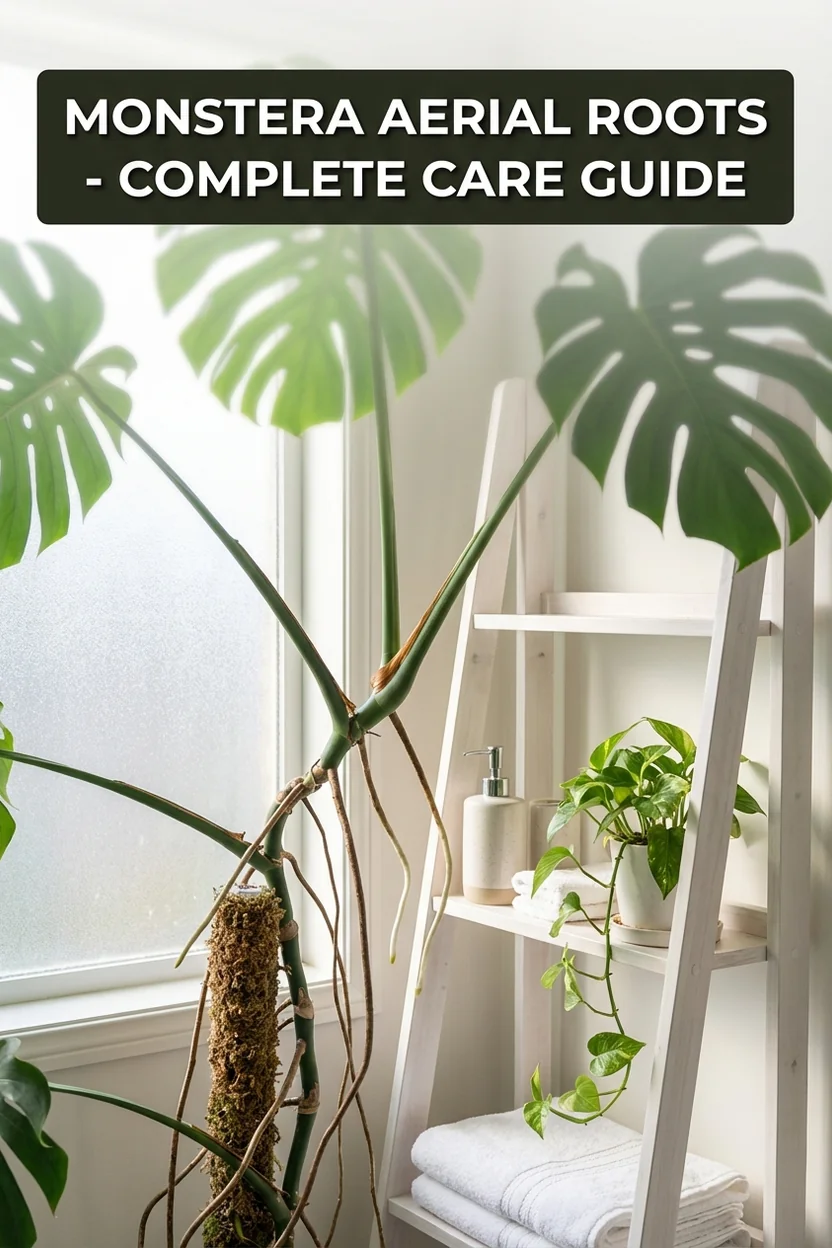
Monstera Aerial Roots: What to Do With Them
Pets & Toxicity
Recorded toxicity for plants linked in this guide. An unknown status is not a safety assessment.
Toxic to pets: Swiss cheese plantDetailsHide
Monstera deliciosa — Toxicity Warning
Toxic to pets and humans. All vegetative parts contain calcium oxalate crystals that cause mouth pain, swelling, and drooling if ingested. Unripe fruit also contains calcium oxalate and is toxic; only fully ripened fruit (after 12+ months) is edible.View Monstera deliciosa plant profile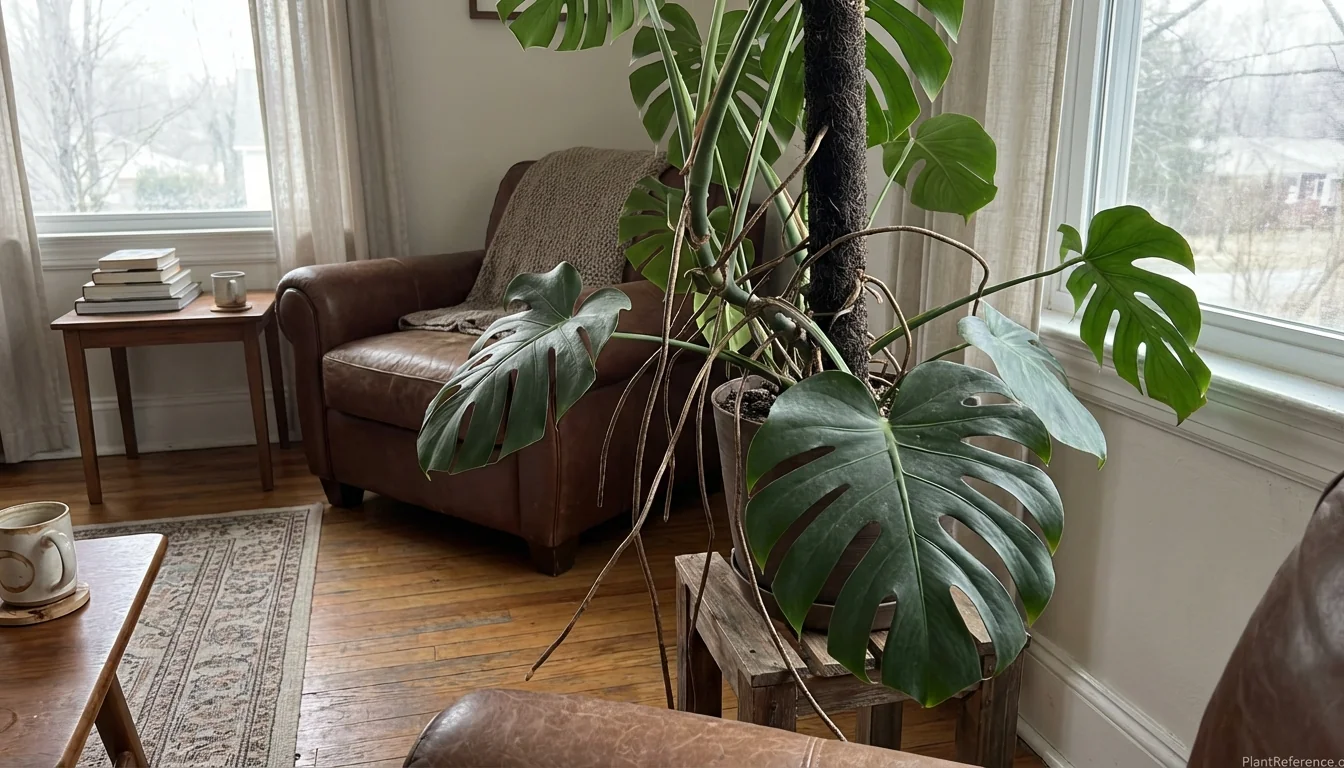
— Image © Plant Reference 2026
Those thick, brown, rope-like growths sprouting from your monstera stem might look weird, but they're actually one of the coolest features of your plant. Monstera aerial roots are completely normal—and they're doing important work to help your plant grow bigger, healthier, and more stable.
Let me cut through the confusion about what to actually do with these roots. I've been working with monsteras for years, and aerial roots are one of the most misunderstood parts of caring for these plants.
What Are Monstera Aerial Roots?
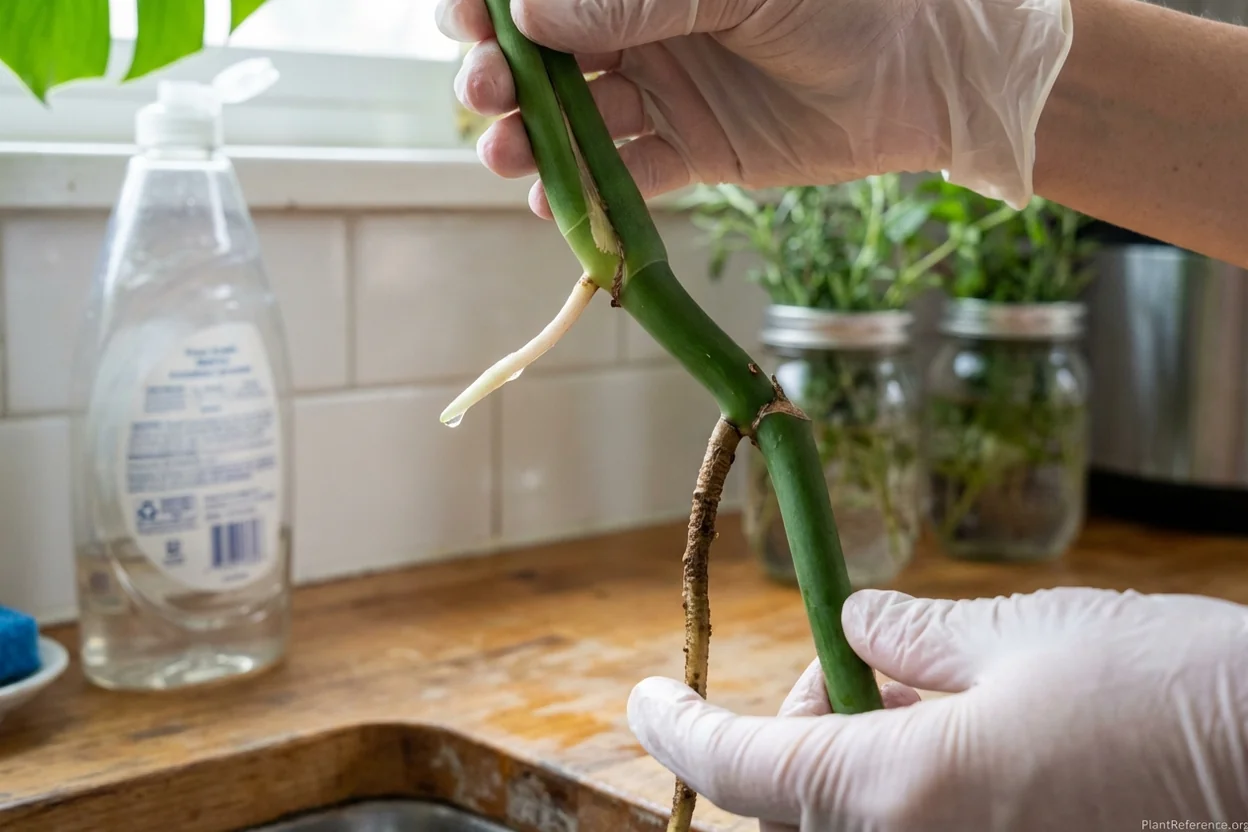
Aerial roots are specialized roots that grow directly from the stem nodes of your monstera 🌿Monstera deliciosa (mon-STER-ah de-lis-ee-OH-sah), extending into the air rather than staying buried in soil. These thick, cord-like structures can grow several feet long and appear anywhere along the stem where there's a node.
Here's what makes them different from regular roots:
They're much thicker—often 0.25 to 0.5 inches (6-13 mm) in diameter
They start white and turn brown as they mature and harden
They can photosynthesize slightly, contributing to the plant's energy
They're covered in a spongy layer called velamen that absorbs moisture
They grow toward support structures and high-humidity areas
You'll typically see aerial roots developing when your monstera reaches about 2-3 feet (60-90 cm) tall, though some plants start producing them earlier if they're getting adequate light and humidity.
Why Your Monstera Grows Aerial Roots
In the wild, monstera 🌿Monstera deliciosa grows as what botanists call a hemiepiphyte—it starts life on the forest floor, then climbs up trees to reach better light in the canopy. Aerial roots are essential for this climbing behavior.
Your houseplant is just following its genetic programming. Here's what those roots are trying to accomplish:
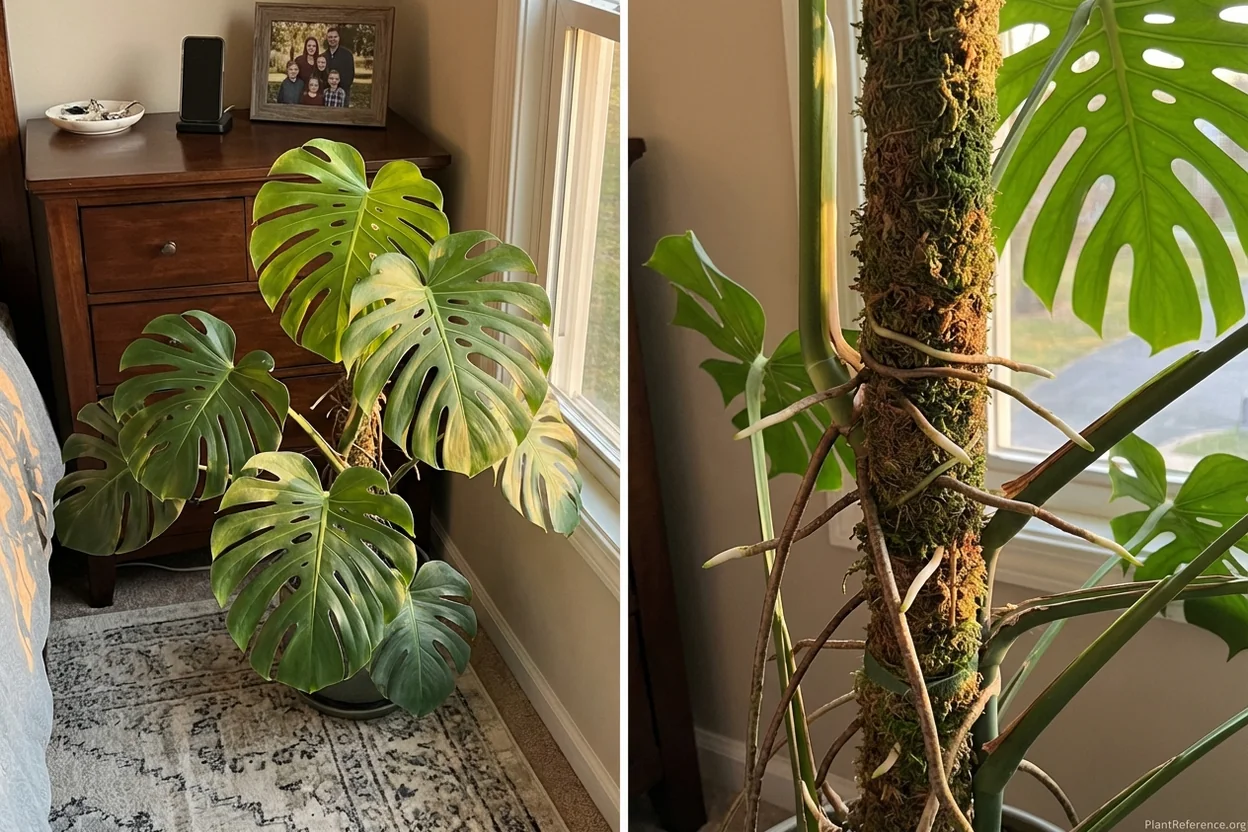
Anchoring and Support: Aerial roots act like natural climbing gear, wrapping around tree trunks, moss poles, or any vertical surface they encounter. This support allows the plant to grow much taller than it could standing on its own.
Moisture Absorption: The spongy velamen coating can absorb water and nutrients directly from humid air. In tropical rainforests, this adaptation helps monsteras thrive in the moisture-rich environment between rain showers.
Nutrient Collection: Aerial roots can absorb nutrients from organic matter they encounter on tree bark or from debris that collects in bark crevices.
Stability: As your monstera gets larger and develops bigger, heavier leaves, aerial roots provide crucial structural support to prevent the plant from toppling over.
The appearance of aerial roots is actually a good sign—it means your plant is mature enough to start its natural climbing behavior and is likely ready for bigger growth.
What to Do With Aerial Roots (4 Options)
You have four main options for managing monstera aerial roots, and honestly, what you choose depends on your aesthetic preferences and how you want your plant to grow.
Option 1: Tuck Them Into the Soil
This is probably the easiest approach. Simply coil the aerial roots around the base of the plant and push them gently into the potting soil. The roots will adapt and start functioning like regular soil roots, helping to anchor the plant and absorb water and nutrients.
Benefits: Provides extra root mass for better plant stability, requires no additional equipment, looks neat and tidy.
Drawbacks: Doesn't support the plant's natural climbing behavior, may limit future growth potential.
Option 2: Attach Them to a Moss Pole
This is what I recommend for most monstera owners. Guide the aerial roots toward a moss pole or other climbing support and gently wrap them around or push them into the moss. Over time, they'll establish firmly and start pulling the plant upward.
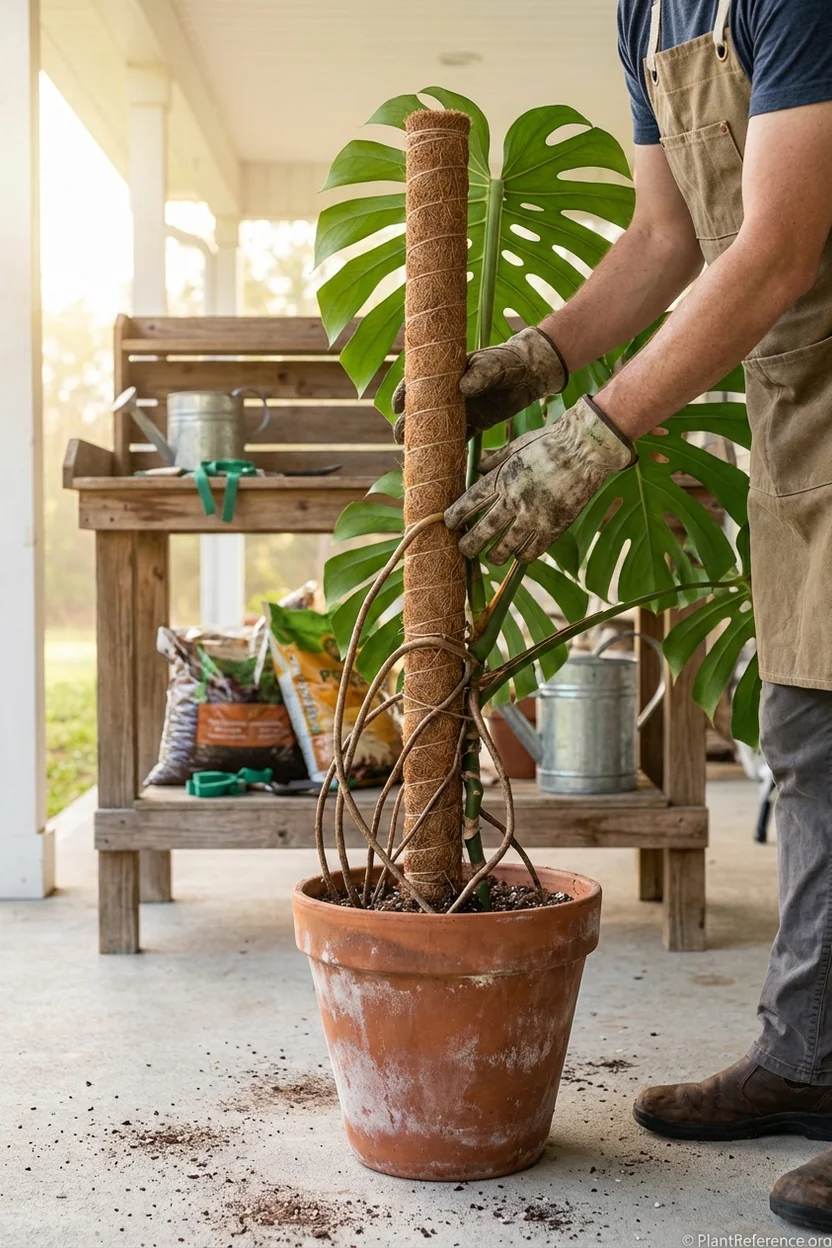
Benefits: Supports natural climbing behavior, leads to bigger leaves and better fenestration, provides excellent plant stability.
Drawbacks: Requires purchasing and installing a moss pole, takes several months for roots to fully establish.
For the best results with Best Moss Pole for Monstera: Support Systems Compared, choose a pole that's at least 2 feet (60 cm) taller than your current plant height.
Option 3: Let Them Grow Wild
You can simply leave aerial roots to do whatever they want. They'll extend into the air, sometimes reaching impressive lengths of 3-4 feet (90-120 cm) or more.
Benefits: Zero maintenance required, shows off the plant's natural growth habit.
Drawbacks: Can look messy or overwhelming, roots may dry out and turn brown at the tips, doesn't provide climbing support.
Option 4: Trim Them
Yes, you can cut aerial roots without harming your plant. Use clean, sharp pruning shears and cut as close to the stem as possible. The plant won't regrow roots from that exact spot, but it will likely produce new ones from other nodes.
Benefits: Maintains a clean, controlled appearance, prevents roots from getting in the way of other plants or decor.
Drawbacks: Removes beneficial root mass, goes against the plant's natural growth pattern, may reduce overall plant health.
→ Fiskars Micro-Tip Pruning Snips ($12-18) - Needle-nose precision for clean cuts
Precision needle-nose design makes clean cuts on delicate stems without crushing tissue. Non-stick stainless steel blades prevent sap buildup and resist corrosion. Comfortable grip reduces hand fatigue during extended pruning sessions. Spring-loaded design provides smooth cutting action. Perfect size for indoor plant maintenance including aerial root trimming, propagation cuts, and removing damaged foliage.
Training Aerial Roots to Climb
If you want to encourage your monstera to climb—and trust me, you should—here's how to train those aerial roots properly.
Start Young: It's much easier to train aerial roots when they're still white and flexible. Brown, woody roots are harder to reposition without breaking.
Be Gentle: Never force aerial roots into position. Guide them toward your support structure and let them find their own way to attach. Forcing them can cause breakage or damage.
Provide Moisture: Aerial roots establish better on moist surfaces. If you're using a moss pole, keep it slightly damp by misting it every few days. The roots will grow toward the moisture.
Use Plant Ties: For stubborn roots that won't stay in position, use soft plant ties or velcro straps to hold them against the support structure until they attach naturally. Remove the ties once the roots have established.
Be Patient: It can take several weeks to several months for aerial roots to fully establish on a new support. Don't get frustrated if progress seems slow.
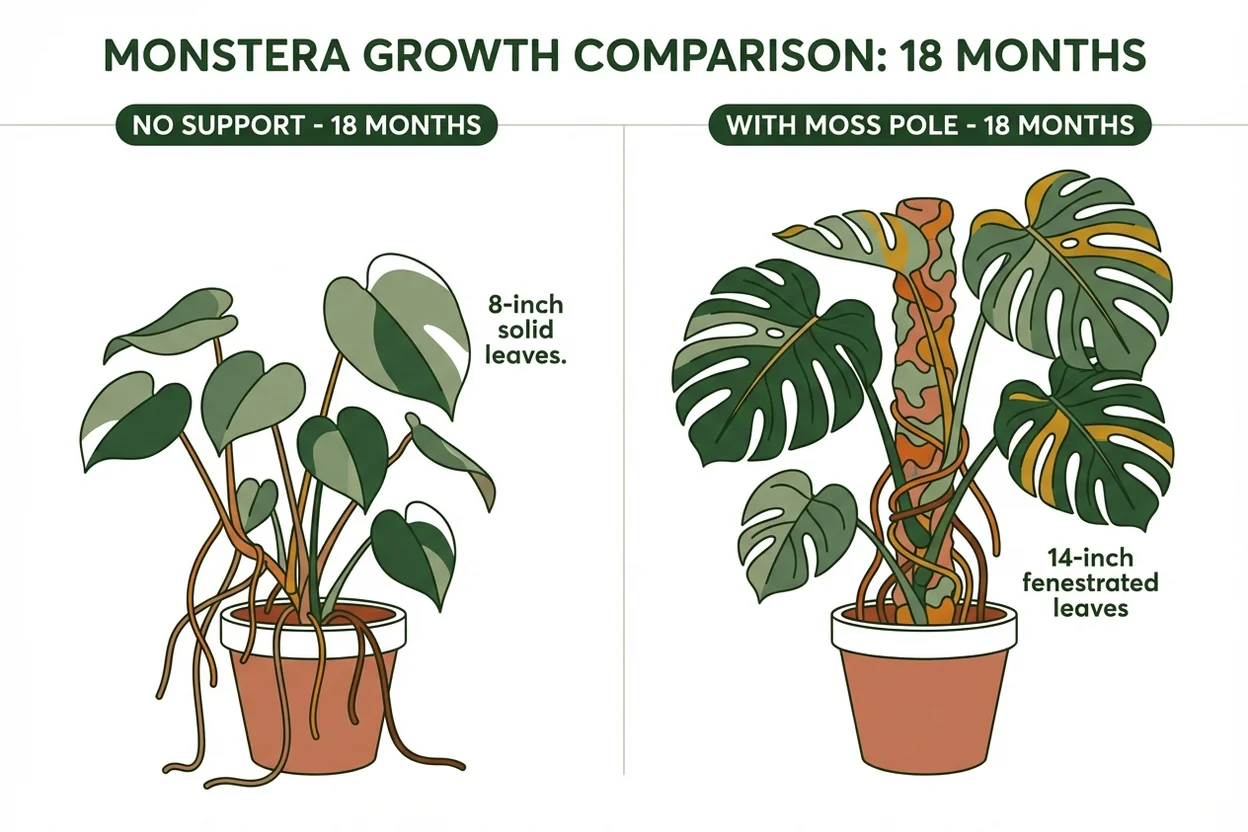
The payoff for proper aerial root training is huge. Plants with well-established climbing support typically produce leaves that are 50-100% larger than unsupported plants, with much better fenestration patterns.
When to Trim Aerial Roots
Look, I'm generally against cutting aerial roots unless you have a good reason. But there are times when trimming makes sense:
They're Getting in the Way: If aerial roots are interfering with other plants, blocking walkways, or getting caught in furniture, it's reasonable to trim them back.
They're Dead or Damaged: Brown, mushy, or obviously dead root tips should be removed to prevent potential rot issues.
Aesthetic Preferences: If the wild look just isn't working for your space, you can trim for appearance. Your plant will survive just fine.
They're Too Long for Your Space: Aerial roots can reach 4-5 feet (120-150 cm) in good conditions. In small apartments, this might be impractical.
When you do trim, use the sharpest, cleanest tool you can find. Make cuts as close to the stem as possible, and consider applying a small amount of cinnamon powder to the cut surface—it acts as a natural antifungal.
Common Aerial Root Problems
Dry, Brown Tips: This usually means your humidity is too low. Aerial roots dry out when indoor humidity drops below 40%. The solution isn't to cut them—it's to increase humidity with a humidifier or pebble tray.
Soft, Mushy Roots: This indicates rot, usually from too much moisture without adequate air circulation. Trim affected portions and improve ventilation around your plant.
No Aerial Roots Developing: If your mature monstera isn't producing aerial roots, it's likely not getting enough light. Move it closer to a bright window or supplement with a grow light.
Roots Won't Attach to Support: This often happens when the support surface is too dry or smooth. Moss poles work better than smooth stakes because they provide texture and can hold moisture.
Encouraging Healthy Aerial Root Growth
If you want more robust aerial root development—and you should, because it leads to better overall plant health—focus on these key factors:
Increase Humidity: Aim for 50-60% relative humidity around your plant. Aerial roots are much more active in humid conditions because they can actually absorb moisture from the air.
Provide Adequate Light: Plants in bright, indirect light produce more vigorous aerial roots than those struggling in low-light conditions. If your monstera isn't getting enough natural light, consider supplementing with a grow light.
Maintain Consistent Watering: While aerial roots can absorb some moisture from air, the plant still needs a healthy root system in the soil. Water when the top 1-2 inches (2.5-5 cm) of soil is dry.
Offer Something to Climb: Even if you don't want a traditional moss pole, providing some kind of vertical support encourages aerial root development. This could be a bamboo stake, a wooden trellis, or even a nearby wall.
The relationship between aerial roots and leaf size is real and dramatic. I've seen monsteras go from producing 6-8 inch (15-20 cm) leaves to 12-15 inch (30-38 cm) heavily fenestrated leaves within a year of establishing good aerial root support.
For optimal Monstera Deliciosa Care: The Complete Guide, remember that aerial roots are a feature, not a bug. They're your plant's way of telling you it's ready to climb and grow into the impressive specimen it's meant to be.
→ LEVOIT Classic 300S Smart Humidifier ($50-70) - App-controlled precision humidity
Smart humidifier with WiFi app control maintains precise humidity levels for aerial root health. Works with Alexa and Google Assistant for voice control. Large 6-liter tank runs up to 60 hours on single fill. Auto mode maintains set humidity level automatically. Quiet operation under 30dB won't disturb sleep. Easy top-fill design prevents spills and makes refilling simple. Essential oil tray adds aromatherapy benefits.
Product link unavailable
The bottom line on aerial roots? Work with them, not against them. These amazing structures are your monstera's ticket to becoming the impressive climbing plant it's genetically programmed to be. Whether you tuck them into soil, train them up a moss pole, or just let them do their thing, you're looking at a normal, healthy part of your plant's development.
Give your aerial roots the respect they deserve, and your monstera will reward you with bigger, more dramatic growth than you probably thought possible in your living room.
Frequently Asked Questions
Reading about plants and recognising them are different skills. These three build the second.
- Daily PlantIdentify the day’s mystery plant from a close-up photograph.
- Keyed OutWork a dichotomous key, lead by lead, to name a hidden specimen.
- Name That PlantName a specimen from botanical clues dealt hardest first.
Free to play, no account needed
TJ stumbled into plant parenthood when a coworker gave him a neglected pothos. That single plant sparked an obsession that led him to quit his corporate marketing job and start a plant care service for busy professionals in Chicago. TJ maintains over 150 plants for residential clients and runs monthly plant swap meetups at local coffee shops. He's self-taught through YouTube, plant forums, and plenty of expensive mistakes (RIP to his variegated monstera). TJ specializes in troubleshooting common houseplant problems and is known for his blunt, no-BS advice: "Your plant isn't dying because Mercury is in retrograde—you're overwatering it." He's particularly skilled with finicky tropical plants like fiddle leaf figs and calatheas.