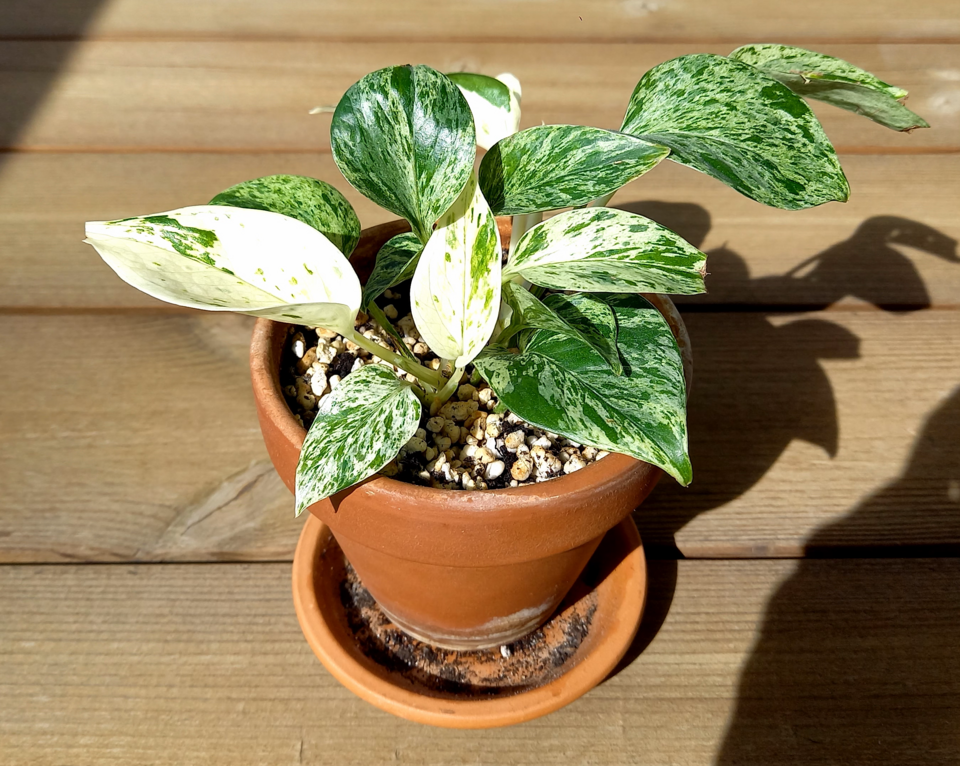
Epipremnum, Genus, aureum, Species, 'Marble Queen', Cultivar,
- Genus & species
- Cultivar
marble queen pothos
Garden cultivar; species native to the Society Islands of French Polynesia (Mo'orea); naturalized and invasive across much of the tropics
Overview
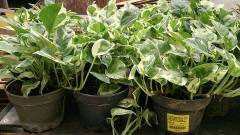
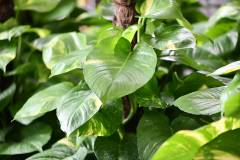
Epipremnum aureum 'Marble Queen' is a heavily variegated trailing pothos cultivar grown almost exclusively as an indoor specimen, with vines reaching 36–96 inches (90–240 cm) long in container culture. Each leaf is heart-shaped, 3–6 inches (8–15 cm) long, and carries a high-contrast cream-and-white-on-green marble pattern with the white-to-cream tissue covering 40–60 percent of the leaf surface — substantially more variegation than the gold-flecked species form 'Golden Pothos' (10–25 percent) and slightly less than the near-white 'Snow Queen' (60–80 percent). The marbling is irregular and varies leaf to leaf within the same plant, with some leaves nearly all green and others nearly all white in the same vine. The cream-and-white tissue is unstable: cuttings taken from heavily white leaves often produce all-cream growth that browns within 2–3 months, while cuttings from leaves with 30–50 percent variegation propagate reliably. Mature outdoor plants in tropical climates produce fenestrated leaves up to 18 inches (45 cm) long when climbing tree trunks; indoor plants stay in the juvenile leaf form. Cultural failure modes are over-watering (root rot from soil that stays wet), low light loss of variegation (the cream tissue reverts to green-white below 100 foot-candles), and brown leaf edges from chronically dry indoor air below 30 percent humidity. The species was reclassified from Pothos to Epipremnum in 1908 and again confirmed in Epipremnum aureum in 1964, though both names remain in commercial use. All parts contain insoluble calcium oxalate crystals toxic to dogs, cats, and humans; ingestion causes oral pain, drooling, and swelling.
Native Range
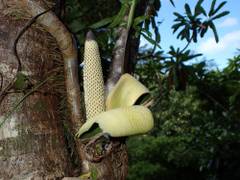
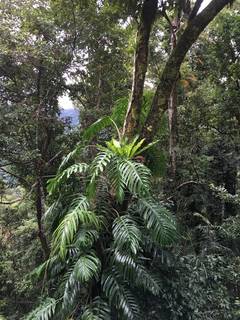
The species Epipremnum aureum is native to the Society Islands of French Polynesia (Mo'orea), where it grows as a hemiepiphyte climbing tree trunks in tropical rainforest. The species has naturalized widely in tropical regions including the Caribbean, Central America, South Asia, and northern Australia, where it is considered invasive in some habitats. E. aureum 'Marble Queen' is a garden cultivar with no wild counterpart.Suggested Uses
Used as a trailing or climbing indoor specimen for shelves, hanging baskets, mantels, and high cabinets in containers of 2 gallons (8 liters) or larger. Vines can be trained up moss poles, around picture frames, or along trellises for vertical interest. Combines with smaller foliage houseplants such as Philodendron hederaceum and Hoya carnosa for layered indoor plantings. Less suited to households with cats and dogs that browse foliage due to calcium oxalate toxicity.How to Identify
Appearance
Size & Dimensions
Height3' - 8'
Width/Spread1' - 2'
Bloom Information
Does not flower in container culture. The variegated foliage is the year-round display.
Detailed Descriptions
Flower Description
Does not flower in container cultureFoliage Description
Heart-shaped leaves 3-6 inches (8-15 cm) long with a high-contrast cream-and-white-on-green marble pattern covering 40-60 percent of the leaf surface in irregular streaks and sectorsGrowing Conditions
Sun Requirements
Needs bright indirect light. Keep it out of direct sun, which can scorch the leaves.
• Bright indirect light: a bright spot near a window, with no direct sun on the leaves
Care & Maintenance
Care Guide
Place in bright indirect light at 200–500 foot-candles for full variegation; cream-and-white tissue reverts toward green below 100 foot-candles, and direct sun above 4 hours scorches the variegated areas. Water when the top one-third to one-half of the soil volume has dried; the plant tolerates short dry periods better than over-watering. Soil mix should be free-draining (peat-based potting mix amended with 25–30 percent perlite). Indoor humidity above 40 percent reduces brown leaf edges. Feed at half the label rate with a balanced liquid fertilizer monthly during active growth (spring through early autumn) and skip feeding in winter. Pinch back vine tips to encourage branching and a fuller plant; without pinching the vines stay single-stemmed and grow longer rather than fuller. Variegation is unstable on cuttings: take cuttings from leaves with 30–50 percent variegation rather than heavily white leaves to maintain the cultivar's pattern.Pruning
Pinch back vine tips at any node to encourage branching and a fuller plant. Cut just below a node for cuttings; nodes root in water or moist potting mix in 2–4 weeks for new plants. Remove all-cream leaves at the base when they emerge; cream tissue without enough chlorophyll browns within 2–3 months and drains energy from the vine.Container Growing
Suitable for container growing
Minimum container size: 2 gallons