Fiddle Leaf Fig Root Rot: How to Save Your Plant
Pets & Toxicity
Recorded toxicity for plants linked in this guide. An unknown status is not a safety assessment.
Toxic to pets: fiddle leaf figDetailsHide
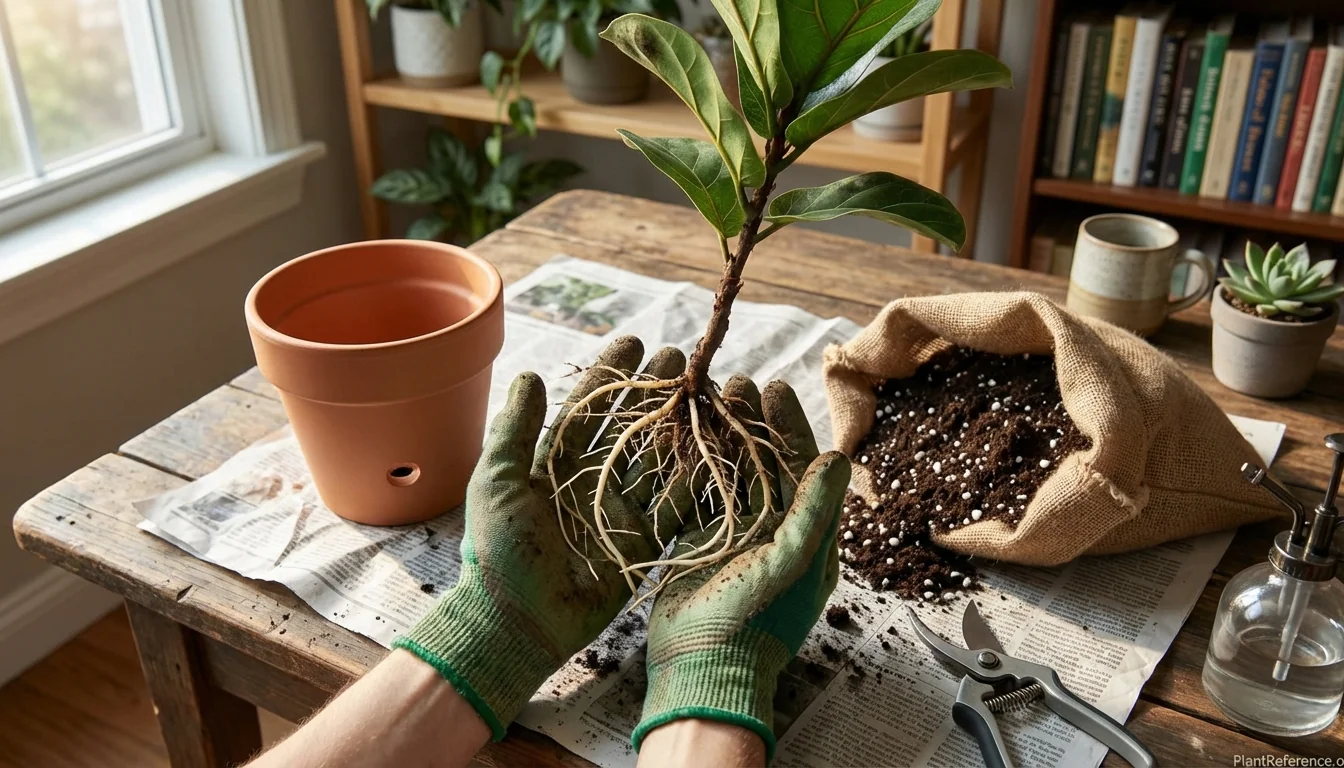
— Image © Plant Reference 2026
Your fiddle leaf fig is dying, and you know it. Those brown spots are spreading, leaves are yellowing faster than you can count, and that soggy soil smell tells you everything you need to know—you've got root rot. Here's the truth: root rot kills fiddle leaf figs faster than almost any other problem, but if you act now, you can save your plant. This guide covers the exact diagnosis, treatment, and prevention steps that actually work.
What Root Rot Actually Is (And Why It Kills)
Root rot isn't one disease—it's a death sentence delivered by several fungal pathogens that thrive in waterlogged soil. When your fiddle leaf fig 🌿Ficus lyrata (FYE-kus lye-RAY-tuh) sits in wet conditions, the soil becomes anaerobic. Roots need oxygen to function, and when water displaces all the air in the soil, roots literally suffocate.
Dead and dying roots become breeding grounds for opportunistic fungi like Pythium, Phytophthora, and Rhizoctonia. These pathogens attack weakened tissue, turning firm white roots into brown, mushy slime. Once infection sets in, it spreads rapidly through the root system. The plant can't absorb water or nutrients, even though it's sitting in wet soil. That's why root rot creates the cruel irony of a plant dying of thirst while drowning.
The fiddle leaf fig's native habitat in West African rainforests features fast-draining soil that never stays saturated. When you recreate swamp conditions in a pot, you're asking for trouble. Most fiddle leaf fig deaths trace back to root rot caused by one thing: overwatering.
Diagnosing Root Rot: What to Look For
Root rot announces itself through a predictable progression of symptoms. Learn to recognize these signs before it's too late.
Above-Ground Symptoms:
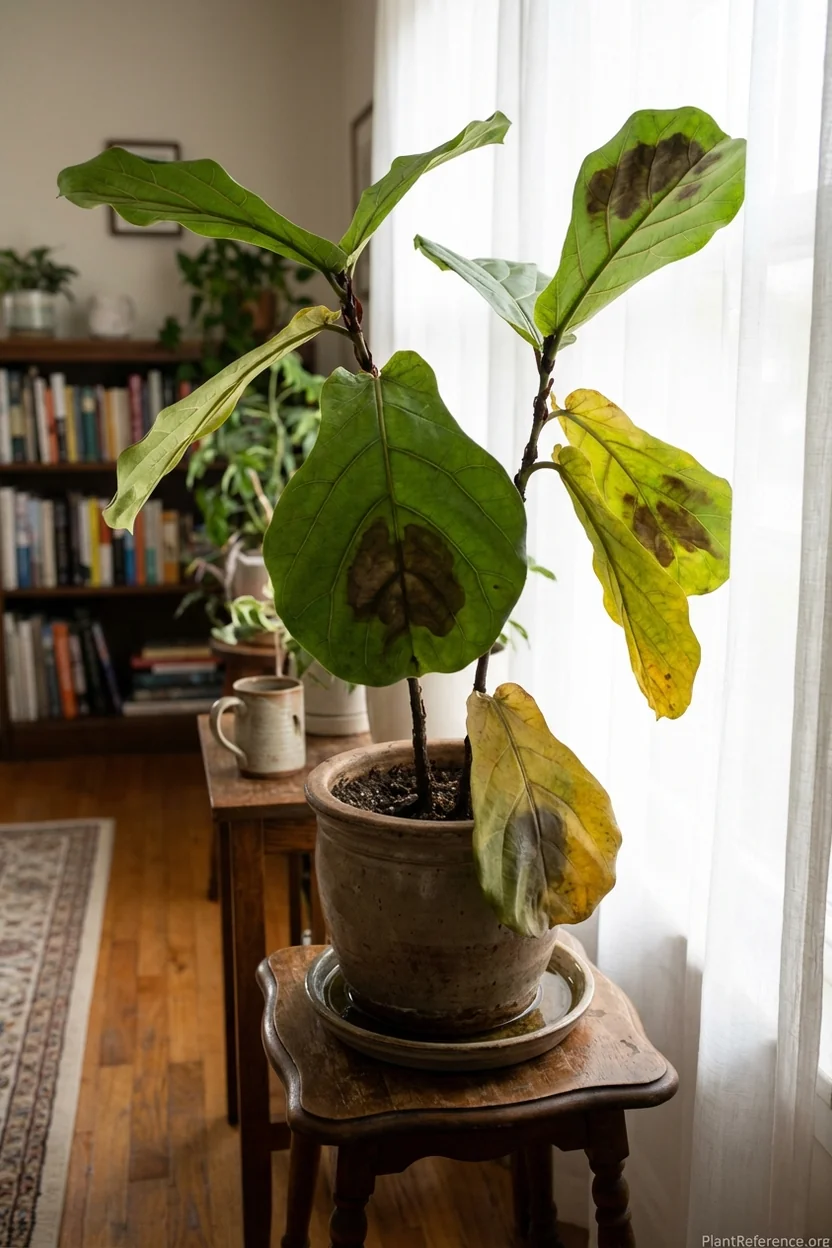
Dark brown or black spots in the center of leaves (not edges—that's different)
Yellow leaves that appear suddenly, often multiple at once
Soft, mushy leaf bases where leaves connect to stems
Leaves dropping rapidly, sometimes several per day
Stunted or stopped growth during growing season
Wilting leaves even when soil is wet
Foul smell from soil (rotting organic matter)
Below-Ground Confirmation:
You need to check the roots. Period. Above-ground symptoms can mislead, but roots tell the truth. Gently remove your plant from its pot and examine the root system.
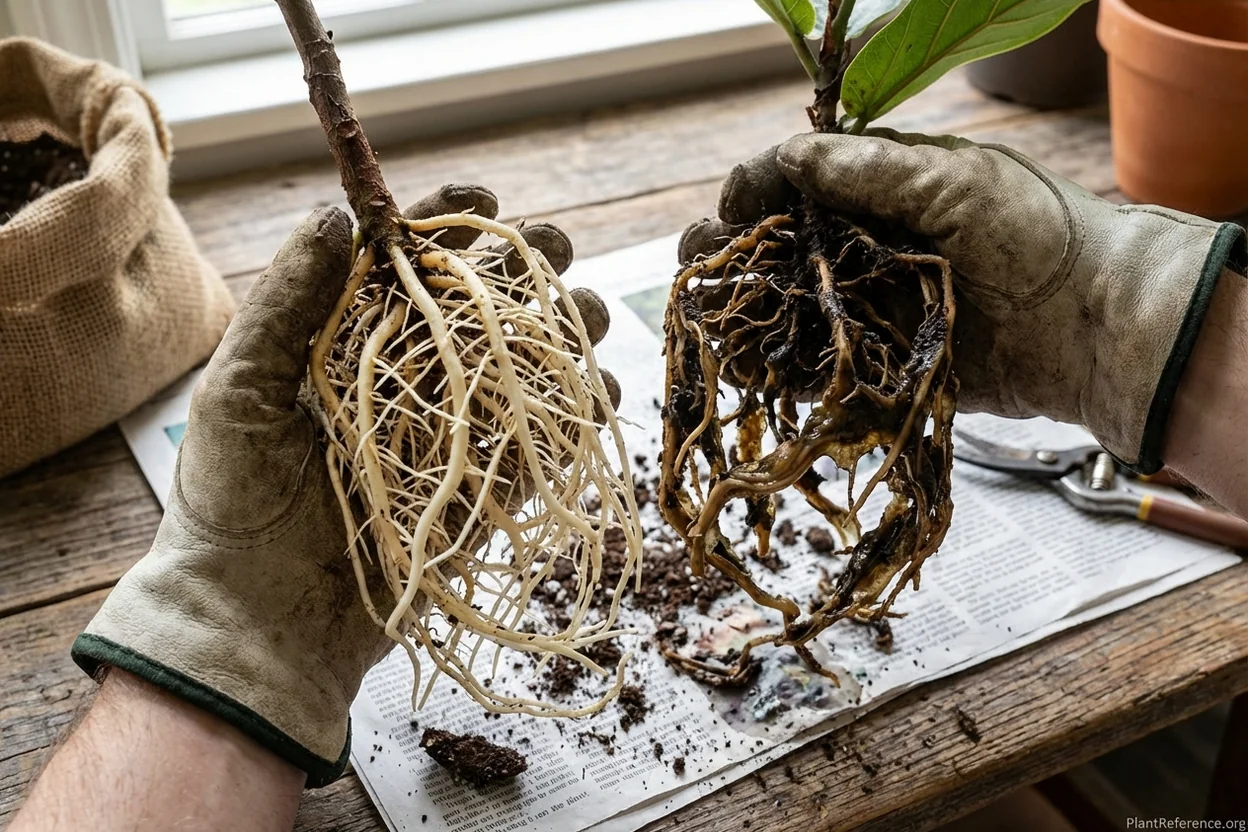
Healthy roots: White or light tan, firm to the touch, spring back when gently squeezed
Diseased roots: Brown, black, or gray; mushy and slimy; fall apart when touched; smell rotten
Advanced infection: Entire root ball feels wet and spongy; very few firm roots remain; soil slides off easily
If you see brown mushy roots, you have root rot. The question isn't "do I have it?"—it's "how bad is it?" If more than 50% of roots are diseased, your plant's prognosis is poor but not hopeless. If more than 75% are gone, prepare yourself for the possibility of losing the plant.
Check out Fiddle Leaf Fig Yellow Leaves: Complete Troubleshooting for more on diagnosing yellowing that might signal root rot versus other causes.
Emergency Treatment Protocol
Root rot requires immediate aggressive treatment. Follow these steps in order—skipping any step reduces your success rate dramatically.
Step 1: Remove the Plant From Its Pot
Lay down newspaper or a tarp. Turn the pot on its side and gently slide the plant out. If it's stuck, run a knife around the inside edge of the pot. Don't yank on the trunk—you'll damage what's left of the root system.
Step 2: Wash Away All Soil
Take the root ball to a sink or use a hose if you're outside. Gently wash away all the old soil until you can see every root clearly. This isn't optional—you need to see exactly what you're dealing with. The old soil is contaminated with fungal pathogens, and leaving any behind invites reinfection.
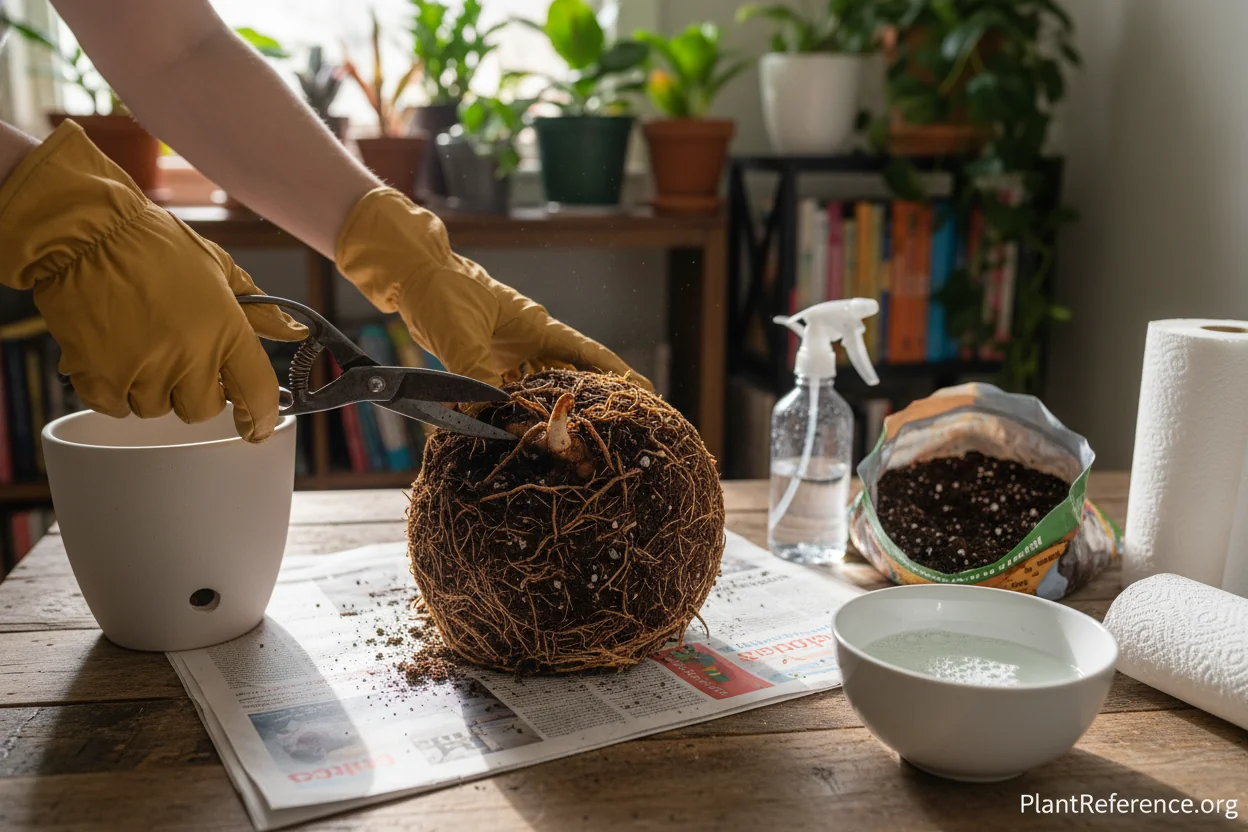
Step 3: Identify and Remove Diseased Roots
Get a pair of sharp, sterilized pruning shears. Sterilize them with rubbing alcohol or a 10% bleach solution. Now comes the hard part: cut away every brown, mushy, or slimy root. Cut back to healthy white tissue. If you see brown discoloration inside a root when you cut it, keep cutting back until you see clean white tissue.
Be ruthless. A fiddle leaf fig can survive losing 60-70% of its roots if what remains is healthy. It cannot survive keeping diseased roots. Cut at a 45-degree angle to maximize the surface area for new root growth.
Step 4: Treat Remaining Roots
Mix a solution of 1 part 3% hydrogen peroxide to 3 parts water. Soak the remaining roots in this solution for 30 minutes. This kills surface fungal spores without damaging healthy tissue. Some people use a fungicide—that works too, but hydrogen peroxide is cheaper and just as effective for most cases.
Step 5: Repot in Fresh, Sterile Soil
Never reuse the old pot without sterilizing it first. Wash it thoroughly with hot soapy water, then spray with a 10% bleach solution. Let it air dry completely.
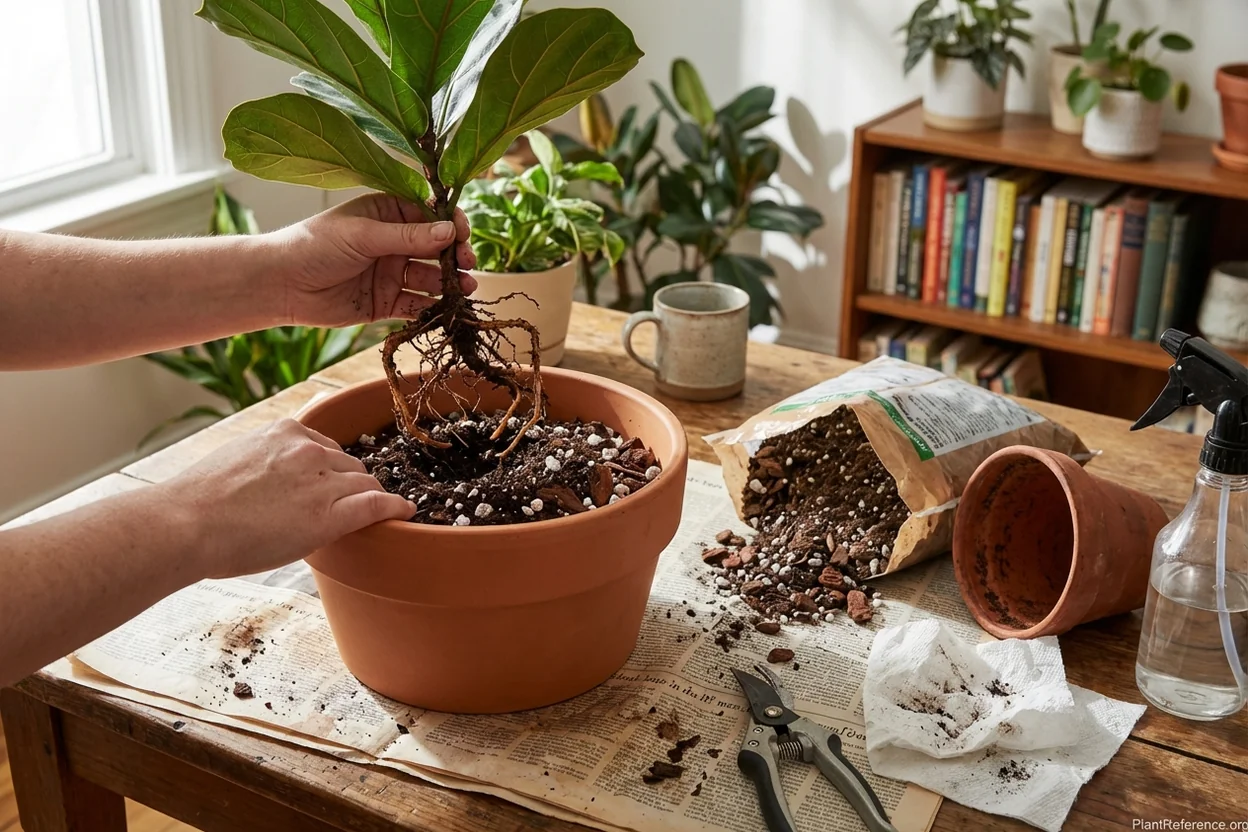
Use fresh, well-draining soil specifically formulated for fiddle leaf figs. The mix should contain perlite, pine bark, or coarse sand for drainage. Do not use regular potting soil—it holds too much moisture. Fill the pot about one-third full, position the plant so the root ball sits 1-2 inches below the rim, then fill in around the roots. Tap the pot gently to settle soil, but don't pack it down hard.
For pot selection, read Best Pots for Fiddle Leaf Fig to choose a container with proper drainage that prevents future rot.
Step 6: Water Lightly and Wait
This seems counterintuitive after all that root pruning, but give the plant a light watering—just enough to settle the soil around roots. Don't saturate it. The plant has lost significant root mass and can't absorb much water right now. Overwatering at this stage invites reinfection.
Place the plant in bright indirect light but not direct sun. The plant is in shock and can't handle intense light while recovering.
Post-Treatment Care for Recovery
Your plant is in critical condition. Recovery takes 4-8 weeks if everything goes right. Here's how to support healing without smothering the patient.
Watering During Recovery:
This is where most people mess up. They see their plant struggling and think "it needs water!" Wrong. That root system is a fraction of its original size and can't process much water. Test soil daily by sticking your finger 3-4 inches deep. Only water when the soil is 75% dry. When you do water, give it just enough to moisten the soil—don't drench it.
For the first 2-3 weeks, expect to water maybe once every 10-14 days. As new roots develop, the plant will start using more water and you can gradually increase frequency.
Light Requirements:
Bright indirect light helps the plant photosynthesize and generate energy for new root growth, but avoid direct sun. The plant can't transpire properly with reduced roots, making it vulnerable to sunburn and additional stress. An east-facing window works perfectly—gentle morning sun, bright light the rest of the day.
Read Fiddle Leaf Fig Light Requirements: The Ultimate Guide for optimal lighting conditions during recovery and normal growth.
Humidity and Misting:
Increase humidity to 50-60% if possible. The plant is losing water through leaves faster than reduced roots can replace it. Use a humidifier near the plant, place it on a pebble tray filled with water, or group it with other plants. Light misting 2-3 times per week helps, but don't soak the leaves—that invites fungal problems on stressed tissue.
Fertilizer: Not Yet
Do not fertilize for at least 4-6 weeks. The plant can't use nutrients right now, and fertilizer salts can damage delicate new roots. Once you see new leaf growth, start with a diluted fertilizer at half strength. Use a balanced 3-1-2 NPK formula designed for fiddle leaf figs.
Monitoring for Reinfection:
Check the plant weekly. New brown spots, continued leaf drop, or a return of the rotten smell means the infection survived your treatment. If this happens, you need to repeat the entire process with more aggressive root pruning.
Prevention: Never Deal With This Again
Root rot is 100% preventable. Here's how to never repeat this nightmare.
Master the Watering Schedule:
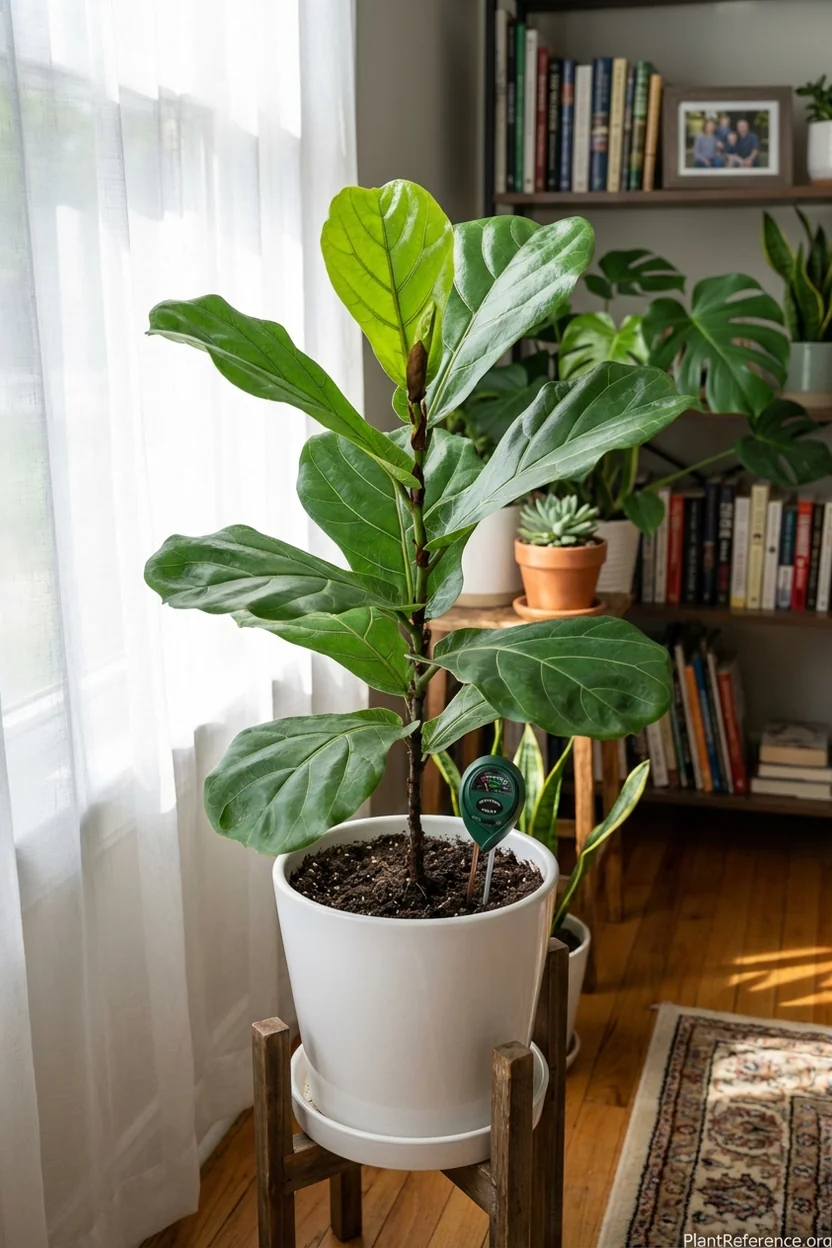
Fiddle leaf figs need to dry out between waterings. The top 2-3 inches of soil should be completely dry before you water again. That's roughly 50-75% of the total soil volume in most pots. Use your finger, a moisture meter, or simply lift the pot—dry soil weighs significantly less than wet soil.
Season matters. In summer, you might water every 7-10 days. In winter, maybe once every 3-4 weeks. Stop following calendar-based schedules and start responding to the plant's actual needs.
For a complete watering guide, check How to Water a Fiddle Leaf Fig (Never Kill Yours Again) for timing, techniques, and troubleshooting.
Use Proper Soil:
Never use regular potting soil for fiddle leaf figs. You need a fast-draining mix with perlite, pine bark, orchid bark, coarse sand, or pumice. Water should drain through the pot in seconds, not minutes. If water pools on the surface, your soil is too dense.
Repot every 2-3 years with fresh soil. Over time, organic matter breaks down and soil becomes compacted, reducing drainage and increasing root rot risk.
Drainage Is Non-Negotiable:
Your pot must have drainage holes. Plural. One hole isn't enough for pots larger than 10 inches. No amount of careful watering compensates for a pot without drainage. And never, ever leave your fiddle leaf fig sitting in a water-filled saucer for more than 30 minutes.
Environmental Stability:
Consistent conditions prevent stress that weakens plants and makes them susceptible to disease. Keep temperatures between 65-75°F (18-24°C). Avoid cold drafts from windows or AC vents. Don't move the plant unnecessarily—every relocation stresses it.
Early Detection:
Inspect your plant weekly. Look for early warning signs: slightly soft leaf bases, minor yellowing, slower growth. Catching problems early means simple fixes instead of emergency surgery.
Learn to spot issues before they become emergencies with Brown Spots on Fiddle Leaf Fig: 7 Causes + Solutions and Fiddle Leaf Fig Leaves Dropping? Here's Why (+ Fixes).
Frequently Asked Questions
Reading about plants and recognising them are different skills. These three build the second.
- Daily PlantIdentify the day’s mystery plant from a close-up photograph.
- Keyed OutWork a dichotomous key, lead by lead, to name a hidden specimen.
- Name That PlantName a specimen from botanical clues dealt hardest first.
Free to play, no account needed
Sarah earned her doctorate in plant biology and spent time working in botanical garden education before transitioning to freelance writing and consulting. Now based in Portland, Oregon, she teaches plant identification workshops at local community centers and maintains a modest collection of over 60 houseplants in her small apartment. Sarah specializes in helping beginners understand plant science without the jargon—her approach focuses on practical observation over theory. She's killed her fair share of fiddle leaf figs and finally cracked the code on keeping them alive.