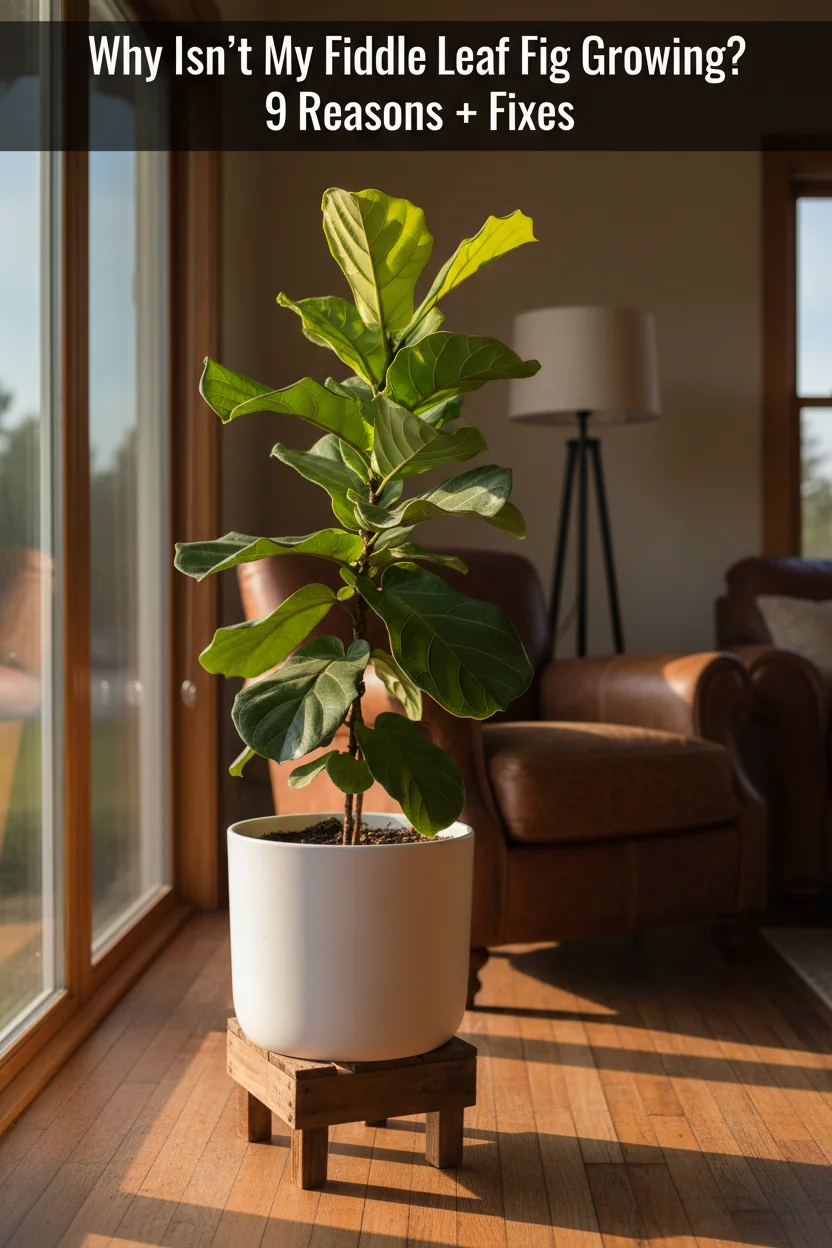
Why is My Fiddle Leaf Fig Not Growing? 9 Reasons
Pets & Toxicity
Recorded toxicity for plants linked in this guide. An unknown status is not a safety assessment.
Toxic to pets: fiddle leaf figDetailsHide
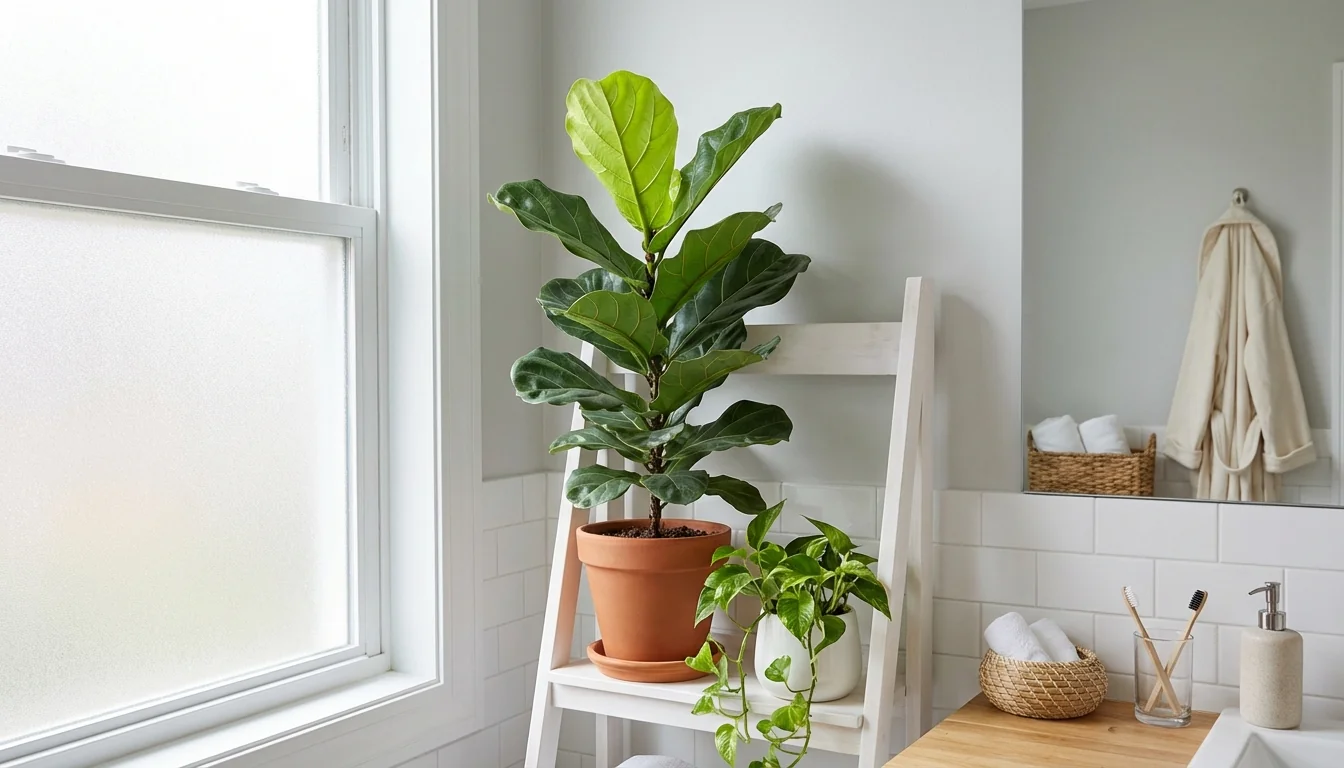
— Image © Plant Reference 2026
Let's be honest—your fiddle leaf fig stopped growing, and you're frustrated. I get it. These plants can sit there like expensive green statues doing absolutely nothing for months while you're doing everything the internet told you to do. Here's the truth: nine times out of ten, it's a light problem. But let's cover all nine reasons your fiddle leaf fig isn't growing so you can actually fix this.
The fiddle leaf fig 🌿Ficus lyrata (FYE-kus lye-RAY-tuh) is a slow to medium grower that should produce 1-2 feet of new growth per year indoors with growth spurts of 2-4 leaves every 4-6 weeks during spring and summer. If your plant hasn't pushed out a single new leaf in months outside of winter dormancy, something's wrong. Time to diagnose.
Reason #1: Insufficient Light (The #1 Culprit)
This is it. This is the problem 80% of the time. Your fiddle leaf fig isn't getting enough light, period. These plants evolved under the tropical rainforest canopy where they get bright filtered light for most of the day—not the dim corner of your living room.
Here's what's actually happening when light is insufficient: photosynthesis slows to a crawl. Those large fiddle-shaped leaves contain specialized cells called lithocysts with calcium carbonate deposits that enhance light absorption and diffusion. When light levels drop below what the plant needs, the entire photosynthesis process becomes inefficient. The plant shifts into survival mode instead of growth mode. It maintains existing leaves but doesn't have the energy to produce new ones.
Your fiddle leaf fig needs minimum 6-8 hours of bright indirect light daily. That means directly in front of an east or west-facing window, or a few feet back from a south-facing window with sheer curtains. If your plant is more than 3-4 feet from a window, that's probably not enough light.
Quick test: Can you read a book comfortably next to your plant without turning on a light during daytime? If not, it's too dark.
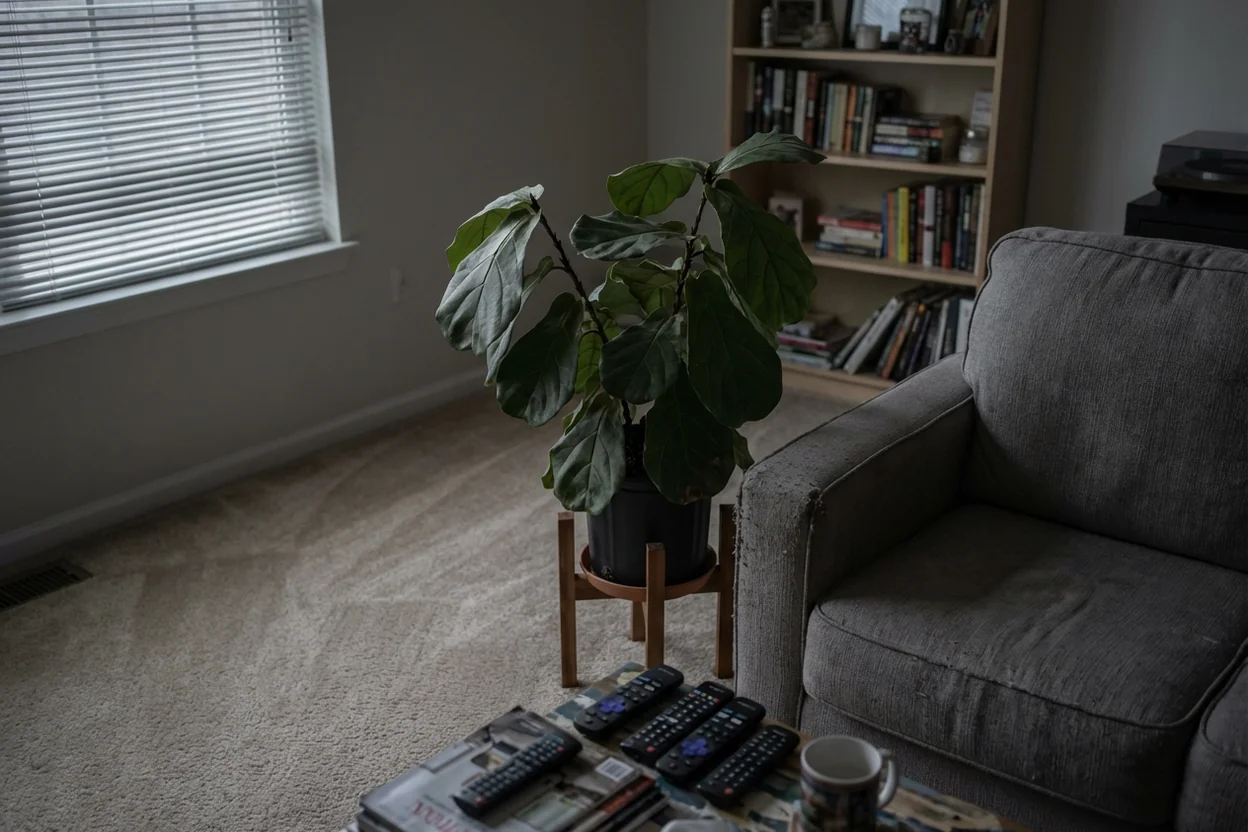
The fix: Move your plant directly in front of your brightest window. Yes, directly. I'm talking 6 inches to 2 feet away maximum. East-facing windows are ideal because they provide gentle morning sun that won't burn leaves. West-facing works too but watch for intense afternoon sun. South-facing windows give the most light but may need sheer curtains to prevent leaf burn.
Can't move it closer to a window? Get a Best Grow Lights for Fiddle Leaf Fig (Complete Guide)|grow light. A quality LED grow light positioned 12-18 inches above the plant for 12-14 hours daily will solve your light problem. This isn't optional if you want growth in a low-light space.
Reason #2: Nutrient Deficiency
Your fiddle leaf fig can't grow new leaves without the raw materials to build them. Think of nutrients as the construction supplies—nitrogen for leaf structure, phosphorus for energy transfer, potassium for overall health, plus micronutrients like calcium that strengthen cell walls.
If you haven't fertilized in over a year, that's your problem. Potting soil contains nutrients for about 3-6 months before it's depleted. After that, your plant is trying to build new leaves from nothing. It won't work.
Signs of nutrient deficiency that stunt growth:
Overall yellowing especially in older lower leaves (nitrogen deficiency)
Slow growth or no new leaves during spring-summer
Small new leaves that don't reach full size
Pale green color instead of deep vibrant green
Weak stems that can't support leaves properly
Here's what you need to know about fertilization: fiddle leaf figs need feeding during the growing season only (March through September). They want a balanced formula with higher nitrogen to fuel leaf production. The ideal ratio is 3:1:2 (nitrogen:phosphorus:potassium). You can use liquid fertilizer every 2 weeks at half-strength or monthly at full strength. Never fertilize during fall and winter when the plant is dormant—that's how you burn roots and cause more problems.
Stop fertilizing if you see brown leaf edges or tips—that's fertilizer burn from too much. Always water before fertilizing to prevent root burn.
For more details on feeding schedules, check out the Fiddle Leaf Fig Care: The Complete Guide (2025)|complete care guide.
Reason #3: Root-Bound Plant
When was the last time you repotted? If it's been more than 2-3 years, your fiddle leaf fig has probably outgrown its container. Roots that have completely filled the pot with nowhere left to grow will slow top growth to a halt. The plant can't take up enough water and nutrients because there's more root than soil.
Check this right now: Look at the bottom drainage holes. Do you see roots poking through or circling around the drainage holes? If yes, your plant is root-bound and needs repotting. You can also gently slide the plant out of its pot—if roots have formed a tight spiral around the root ball with minimal soil visible, that's root-bound.
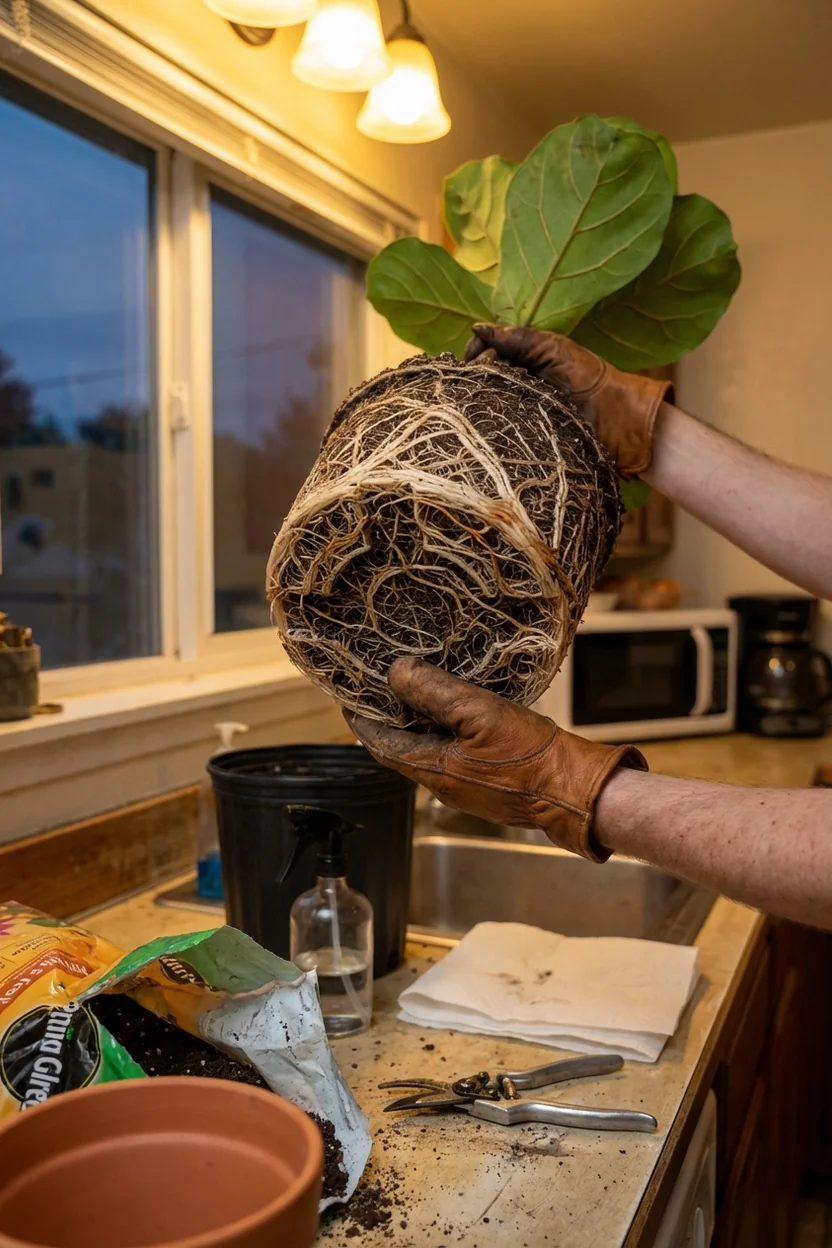
The fix: Repot into a container 2 inches larger in diameter than the current pot. Use fresh well-draining soil formulated for fiddle leaf figs or make your own mix with regular potting soil, perlite, and pine bark. Gently loosen circling roots before placing in the new pot. Water thoroughly after repotting.
Important: Your plant will pause growth for 2-4 weeks after repotting as it adjusts. This is transplant shock and it's normal. Don't panic. Keep conditions consistent, water when the top 2 inches dry, and new growth will resume once roots establish in the fresh soil.
Need step-by-step repotting guidance? See How to Repot a Fiddle Leaf Fig (Step-by-Step).
Reason #4: Inconsistent Watering
Underwatering and overwatering both stunt growth, just in different ways. When soil stays too dry, roots can't absorb water and nutrients. Transpiration stops. The plant enters drought-stress mode where it focuses on survival instead of producing new leaves. When soil stays too wet, roots suffocate in waterlogged conditions and begin rotting. Damaged roots can't support new growth.
Both extremes stress the plant and shut down growth. The key is consistency. Your fiddle leaf fig wants the top 2-3 inches of soil (about 50-75% of the soil depth) to dry between waterings, then a thorough deep watering until water drains from the bottom. This creates a healthy wet-dry cycle that keeps roots oxygenated while delivering adequate moisture.
Here's how to know if watering is your growth problem:
Underwatering signs: Drooping leaves, brown crispy edges, dry soil 3+ inches deep
Overwatering signs: Yellowing leaves, brown spots in leaf centers, constantly wet soil, mushy roots
Inconsistent watering: Plant looks stressed, leaves dropping, erratic growth pattern
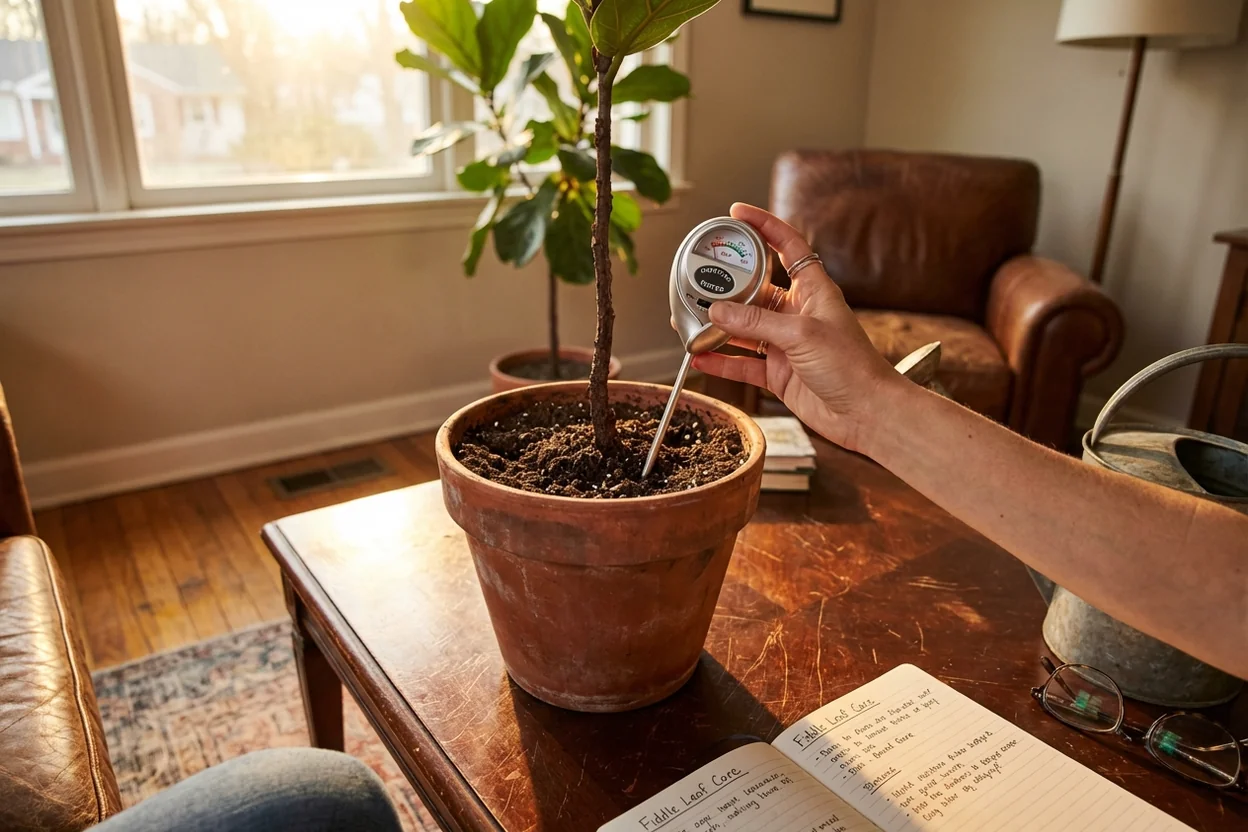
Get a moisture meter. Stop guessing. Insert it 3-4 inches deep into the soil and water when it reads "dry" or hits the 2-3 range on a 1-10 scale. This takes all guesswork out of watering and prevents both extremes that kill growth.
For watering specifics by season and pot size, check How to Water a Fiddle Leaf Fig (Never Kill Yours Again).
Reason #5: Natural Winter Dormancy
Let me save you some stress: it's completely normal for fiddle leaf figs to stop growing during fall and winter. This isn't a problem you need to fix. It's biology.
From October through February, shorter days and lower light levels trigger dormancy. The plant conserves energy, stops producing new leaves, and focuses on maintaining existing foliage. Growth slows or stops entirely. This is the plant's natural response to seasonal changes even if your indoor temperature stays consistent.
If your plant stopped growing in November and it's now January, relax. That's supposed to happen. You'll see new growth resume in March or April when day length increases and spring arrives. Don't start fertilizing or overwatering trying to force growth—you'll just stress the plant and cause problems.
During dormancy, reduce watering frequency slightly since the plant uses less water. Skip fertilizer completely. Maintain adequate light but don't expect growth. Patience.
Reason #6: Temperature Stress
Fiddle leaf figs are tropical plants that grow best in stable temperatures between 65-75°F (18-24°C). When temperatures drop below 60°F (15°C) or spike above 85°F (29°C), growth slows or stops as the plant redirects energy toward temperature stress management instead of leaf production.
Cold drafts from windows, doors, or AC vents cause sudden temperature drops that shock the plant. Hot air from heating vents or space heaters creates the opposite problem—excessively dry hot air that stresses leaves and roots. Both extremes shut down growth.
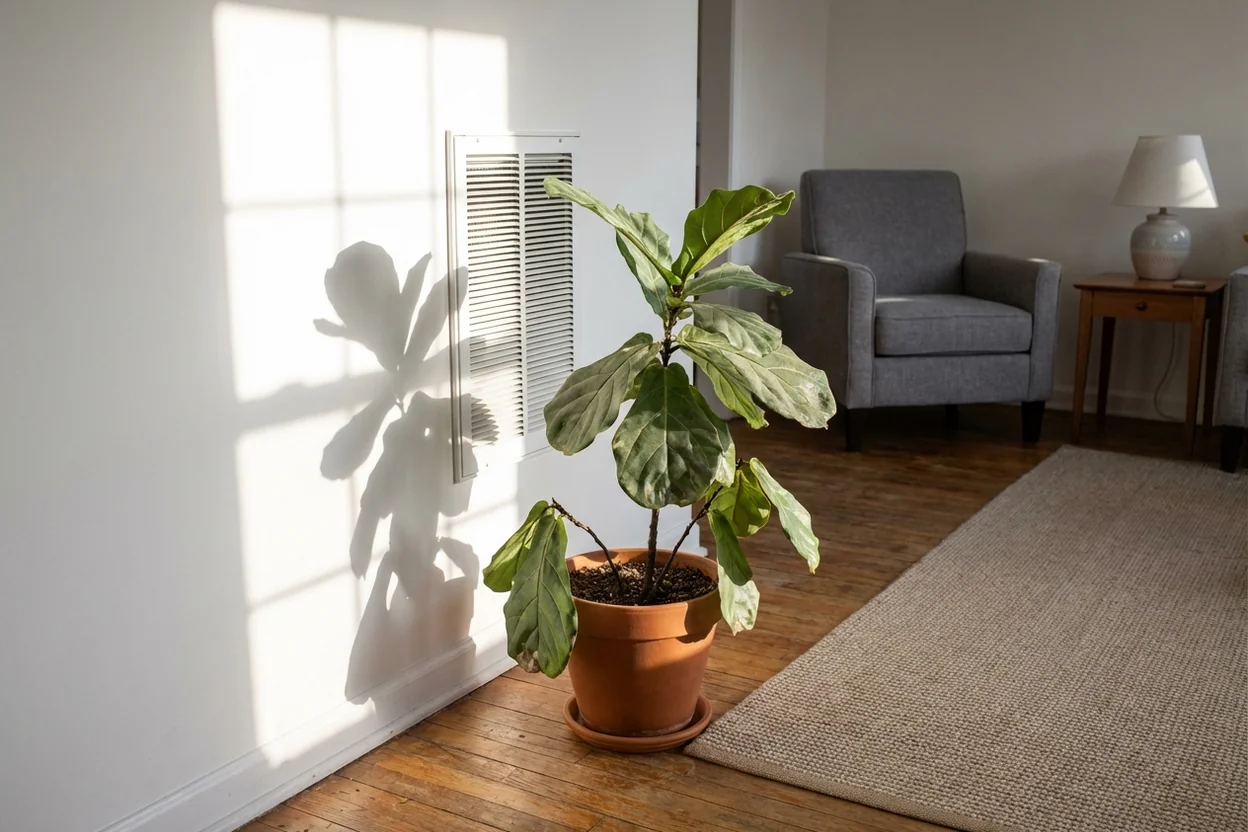
Quick fixes for temperature stress:
Move plant away from drafty windows and doors (at least 3 feet)
Keep away from heating/AC vents (minimum 3-4 feet distance)
Avoid placing near exterior walls in winter (colder surface temperatures)
Maintain consistent indoor temperature between 65-75°F year-round
Use a small fan for gentle air circulation without direct drafts
Temperature stress often combines with low humidity since heating and AC both dry out air. If your plant isn't growing and sits near a vent or drafty window, that's likely your culprit.
Reason #7: Recent Repotting Shock
Did you recently repot your fiddle leaf fig and now growth has stopped? That's transplant shock—completely normal and temporary. When you disturb roots during repotting, even carefully, the plant pauses all growth to focus energy on re-establishing roots in the new soil. This recovery period typically lasts 2-4 weeks but can extend to 6-8 weeks for larger plants or rough repotting jobs.
Signs of transplant shock:
Drooping leaves immediately after repotting
No new growth for several weeks post-repotting
Minor leaf yellowing or dropping (1-3 leaves)
Plant looks "sad" or stressed despite proper care
This is temporary. The plant isn't dying—it's adjusting. Keep conditions stable, water when the top 2 inches dry (don't overwater trying to help), maintain bright indirect light, and skip fertilizer for at least 4-6 weeks. New growth will resume once roots establish in fresh soil.
If it's been more than 8 weeks since repotting with no growth and worsening symptoms, you may have root rot from overwatering or damaged too many roots during repotting. Check for Fiddle Leaf Fig Root Rot: How to Save Your Plant|root rot symptoms.
Reason #8: Pest Infestation
Pests suck nutrients directly from leaves and stems, literally draining the plant's energy reserves needed for growth. Spider mites, scale, mealybugs, and thrips all feed on plant sap, weakening the fiddle leaf fig and halting new leaf production.
Small pest populations may not be immediately obvious. Check your plant carefully for these signs:
Spider mites: Fine webbing on undersides of leaves, tiny moving dots, small holes
Scale insects: Small brown bumps on stems and leaf veins, sticky sap on leaves
Mealybugs: White cottony substance in leaf joints and stem crevices
Thrips: Tiny elongated insects, silvery streaks on leaves, distorted new growth
Pests spread quickly and cause cumulative damage. Even a minor infestation redirects plant energy toward defense responses instead of growth. Heavy infestations cause severe stress that completely stops new leaf production.
The fix: Isolate the plant immediately. Wipe off visible pests with damp cloth. Spray with neem oil solution or insecticidal soap, covering all leaf surfaces and stems thoroughly. Repeat every 7-10 days for 3-4 weeks to break the pest lifecycle. Check regularly for recurrence.
For comprehensive pest identification and treatment, see Fiddle Leaf Fig Pests: Identification & Treatment.
Reason #9: Age and Maturity Stage
Here's something most people don't know: young fiddle leaf figs grow faster than mature ones. A 2-3 foot plant produces new leaves more rapidly than an 8-10 foot mature specimen. This is normal plant biology, not a problem to fix.
Mature fiddle leaf figs that have reached their maximum indoor height (typically 8-10 feet) naturally slow growth. They maintain existing foliage and may produce only 1-2 new leaves per year instead of the 6-8 leaves a younger plant produces annually. This is the plant reaching equilibrium with its environment.
If your plant is 6+ feet tall and growth has slowed dramatically, age may be the factor. You can encourage continued growth with optimal care—maximum light, proper fertilization, adequate water—but don't expect the explosive growth of a young plant. Mature specimens focus energy on maintaining impressive foliage rather than rapid vertical expansion.
Some growers prune mature plants to encourage branching and bushier growth. Notching (cutting a small wedge into the trunk just above the node where you want branching) can stimulate new branch development. This creates a fuller appearance instead of continued upward growth.
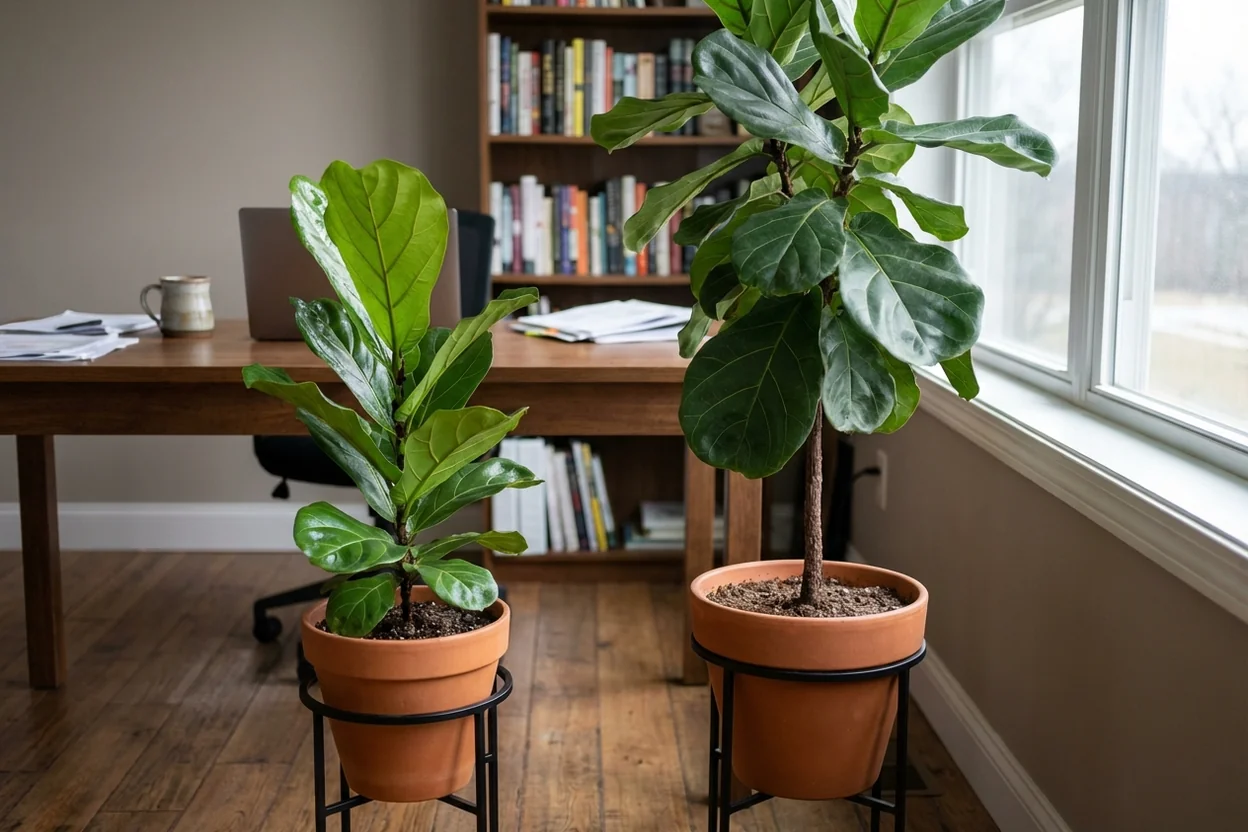
If you want to know how to shape and maintain your mature fiddle leaf fig, check the Fiddle Leaf Fig Care: The Complete Guide (2025)|complete care guide section on pruning and shaping.
Quick Diagnostic Checklist
Run through this checklist to identify your specific growth problem:
Light Assessment:
Is your plant within 2 feet of a window? (If no, insufficient light)
Does it get 6-8 hours of bright indirect light daily? (If no, insufficient light)
Can you comfortably read next to the plant during daytime without a lamp? (If no, insufficient light)
Nutrient Assessment:
Have you fertilized within the last 3 months during growing season? (If no, nutrient deficiency)
Are older lower leaves yellowing? (If yes, nitrogen deficiency)
Are new leaves smaller than older leaves? (If yes, nutrient deficiency)
Root-Bound Assessment:
Are roots visible through drainage holes? (If yes, root-bound)
Has it been 2+ years since repotting? (If yes, likely root-bound)
Does water run straight through pot without absorbing? (If yes, root-bound)
Watering Assessment:
Do you check soil moisture before watering? (If no, likely watering problem)
Does soil stay wet for more than 5-7 days after watering? (If yes, overwatering)
Do leaves droop or brown edges appear between waterings? (If yes, underwatering)
Timing Assessment:
Is it currently October through February? (If yes, natural dormancy)
Did you repot within the last 4-6 weeks? (If yes, transplant shock)
Environmental Assessment:
Is the plant near heating/AC vents or drafty windows? (If yes, temperature stress)
Is indoor temperature consistently 65-75°F? (If no, temperature stress)
Pest Assessment:
Do you see webbing, sticky residue, or small insects? (If yes, pest infestation)
Are there small bumps on stems or white cottony substance? (If yes, pest infestation)
This checklist identifies the most likely causes in order of frequency. Address light first since it's the #1 culprit, then move down the list.
How to Restart Growth
Once you've identified the problem, here's how to get your fiddle leaf fig growing again:
Immediate Actions: 1. Move to brightest available location (directly in front of window or under grow light) 2. Check if root-bound and repot if necessary 3. Establish consistent watering schedule using moisture meter 4. Verify temperature stays 65-75°F away from vents and drafts
Ongoing Maintenance (during growing season March-September): 1. Fertilize every 2 weeks at half-strength or monthly at full strength using 3:1:2 ratio formula 2. Rotate plant 1/4 turn weekly for even light exposure and growth 3. Water when top 2-3 inches of soil dry (typically every 7-10 days but varies) 4. Maintain humidity around 40-60% with humidifier if needed 5. Clean leaves monthly to remove dust and maximize photosynthesis
Timeline Expectations:
Light adjustment: New growth within 3-4 weeks if light was the issue
Fertilization: New leaves appear 2-3 weeks after starting proper feeding schedule
Repotting: Growth resumes 3-6 weeks after transplant shock passes
Pest treatment: Growth restarts 4-6 weeks after pest elimination
Winter dormancy: Growth resumes naturally in March-April, no intervention needed
Don't expect overnight results. Fiddle leaf figs are slow growers that produce 2-4 leaves every 4-6 weeks during active growing season. If you've corrected the underlying problem, be patient and maintain consistent optimal care. New growth will come.
For complete care protocols that support healthy growth, see the Fiddle Leaf Fig Care: The Complete Guide (2025).
Common Growth Questions
How long does it take for a fiddle leaf fig to grow a new leaf?
Under optimal conditions during the growing season (March-September), a healthy fiddle leaf fig produces a new leaf every 2-3 weeks on average. You'll typically see growth spurts of 2-4 leaves every 4-6 weeks. Each new leaf starts as a small reddish-brown tip at the growth point, then unfurls over 1-2 weeks to reach full size. Growth is much slower in fall-winter due to natural dormancy—expect minimal or no new leaves from October through February even with perfect care.
Can I force my fiddle leaf fig to grow faster?
You can optimize conditions to support maximum natural growth rate but cannot force growth beyond the plant's biological limits. Provide bright indirect light 8-10 hours daily (this is the #1 growth factor), fertilize consistently during growing season with 3:1:2 ratio formula, maintain temperature 65-75°F, water when top 2 inches dry, and keep humidity 40-60%. This creates ideal conditions where the plant grows at its fastest natural rate. Attempts to force faster growth with excessive fertilizer or water cause stress and damage rather than accelerated growth.
Why is my fiddle leaf fig growing but the leaves are small?
Small new leaves indicate insufficient light or nutrient deficiency. When light levels are marginal, the plant produces leaves but they don't reach full size because photosynthesis can't support large leaf development. Nutrient deficiency causes the same problem—the plant lacks raw materials to build full-sized leaves. Move to brighter location directly in front of window and fertilize with balanced formula during growing season. New leaves should gradually increase in size over subsequent growth cycles as conditions improve.
Should I prune my fiddle leaf fig to encourage growth?
Strategic pruning encourages bushier growth with multiple branches instead of single vertical stem. Notching—making a small wedge cut just above the node at each desired branching point—stimulates dormant buds to produce new shoots. The cut goes above the bud because it works by interrupting the auxin flowing down from the tip that keeps that bud dormant. Top pruning removes apical dominance and triggers side shoot development. However, pruning doesn't increase overall growth rate or leaf production; it just redirects where growth occurs. Only prune during growing season (March-August) and maintain optimal care conditions to support new branch development. See Fiddle Leaf Fig Care: The Complete Guide (2025) for pruning techniques.
Is it normal for lower leaves to fall off even when growing?
Yes, losing 1-2 lower leaves per year is normal as the plant focuses energy on new top growth. Mature older leaves at the bottom naturally decline and drop as part of the normal growth cycle. This is different from problematic leaf drop where multiple leaves yellow and fall rapidly due to overwatering, underwatering, or environmental stress. If your plant produces new top growth while gradually dropping 1-2 oldest bottom leaves annually, that's expected behavior not a problem requiring intervention.
Frequently Asked Questions
Reading about plants and recognising them are different skills. These three build the second.
- Daily PlantIdentify the day’s mystery plant from a close-up photograph.
- Keyed OutWork a dichotomous key, lead by lead, to name a hidden specimen.
- Name That PlantName a specimen from botanical clues dealt hardest first.
Free to play, no account needed
Tagged with
Sarah earned her doctorate in plant biology and spent time working in botanical garden education before transitioning to freelance writing and consulting. Now based in Portland, Oregon, she teaches plant identification workshops at local community centers and maintains a modest collection of over 60 houseplants in her small apartment. Sarah specializes in helping beginners understand plant science without the jargon—her approach focuses on practical observation over theory. She's killed her fair share of fiddle leaf figs and finally cracked the code on keeping them alive.