Plant Care

Best Humidifiers for Monstera and Tropical Plants (2025)
Last updated: October 30, 2025
Discover the top 5 humidifiers that keep monstera and tropical plants thriving indoors with proper humidity levels year-round.
AAisha Patel
October 30, 2025
Share:
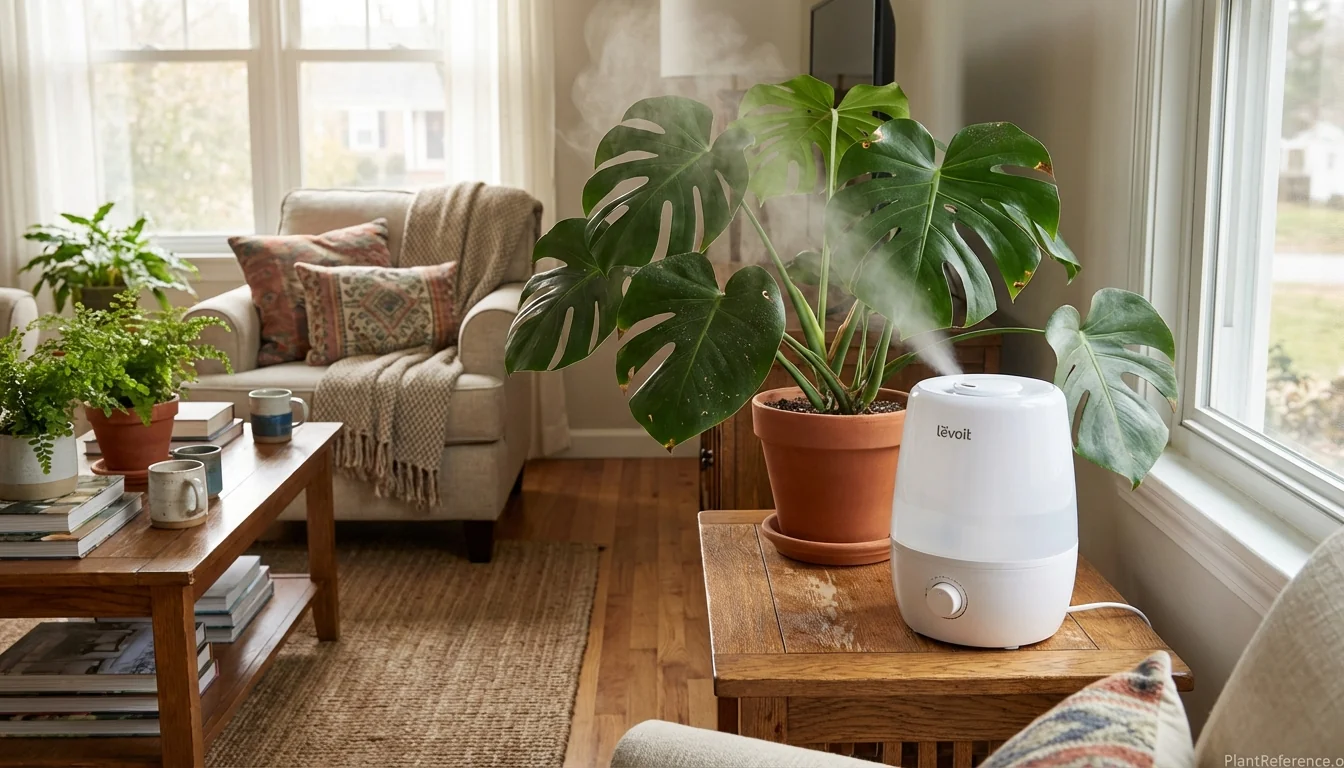
Best humidifier for monstera plants creating optimal humidity in modern living room

Image © PlantReference.org 2026
Quick Answer
LEVOIT Classic 300S ($50-70) is the best humidifier for plants with smart controls and 6-liter capacity. Cool mist ultrasonic models work best for tropical plants like monstera.
TL;DR
Tropical plants like monstera need 60-70% humidity to thrive indoors, but most homes average 30-40%. The LEVOIT Classic 300S offers the best combination of smart controls, large capacity, and quiet operation for plant parents. Cool mist humidifiers work better than warm mist for plant health, and ultrasonic models provide the quietest operation for living spaces.
Frequently Asked Questions

How much humidity do monstera plants need?

Monstera plants thrive in 60-70% humidity, similar to their native tropical rainforest environment. Most homes maintain 30-40% humidity, especially during winter heating season. This gap explains why monsteras develop brown leaf edges, curled leaves, and reduced growth. A quality humidifier can bridge this difference and dramatically improve plant health.

Should I use a cool mist or warm mist humidifier for plants?

Cool mist humidifiers are always better for tropical plants like monstera. Warm mist creates localized hot spots that can stress plants if positioned too close. Cool mist distributes more evenly throughout the room and uses less electricity. Ultrasonic cool mist models operate the quietest, making them ideal for living spaces with plants.

How far should a humidifier be from my monstera?

Position your humidifier 3-6 feet (1-2 meters) away from plants at table height. Too close causes water droplets to collect on leaves, potentially leading to fungal issues. Too far reduces effectiveness. The goal is for mist to disperse into fine humidity before reaching your plants, not direct mist contact.

Can I use tap water in my plant humidifier?

Distilled water works best for both plant health and humidifier longevity. Tap water contains minerals that create white dust on leaves and nearby surfaces, potentially blocking stomata and reducing photosynthesis. Minerals also clog ultrasonic mechanisms over time. Filtered water provides a middle-ground option if distilled water isn't readily available.

How often should I clean my humidifier for plants?

Clean your humidifier weekly with a 1:10 bleach solution to prevent mold and bacteria buildup. Empty the tank daily if not in continuous use. Replace filters monthly in evaporative models. Mineral deposits from tap water require more frequent cleaning—another reason to use distilled water for plant humidifiers.

Will a humidifier help with spider mites on monstera?

Yes, maintaining 60%+ humidity significantly reduces spider mite infestations. These pests thrive in dry conditions below 40% humidity. While a humidifier won't eliminate existing spider mites, it creates an environment where they struggle to reproduce and spread. Combine increased humidity with regular leaf cleaning for best prevention.

How many hours per day should I run my humidifier for plants?

Run your humidifier 8-10 hours daily during spring and summer growing seasons. Reduce to 6-8 hours in winter when heating systems create drier conditions but plants need less humidity during dormancy. Monitor with a digital hygrometer and adjust runtime to maintain 60-65% humidity consistently.
NEW PLANT DAILY

Think you know your plants?

Test your botanical knowledge with a new plant identification challenge every day. Build your streak, learn fascinating plant facts, and become a plant identification expert!

Build your streak
One chance per day
Learn as you play

Free account required • Takes less than 30 seconds

Written By
A

Aisha Patel

Aisha manages a small tropical nursery on the east side of Houston, specializing in plants that can handle the Gulf Coast's humidity, heat, and unpredictable flooding. She studied horticulture in college and worked at a wholesale grower before opening her own operation. Growing up, her parents kept a kitchen garden with okra, bitter gourd, and curry leaf plants—a tradition she's continued. Houston's subtropical climate lets her grow things most of the country can't, but it also means dealing with fungal issues, standing water, and summers where it's too hot for even tomatoes. Aisha writes about tropical and subtropical plant care, humidity management, and working with heavy clay soils.
Related Plants

Other Articles You May Enjoy