Monstera, Genus, siltepecana, Species,
- Genus & species
silver monstera
Mexico and Central America — from Chiapas south to Honduras
Overview
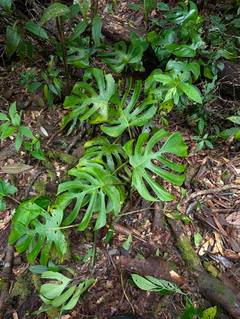
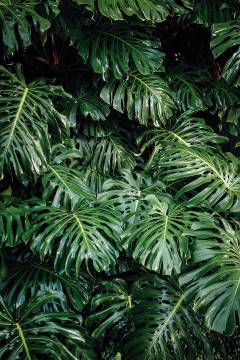
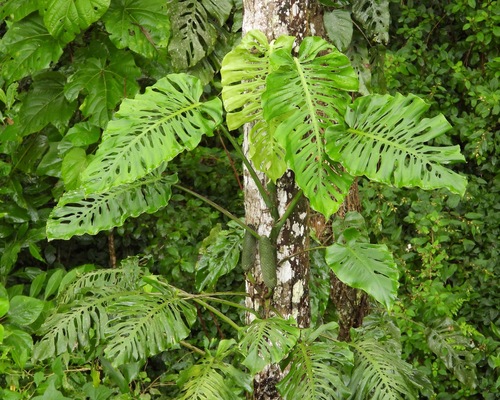
Monstera siltepecana is the silver Monstera, climbing or trailing 36–96 inches (90–240 cm). Juvenile (trailing) leaves are lance-shaped, 3–5 inches (7–13 cm) long, silvery-green with darker green veining — visually similar to Scindapsus pictus. Mature (climbing) leaves are larger, 6–10 inches (15–25 cm), greener, and develop fenestrations (holes) when the plant climbs a vertical support. This two-phase growth (silvery trailing juvenile vs. green fenestrated climbing adult) means the appearance changes substantially depending on whether the plant is trailing or climbing. The silver coloring is most pronounced in the trailing juvenile form. Named after the Sierra de Siltepec region in Chiapas, Mexico. Fast-growing vine. Propagates from single-node stem cuttings in water. Toxic to cats and dogs (calcium oxalate raphides). Native to Mexico and Central America, where it climbs tree trunks in tropical forest. Bright indirect light; direct sun washes out the silver coloring. Keep soil evenly moist. Humidity above 50% maintains leaf quality.
Native Range
Monstera siltepecana is native to Mexico and Central America — Chiapas south to Honduras.Suggested Uses
Grown as a trailing plant for silver foliage, or on a moss pole for the fenestrated mature phase, in containers of 1–3 gallons (4–12 liters). The choice of trailing vs. climbing determines the leaf appearance.How to Identify
Appearance
Size & Dimensions
Height3' - 8'
Width/Spread1' - 1'6"
Colors
Bloom Information
Rarely produced indoors. The foliage in either the silver trailing or green fenestrated climbing phase is the display.
Detailed Descriptions
Flower Description
White spadix (rare indoors)Foliage Description
Silvery-green with darker green along the veins — the juvenile form has the most silver; mature climbing leaves become larger, greener, and develop fenestrationsGrowing Conditions
Sun Requirements
Requires 4-6 hours of direct sunlight daily
• Full Sun: 6+ hours of direct sunlight
• Partial Shade: 3-6 hours of direct sunlight
• Full Shade: Less than 3 hours of direct sunlight
Care & Maintenance
Care Guide
Bright indirect light — direct sun fades the silver coloring. Keep soil evenly moist. Humidity above 50%. Trailing form maintains silver foliage; climbing form develops fenestrations and greener color. Toxic to cats and dogs (calcium oxalate).Pruning
Prune to control vine length. Stem cuttings with a node propagate in water or moist sphagnum.Container Growing
Suitable for container growing
Minimum container size: 3 gallons