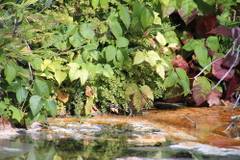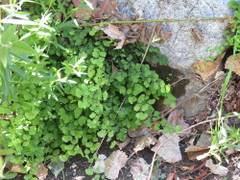
Adiantum, Genus,
- Genus
maidenhair fern
Eastern North America, the Pacific Northwest, the Himalayas, and tropical regions worldwide; the genus contains approximately 250 species
Overview
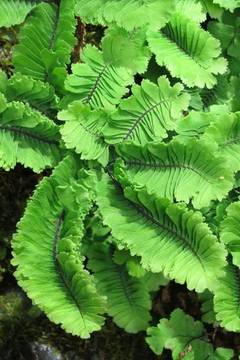
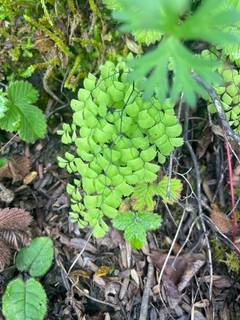
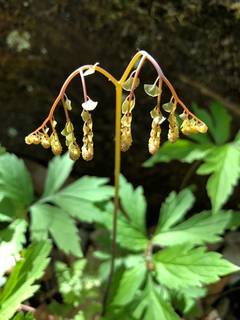
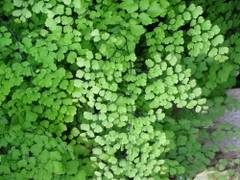
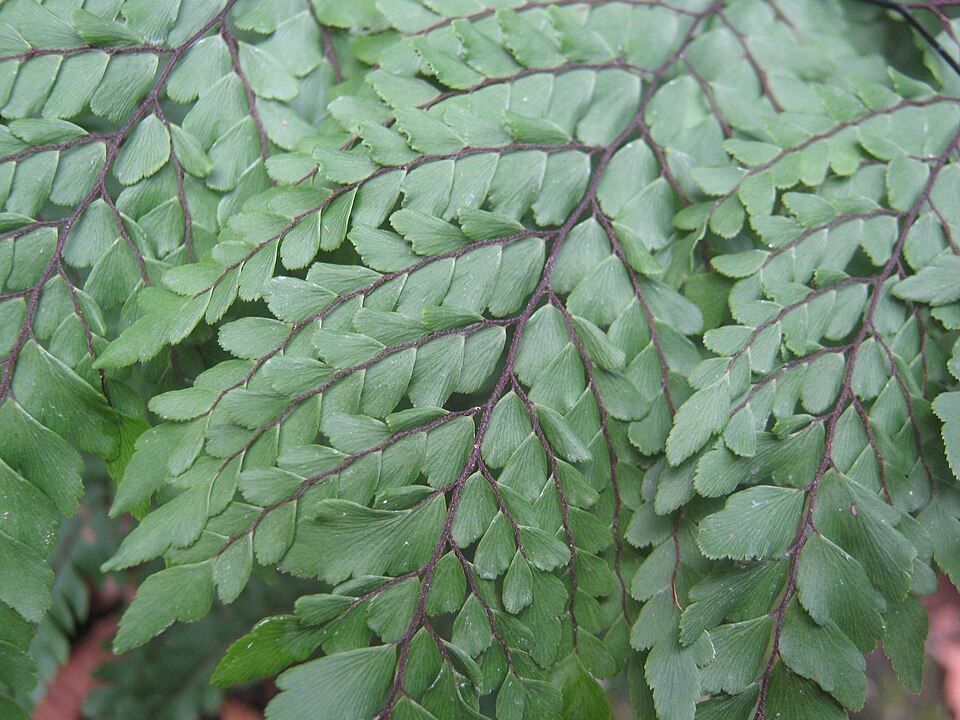
Adiantum is the maidenhair fern genus, a mounding deciduous fern (semi-evergreen in some species) growing 12-24 inches (30-60 cm) tall and 12-24 inches (30-60 cm) wide. Foliage consists of bright to mid-green fan-shaped or wedge-shaped pinnules borne on wiry black to dark purple-brown stipes. The wiry black stipes give the genus its common name. Family Pteridaceae; the genus contains approximately 250 species worldwide with the greatest diversity in the tropics. The two cold-hardy species commonly grown in temperate gardens are A. pedatum (northern maidenhair, eastern North America and the Pacific Northwest, hardy to zone 3) and A. venustum (Himalayan maidenhair, semi-evergreen, hardy to zone 5). Both are deer-resistant and non-toxic to pets and humans. Drought stress causes the wiry stipes to dry and the fronds to crumble, and damaged stipes do not regenerate. Plants are also susceptible to crown rot in waterlogged soil and to slug damage. Growth rate is slow to moderate; established clumps reach mature size in 2-3 years. Hardy in zones 3-8 (A. pedatum) and 5-8 (A. venustum). Grown in full to partial shade in moist, humus-rich, slightly acidic to neutral soil.
Native Range
Adiantum pedatum (northern maidenhair) is native to eastern North America and the Pacific Northwest, found on moist woodland slopes and at the edges of streams. A. venustum (Himalayan maidenhair) is native to the Himalayas of Pakistan, India, Nepal, and Bhutan. The genus contains approximately 250 species worldwide, with the greatest concentration in tropical America.Suggested Uses
Adiantum is grown in shaded woodland gardens, near water features, in fern collections, and in containers of at least 2 gallons (7.5 L), spaced 12-24 inches (30-60 cm) apart. Foliage crumbles in dry or windy locations; sheltered sites with consistent moisture are required. Plants are deer-resistant and non-toxic. Hardy in zones 3-8.How to Identify
Appearance
Size & Dimensions
Height1' - 2'
Width/Spread1' - 2'
Bloom Information
Ferns reproduce by spores, not flowers. Spores form in marginal sori on the undersides of the pinnules from June through August in temperate climates.
Detailed Descriptions
Foliage Description
Bright to mid-green fan-shaped or wedge-shaped pinnules carried on wiry black to dark purple-brown stipes. The wiry black stipes are the source of the common name.Growing Conditions
Sun Requirements
Tolerates up to 4 hours of direct sunlight daily
• Full Sun: 6+ hours of direct sunlight
• Partial Shade: 3-6 hours of direct sunlight
• Full Shade: Less than 3 hours of direct sunlight
Care & Maintenance
Care Guide
Grown in full to partial shade with 0-4 hours of direct sun. Soil is moist, humus-rich loam or peat with a pH of 5.5-7.0; consistent moisture and high humidity are required. Drought causes the wiry stipes to dry and the fronds to crumble, and waterlogged soil leads to crown rot. Winter-damaged fronds are cut back in February-March before new fiddleheads emerge. Plants are deer-resistant and non-toxic to pets and humans. Hardy in zones 3-8 (A. pedatum) and 5-8 (A. venustum).Pruning
Winter-damaged or dead fronds are cut back in early spring (February-March) before new fiddleheads emerge. No other pruning is required. The wiry stipes do not regenerate once damaged.Pruning Schedule
Prune: February–March
early spring
Container Growing
Suitable for container growing
Minimum container size: 2 gallons