Adiantum, Genus, capillus-veneris, Species,
- Genus & species
black maidenhair fern
Cosmopolitan, warm temperate and subtropical
Overview
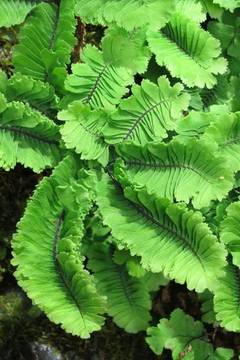
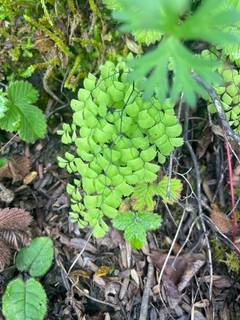
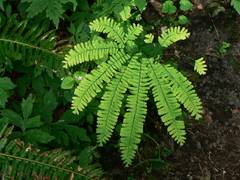
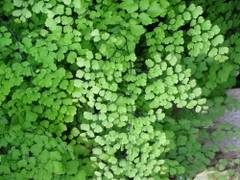
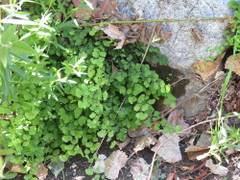
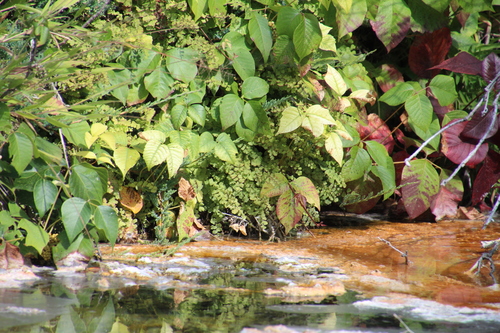
Adiantum capillus-veneris is a slender, clump-forming fern with a near-worldwide distribution in warm temperate and subtropical regions. The fronds rise 6-18 inches (15-45 cm) tall from short creeping rhizomes, arching outward on thin, glossy black stalks. Each frond is two to three times divided into small, fan-shaped segments 0.4-0.8 inch (1-2 cm) wide, bright green and membranous, with the wedge-shaped pinnules notched along their outer edges. Spore-bearing structures form as narrow flaps folded under the segment margins, releasing spores in summer and autumn. The rhizomes spread slowly into open colonies on moist, shaded surfaces. In nature it grows on dripping limestone cliffs, spring-fed seeps, and the walls of wells and grottoes, favoring constant humidity and calcareous moisture. The thin fronds wilt quickly when air or soil dries, and foliage is shed in cold spells, regrowing from the rhizome when warmth returns. It stays evergreen in frost-free climates and behaves as a die-back perennial at the cold edge of its range. The black stalks lie behind its long history in folk preparations and the common name Venus-hair fern.
Native Range
Cosmopolitan in distribution, found on every continent except Antarctica. In North America it occurs from the southern United States into Mexico, and it is widespread across southern Europe, Africa, Asia, and Australia in limestone country with reliable moisture.Suggested Uses
Grown as a houseplant, terrarium and bottle-garden fern, and in shaded rock gardens, grotto walls, and the margins of water features in mild climates. It suits damp limestone crevices and shaded courtyard plantings where humidity stays high.How to Identify
Appearance
Size & Dimensions
Height6" - 1'6"
Width/Spread6" - 1'6"
Bloom Information
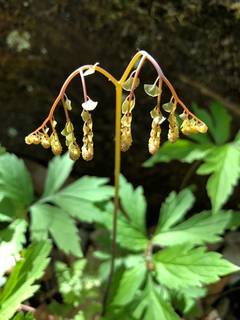
As a fern, this species reproduces by spores rather than flowers. Spores ripen in summer and autumn within marginal flaps on the frond undersides. Wind and water carry them to damp, shaded surfaces where they germinate.
Detailed Descriptions
Foliage Description
Bright greenGrowing Conditions
Sun Requirements
Requires 1-4 hours of direct sunlight daily
• Full Sun: 6+ hours of direct sunlight
• Partial Shade: 3-6 hours of direct sunlight
• Full Shade: Less than 3 hours of direct sunlight
Care & Maintenance
Care Guide
Grows in part to full shade with constant humidity and evenly moist, free-draining soil enriched with limestone chippings or crushed shell. It performs as a houseplant or terrarium fern where dry indoor air is buffered by misting or a humid microclimate. Cold-sensitive in the ground, it is reliably hardy outdoors only in USDA zones 8-11, dying back in brief frosts and resprouting from the rhizome. Watering keeps the soil damp but never waterlogged, since stagnant moisture rots the shallow roots. Hard or limy water suits it better than soft, acidic water. Tired or browned fronds can be cut to the base to make room for fresh growth.Pruning
No formal pruning is needed. Discolored, dried, or winter-damaged fronds can be sheared back to the rhizome in late winter, which prompts a flush of new fronds. Routine removal of spent fronds keeps colonies open.Container Growing
Suitable for container growing
Minimum container size: 1 gallons