Image 1 of 10
Plant Reference
1 / 10
Spathiphyllum, Genus, wallisii, Species,
- Genus & species
peace lily
Native to Colombia and Venezuela growing in tropical rainforest understory and along rainforest streambanks at low to moderate elevations
Overview
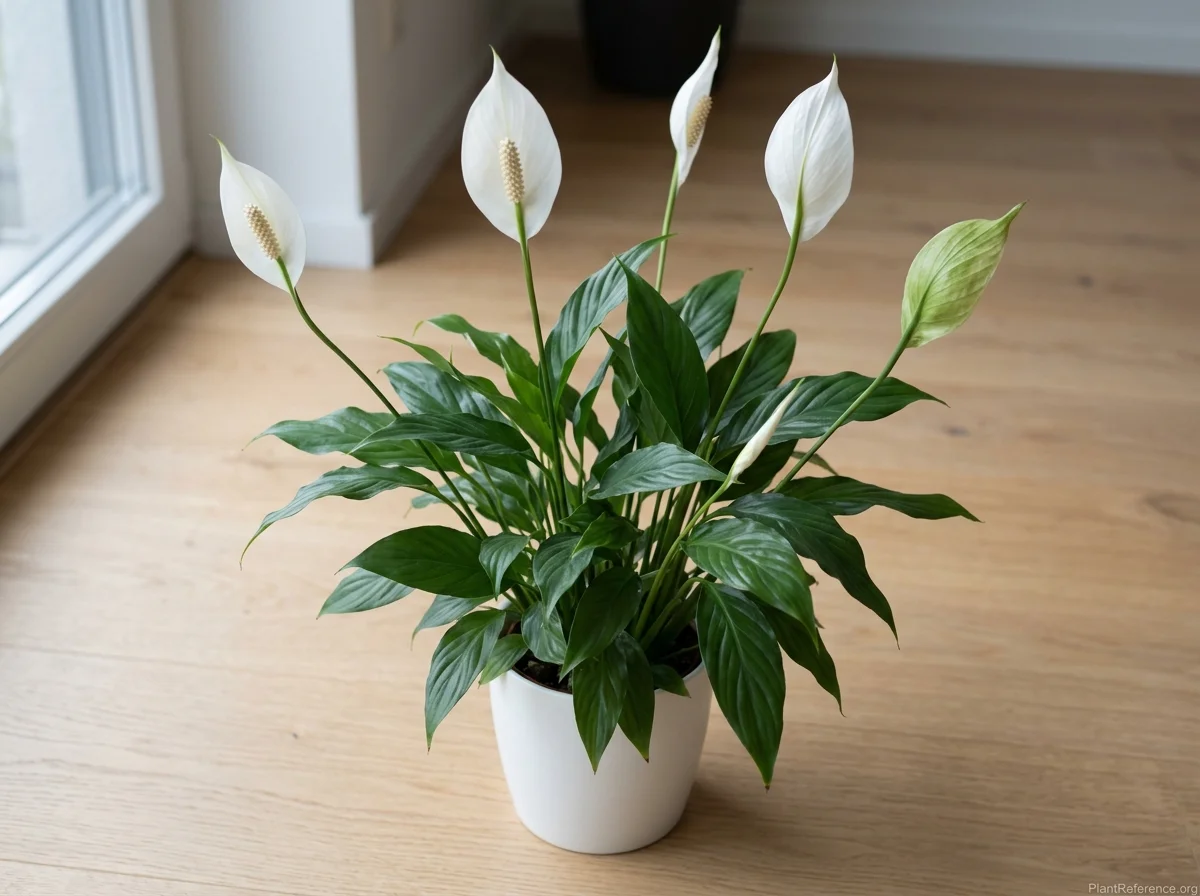
Spathiphyllum wallisii is the peace lily — a Colombian-and-Venezuelan native tropical perennial in the arum family (Araceae) carrying white spathe-and-spadix inflorescences across an unusually wide indoor light range, growing 18–36 inches (45–90 cm) tall and wide on dark green glossy lance-shaped foliage. White 'sail' spathes with a cream spadix appear in spring through summer and reflower sporadically year-round under consistent conditions; the species runs as among the few houseplants that flowers reliably in low-light indoor positions (75–200 foot-candles), separating the species from typical flowering houseplants that require bright direct or bright indirect light to bloom. Each spathe lasts 4–6 weeks and gradually transitions in color from pure white through pale green and finally to brown as the inflorescence ages. The species was named in honor of Gustav Wallis, the 19th-century German plant collector who collected the type specimen in Colombia. The species's principal cultural feature runs as a conspicuous wilt response: when the potting mix dries beyond the species's tolerance, the entire plant collapses dramatically — leaves and petioles droop downward in a visible wilting display that runs as a built-in watering indicator. Rewatering restores turgor within hours, and the wilt-recovery cycle does not damage the plant. The species was tested in the NASA Clean Air Study and identified as a plant that removes formaldehyde, benzene, and trichloroethylene from indoor air. Lightly fragrant flowers. Commercial nursery production induces flowering with gibberellic acid hormone application, which produces the heavy bloom seen on retail plants — home conditions typically reflower less reliably than retail production, and gardeners may see reduced flowering after bringing a heavily-blooming plant home. Brown leaf tips indicate fluoride sensitivity in the species — filtered or distilled water prevents the issue. The species runs toxic to cats and dogs through calcium oxalate raphides that cause oral irritation, drooling, and difficulty swallowing on ingestion.
Native Range
Spathiphyllum wallisii is native to Colombia and Venezuela, growing in tropical rainforest understory and along rainforest streambanks at low to moderate elevations.Suggested Uses
Used in low-light indoor positions such as offices, bedrooms, bathrooms, and north-facing rooms where most flowering houseplants would produce only foliage growth without bloom. Containers of 1–3 gallons (4–12 liters) suit the species's typical mature size. The species runs as a distinct selection among the few flowering plants that bloom reliably in dim indoor conditions, giving the plant a market position separate from foliage-only low-light houseplants (Sansevieria, ZZ plant, Pothos). The NASA Clean Air Study designation gives the species a wellness-oriented marketing dimension beyond purely ornamental value. The species runs toxic to cats and dogs — keep planting positions inaccessible to pets that may chew the foliage.How to Identify
Appearance
Size & Dimensions
Height1'6" - 3'
Width/Spread1'6" - 3'
Bloom Information
Flowering primarily in spring to summer with sporadic reblooming year-round under consistent conditions; each spathe lasts 4–6 weeks and gradually transitions from pure white through pale green to brown across the lifespan of the inflorescence. The low-light flowering capability runs uncommon among houseplants — most indoor flowering plants require bright direct or bright indirect light to bloom, and S. wallisii reflowers in indoor positions where most flowering houseplants would produce only foliage growth. Lightly fragrant flowers attract minor indoor pollinator interest from any small flying insects present.
Detailed Descriptions
Flower Description
White spathe (sail-shaped bract) with cream-to-white spadix; transitions white through pale green to brown as the inflorescence agesFoliage Description
Dark green; glossy lance-shaped arching leaves on long petiolesGrowing Conditions
Sun Requirements
Requires 1-6 hours of direct sunlight daily
• Full Sun: 6+ hours of direct sunlight
• Partial Shade: 3-6 hours of direct sunlight
• Full Shade: Less than 3 hours of direct sunlight
Care & Maintenance
Care Guide
Place in low to moderate indirect light — the species runs adapted to deep tropical rainforest understory and tolerates indoor light levels far below what most flowering houseplants require. Avoid direct sun, which scorches the foliage and turns the dark green to yellow-tan. Keep the potting mix evenly moist; the species shows a conspicuous wilt response when the mix dries past the species's tolerance, with leaves and petioles drooping downward visibly — rewatering restores turgor within hours. Use filtered or distilled water to prevent fluoride-related brown leaf tips that develop with municipal tap-water cultivation over time. Maintain humidity above 40 percent for optimal foliage and flowering. Standard houseplant potting mix at pH 5.5–6.5 suits the species. Lightly fragrant flowers run as a secondary feature beyond the primary ornamental display. The species runs toxic to cats and dogs through calcium oxalate raphides; ingestion causes oral irritation, drooling, and difficulty swallowing.Pruning
Remove spent flower stalks at the base by cutting the stem flush with the rhizome at soil level after the spathe browns completely. Remove yellowing or damaged leaves at the base. Divide overcrowded clumps in spring by separating the root mass into sections, each carrying at least 2–3 leaves and a portion of the rhizome.Container Growing
Suitable for container growing
Minimum container size: 1 gallons