Image 1 of 10
Plant Reference
1 / 10
Echeveria, Genus, elegans, Species,
- Genus & species
Mexican gem
Mexico — specifically the state of Hidalgo; semi-arid rocky hillsides
Overview
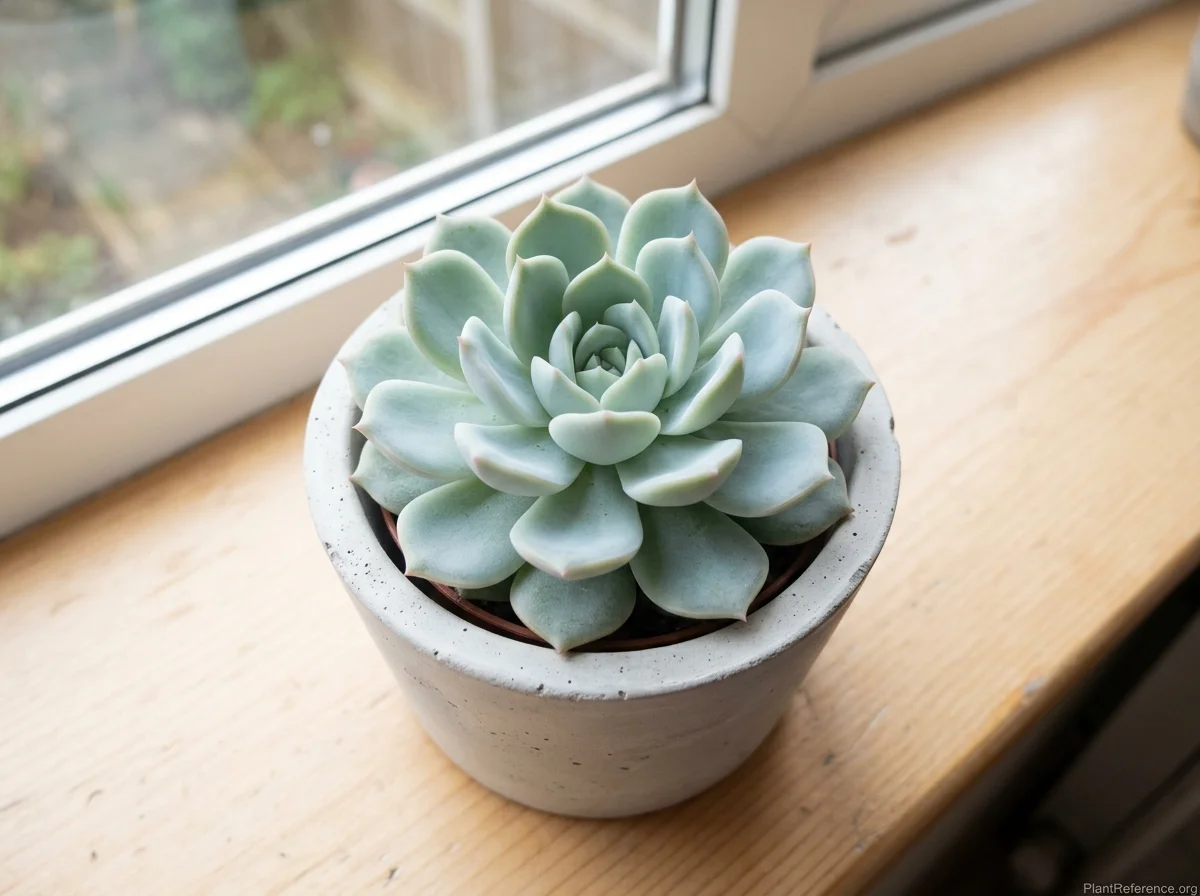
Echeveria elegans is a rosette-forming succulent, growing 4–6 inches (10–15 cm) tall and 4–8 inches (10–20 cm) wide. Pale blue-gray to silvery-white fleshy leaves form a tight, symmetrical rosette covered in farina — a powdery epicuticular wax coating that protects against UV radiation and reduces water loss. The species name 'elegans' means 'refined.' Handling the leaves with bare fingers permanently removes the farina in fingerprint patterns; handle by the base or pot. Offsets (pups) form around the mother rosette over time, creating clusters. Pink flowers with yellow tips appear on arching 12-inch (30 cm) stalks in late winter to spring. Requires full direct sun: insufficient light causes etiolation — the rosette stretches upward and loses its compact form, a process that is irreversible on existing growth. Well-draining cactus/succulent soil and infrequent watering (allow soil to dry completely between waterings). The rosette shape channels rainwater toward the root zone. Non-toxic to cats and dogs. Native to semi-arid rocky hillsides of Hidalgo, Mexico. Susceptible to mealybugs in the tight rosette center and to rot if water sits in the rosette.
Native Range
Echeveria elegans is native to Mexico — the state of Hidalgo, semi-arid rocky hillsides.Suggested Uses
Grown in shallow containers or succulent arrangements in full direct sun. Suited to south-facing windowsills receiving 5+ hours of direct light. Outdoors in zones 9–11 in rock gardens and succulent beds with well-draining mineral soil.How to Identify
Appearance
Size & Dimensions
Height4" - 6"
Width/Spread4" - 8"
Colors
Bloom Information
Detailed Descriptions
Flower Description
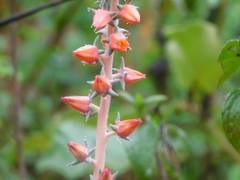
Pink with yellow tips, on an arching stalk (lantern-shaped flowers)Foliage Description
Pale blue-gray to silvery-white with a powdery FARINA (waxy coating), in a tight symmetrical rosette — the classic Echeveria formGrowing Conditions
Sun Requirements
Requires 6-12 hours of direct sunlight daily
• Full Sun: 6+ hours of direct sunlight
• Partial Shade: 3-6 hours of direct sunlight
• Full Shade: Less than 3 hours of direct sunlight
Care & Maintenance
Care Guide
Full direct sun essential (etiolation in shade). Cactus soil. Water very sparingly. Do NOT touch leaves (farina damage). NON-TOXIC. Offsets form hen-and-chicks clusters.Pruning
Remove spent flower stalks. Separate offsets if desired. Handle only by base — never touch farina-coated leaves.Container Growing
Suitable for container growing
Minimum container size: 1 gallons