Image 1 of 11
Plant Reference
1 / 11
Chlorophytum, Genus, comosum, Species,
- Genus & species
spider plant
Overview
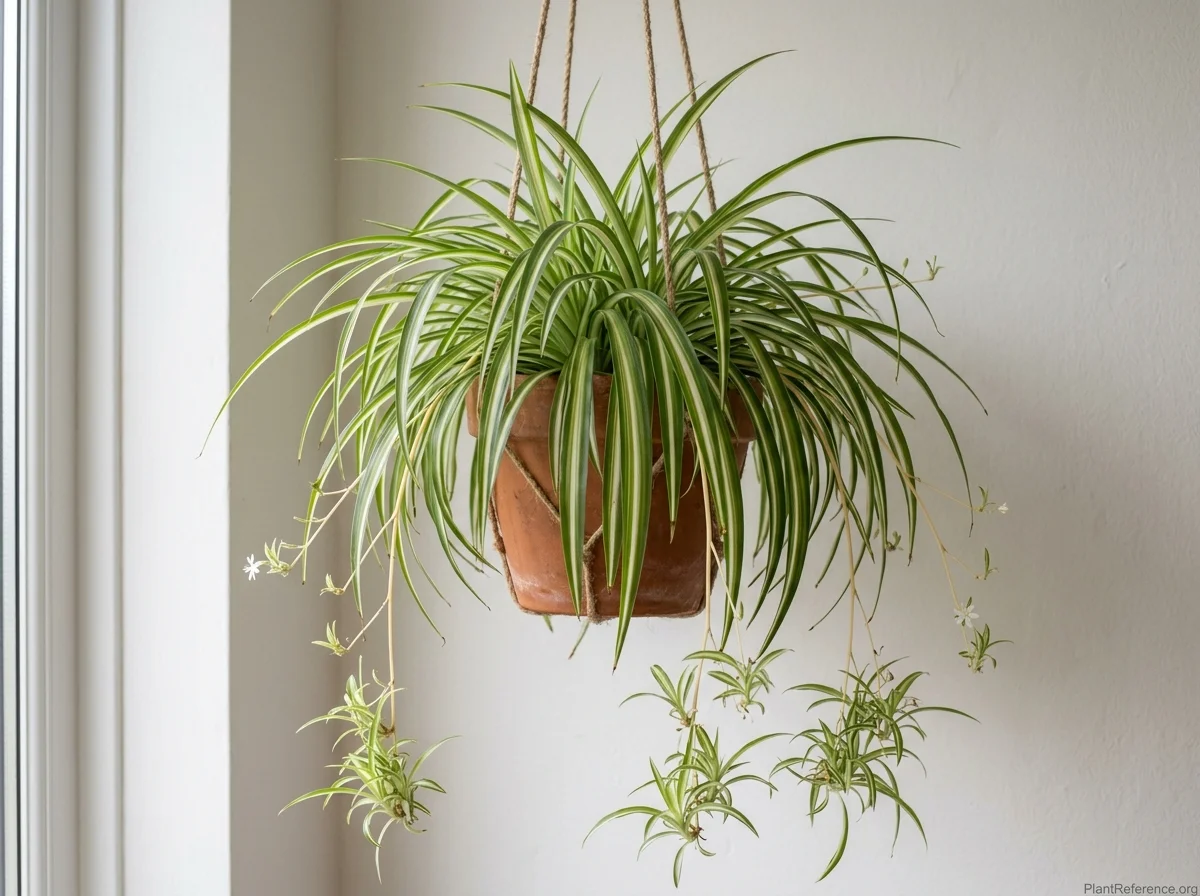
Chlorophytum comosum is the spider plant, growing 12-18 inches (30-45 cm) tall with cascading stolons extending 24+ inches (60+ cm). Long arching grass-like leaves 8-16 inches (20-40 cm) long — the cultivar 'Vittatum' has a white center stripe on green; 'Variegatum' has white margins. Mature plants produce long arching stolons (runners) with plantlets at the tips that can be snipped and rooted in water or soil. The species name 'comosum' means 'tufted'. Thick tuberous roots store water, making the plant drought-tolerant. Non-toxic to cats and dogs, though cats are attracted to the grass-like leaves and may chew them. Listed in the NASA Clean Air Study for removing formaldehyde from indoor air. Brown leaf tips — the primary maintenance issue — are caused by fluoride and chlorine in tap water; filtered or distilled water reduces tip browning. Tolerates a wide range of light from low (50 foot-candles) to bright indirect. Native to tropical and southern Africa. Overwatering with tuberous roots submerged causes root rot. Growth rate is fast; stolons appear on plants that are slightly rootbound.
Native Range
Chlorophytum comosum is native to South Africa and tropical Africa.Suggested Uses
Grown in hanging baskets or on high shelves where stolons and plantlets cascade, in containers of 1-3 gallons (4-12 liters). Suited to offices, bedrooms, and living rooms in low to bright indirect light. Non-toxic — safe for households with pets.How to Identify
Appearance
Size & Dimensions
Height1' - 1'6"
Width/Spread1' - 2'
Bloom Information
Detailed Descriptions
Flower Description
White small star-shaped, on long arching stolons (runners) that produce baby plantlets at the tipsFoliage Description
Green with white to cream center stripe (most common form 'Vittatum'), or reversed with white margins ('Variegatum'); long arching grass-likeGrowing Conditions
Sun Requirements
Requires 2-6 hours of direct sunlight daily
• Full Sun: 6+ hours of direct sunlight
• Partial Shade: 3-6 hours of direct sunlight
• Full Shade: Less than 3 hours of direct sunlight
Care & Maintenance
Care Guide
Low to bright indirect light. Allow the top inch (2.5 cm) to dry between waterings — tuberous roots store water. Use filtered water to reduce brown leaf tips (fluoride/chlorine sensitivity). Stolons with plantlets appear on mature, slightly rootbound plants. Non-toxic to pets. NASA-tested air purifier.Pruning
Remove yellowed leaves at the base. Stolons can be cut and plantlets rooted in water or soil. Trim brown leaf tips at an angle with clean scissors.Container Growing
Suitable for container growing
Minimum container size: 3 gallons