Image 1 of 22
1 / 22
Plant Reference
Cirsium, Genus, arvense, Species,
- Genus & species
canada thistle
Europe, western Asia, northern Africa
Overview
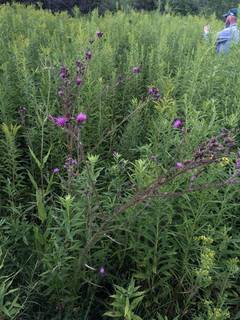
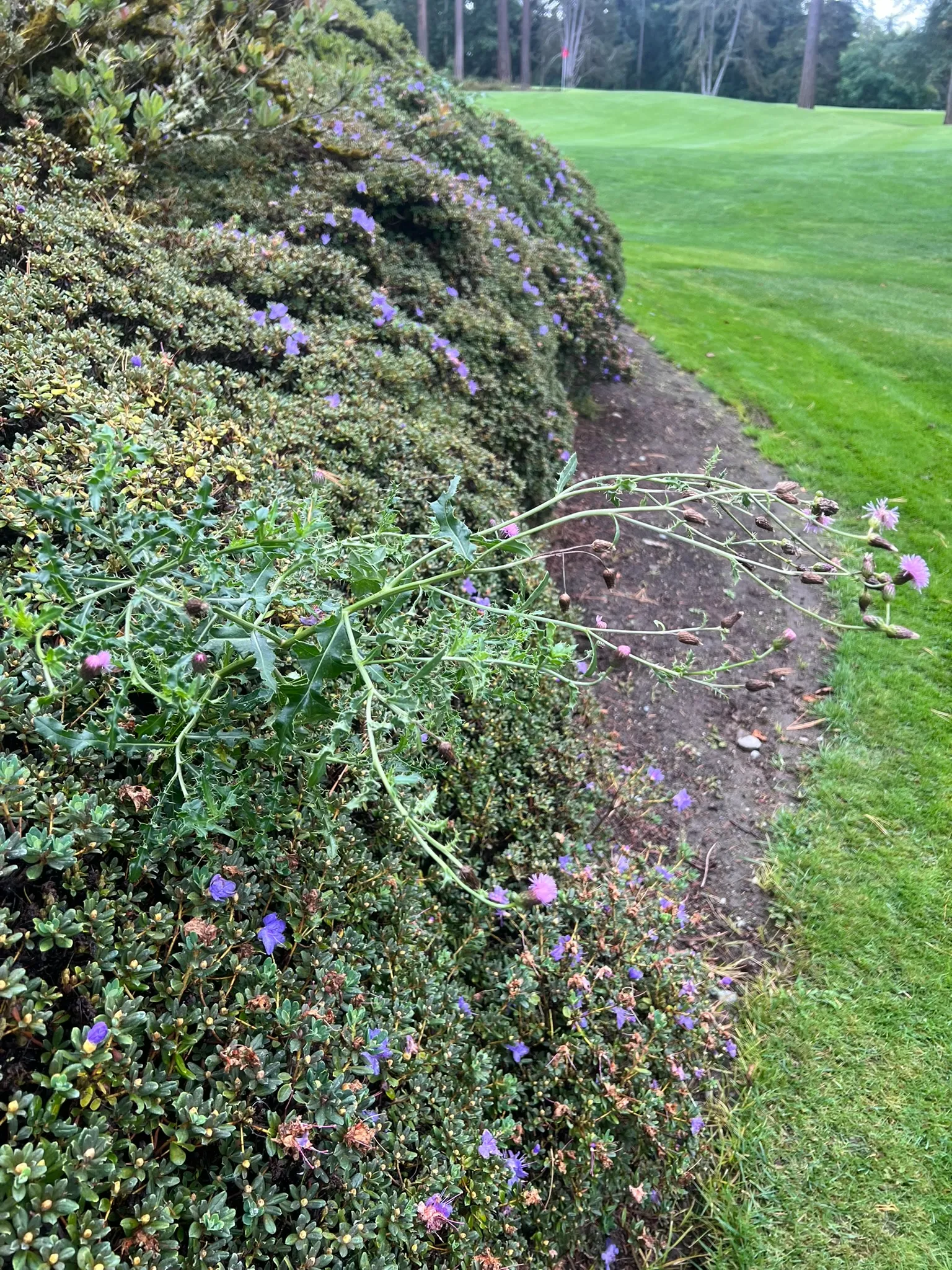
Cirsium arvense is a deep-rooted, colony-forming herbaceous perennial in the daisy family (Asteraceae) reaching 24-60 inches (60-150 cm) tall with a 24-48 inch (60-120 cm) spread per individual stem cluster, expanding indefinitely via lateral roots. Stems are erect, branching in the upper half, smooth to slightly hairy, and lack the spiny wings found on Carduus and some other thistle genera. Leaves are oblong to lance-shaped, 3-8 inches (8-20 cm) long, with irregularly lobed and spiny-toothed margins, dark green above, lighter and sometimes slightly hairy beneath. The species is dioecious — male and female flowers are borne on separate plants, a trait rare within the thistle tribe. Flower heads are small, 0.5-0.75 inch (12-18 mm) in diameter, numerous, borne in loose terminal clusters. Florets are pink to lavender with a light vanilla-like fragrance. Female heads produce seeds with a feathery (plumose) pappus for wind dispersal. A single female plant produces 1,000-5,000 seeds annually. The extensive lateral root system spreads 10-20 feet (3-6 m) per year at depths of 6-36 inches (15-90 cm), with adventitious shoots emerging every 4-12 inches (10-30 cm) along the roots. Root fragments as small as 0.25 inch (6 mm) regenerate. C. arvense is classified as a federal noxious weed in the United States, listed in 43 states, and regulated in all Canadian provinces.
Native Range
Cirsium arvense is native to Europe, western Asia, and northern Africa, occurring in agricultural fields, pastures, meadows, roadsides, and riparian areas from sea level to approximately 8,000 feet (2,400 m). Despite the common name, the species is not native to Canada; it was introduced to North America in the 1600s and is now established across all 50 U.S. states and all Canadian provinces.Suggested Uses
Used extensively in noxious weed management training and integrated weed management curricula at county, state, and federal levels. Studied in invasion biology, root physiology, and biological control research. Flowers are visited by honeybees and native bees, and some beekeepers utilize thistle bloom as a nectar source. Seeds are consumed by goldfinches and pintail ducks. C. arvense is a regulated federal noxious weed in the United States and is not planted horticulturally.How to Identify
Appearance
Size & Dimensions
Height2' - 5'
Width/Spread2' - 4'
Bloom Information
Flowers appear June through September. Individual flower heads bloom for 5-7 days. Flowering progresses from the terminal clusters downward over 4-6 weeks. In the Pacific Northwest, peak flowering occurs in July. Female plants produce pappus-bearing seeds that disperse by wind over distances of 0.5 mile (800 m) or more. Seeds mature 10-14 days after pollination. The species is pollinated by bees and butterflies.
Detailed Descriptions
Flower Description
Pink to lavender heads 0.5-0.75 inch (12-18 mm) in loose terminal clusters; light vanilla-like fragranceFoliage Description
Dark green above, lighter beneath; oblong to lance-shaped with irregularly lobed, spiny-toothed margins; smooth to slightly hairyGrowing Conditions
Sun Requirements
Requires 6-12 hours of direct sunlight daily
• Full Sun: 6+ hours of direct sunlight
• Partial Shade: 3-6 hours of direct sunlight
• Full Shade: Less than 3 hours of direct sunlight