Cirsium, Genus, occidentale, Species,
- Genus & species
cobwebby thistle
California Floristic Province, western North America
Overview
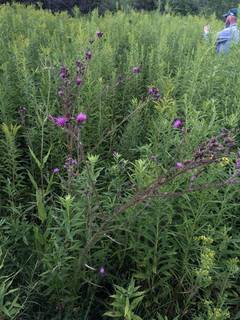
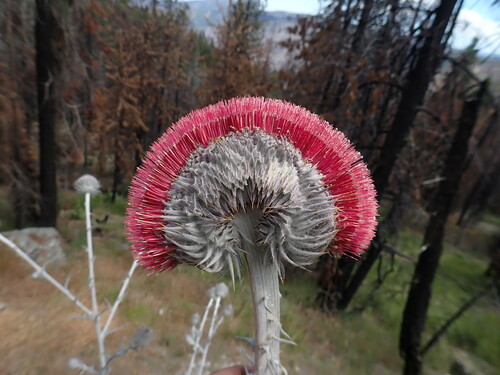
Cirsium occidentale is a biennial to short-lived monocarpic perennial thistle 1-6 feet (0.3-1.8 m) tall, covered through stem and leaf in dense white woolly hairs that give the plant a gray cobwebby look. In the first year it forms a flat rosette of deeply lobed, spine-tipped leaves; in the second it sends up a branched flowering stem. The leaves are 4-12 inches (10-30 cm) long, gray-green above and white-felted beneath, with spiny margins. Flower heads are 1.5-2.5 inches (4-6 cm) across, wrapped in spine-tipped bracts laced with cobwebby fibers, and open from red-purple through pink to white depending on the population. Bloom comes in late spring and summer, after which the plant sets seed tipped with feathery bristles and then dies. It grows on coastal bluffs, dunes, chaparral, and dry slopes, mostly in California and adjacent states. Native bees and butterflies work the heads heavily for nectar. One trade-off is its monocarpic life cycle, since each plant flowers once and dies, so stands persist only by reseeding.
Native Range
Native to California and adjacent parts of Oregon, Nevada, and Baja California, Mexico. It grows on coastal bluffs and dunes, in chaparral, and on dry open slopes from sea level into the foothills.Suggested Uses
Used in native and pollinator gardens, coastal and dune plantings, and habitat restoration on dry sites. It is grown as a nectar source for bees and butterflies and as seed for finches.How to Identify
Appearance
Size & Dimensions
Height1' - 6'
Width/Spread1' - 3'
Bloom Information
Flower heads open from April to July, varying with elevation and the coast-to-inland gradient. Each plant blooms once in its final year over several weeks, then sets feathery seed. Color ranges from deep red-purple to pink and white across different populations.
Detailed Descriptions
Flower Description
Red-purple, pink, or whiteFoliage Description
Gray-green above, white-felted beneathGrowing Conditions
Sun Requirements
Requires 6-12 hours of direct sunlight daily
• Full Sun: 6+ hours of direct sunlight
• Partial Shade: 3-6 hours of direct sunlight
• Full Shade: Less than 3 hours of direct sunlight
Care & Maintenance
Care Guide
Grows in full sun on lean, sharp-draining sandy or rocky soils at pH 6.0-8.0, and tolerates salt spray on coastal sites. It needs little water once rooted and rots in rich, wet, or poorly drained ground. As a monocarpic plant it grows a rosette for one or more years, flowers once, and dies, so it is raised from seed sown in fall or spring. Seedlings transplant poorly because of the deep taproot. Self-sown seedlings keep a planting going from year to year.Pruning
Pruning is minimal. Spent flowering stems can be cut after seed drops or left standing to reseed and to feed seed-eating birds. The whole plant dies after flowering and is removed at the base.Toxicity
Non-toxicPlanting Guide
Planting Methods & Timing
Planting Method
direct sow
Direct Sow Timing
Fall or early spring
Plant Spacing
18 inches