Cirsium, Genus, horridulum, Species,
- Genus & species
bristle thistle
Overview
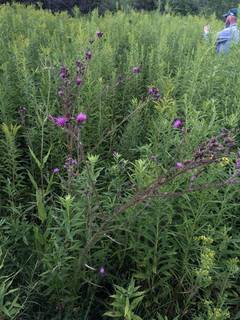
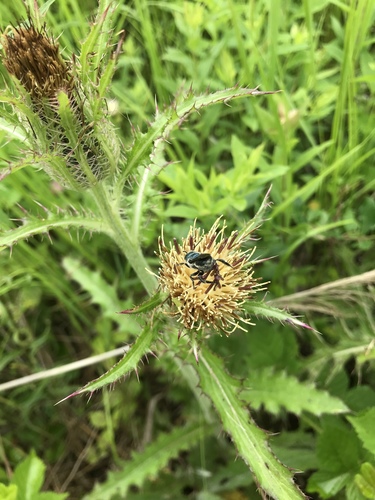
Cirsium horridulum is a biennial or short-lived perennial thistle forming a basal rosette in its first year and a flowering stem 1-5 feet (30-150 cm) tall in the second. Stems are stout and grooved, often woolly. Leaves are deeply lobed, 4-16 inches (10-40 cm) long, edged with stiff yellow spines, and the uppermost leaves form a spiny collar of narrow bracts beneath each flower head. Flower heads are large, 1.5-3 inches (4-8 cm) across, with dense disk florets that may be yellow, cream, pink, purple, or red, ringed by a ruff of spine-tipped bracts. Flowering occurs from spring into summer. The heads mature into fluffy seedheads carried on the wind by tan pappus bristles. Plants die after setting seed. The dense spines along the leaves and stem make the whole plant sharp to the touch.
Native Range
Native to eastern and southern North America, from Maine south to Florida and west along the Gulf Coast to Texas, with related forms in the Caribbean. It grows in sandy soils of coastal dunes, pine flatwoods, fields, and roadsides.Suggested Uses
Grown in coastal and native plant gardens, meadows, and pollinator plantings, spaced 18-24 inches (45-60 cm) apart. The stiff spines limit placement near paths and seating. It supports native bees, butterflies, and seed-eating birds.How to Identify
Appearance
Size & Dimensions
Height1' - 5'
Width/Spread1' - 2'
Bloom Information
Detailed Descriptions
Flower Description
yellow to purpleFoliage Description
greenGrowing Conditions
Sun Requirements
Requires 6-12 hours of direct sunlight daily
• Full Sun: 6+ hours of direct sunlight
• Partial Shade: 3-6 hours of direct sunlight
• Full Shade: Less than 3 hours of direct sunlight