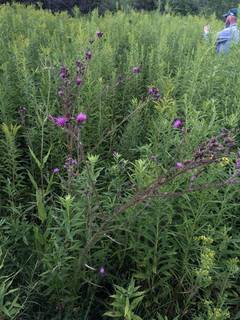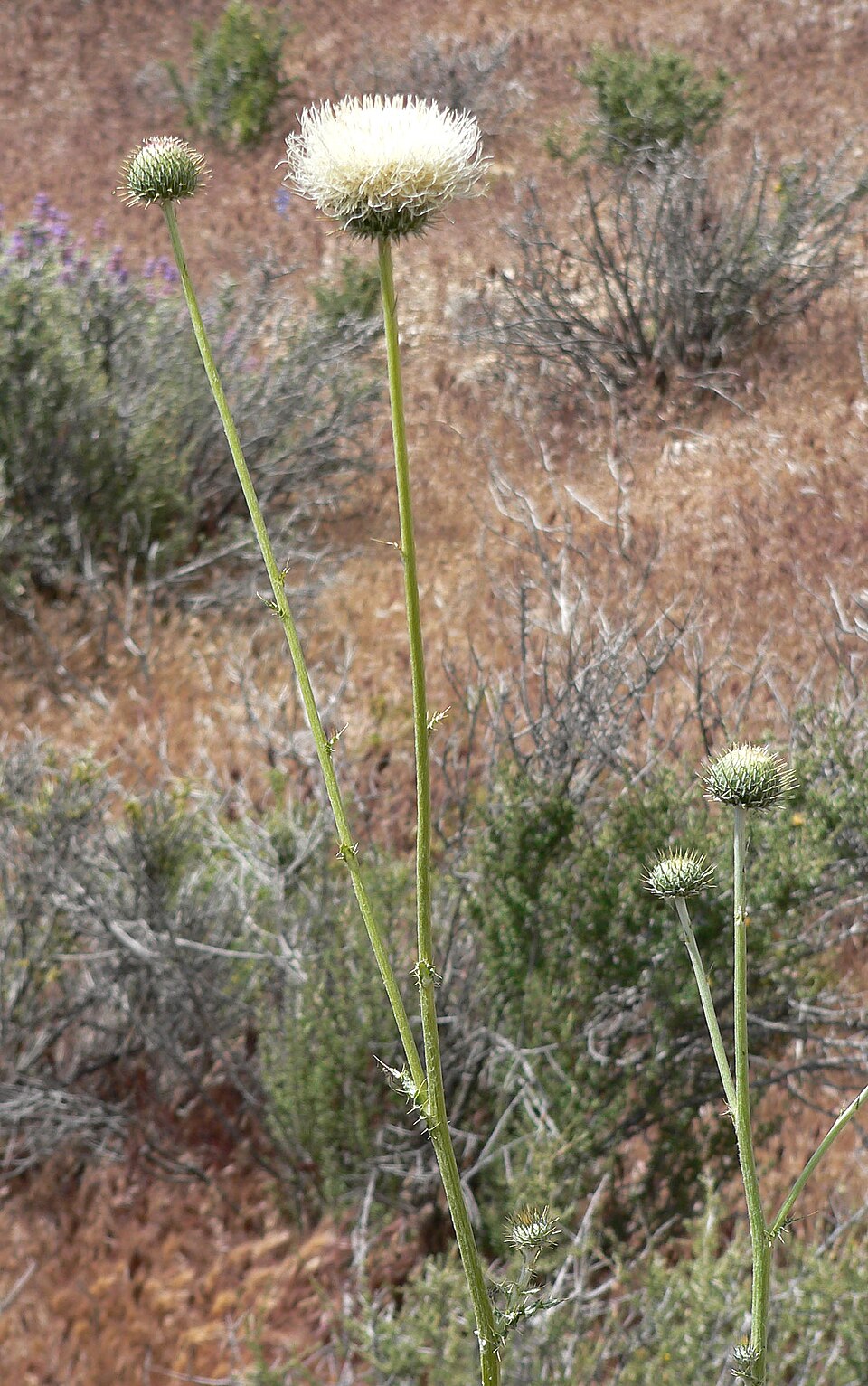
Cirsium, Genus, neomexicanum, Species,
- Genus & species
New Mexico thistle
Southwestern United States and northern Mexico
Overview
Cirsium neomexicanum is a spiny biennial or short-lived monocarpic herb of the southwestern deserts, sending up a flowering stem 2–7 feet (0.6–2.1 m) tall in its second year from a basal rosette. The gray-green leaves are deeply lobed, edged with sharp spines, and covered with loose white woolly hairs, 4–12 inches (10–30 cm) long. Flower heads 1.5–2.5 inches (4–6 cm) across appear singly or in small groups at the branch tips from March to June, with pale pink to lavender or nearly white disc florets above a base of spine-tipped bracts. After flowering and setting tufted wind-borne seed, the plant dies. C. neomexicanum grows on dry slopes, washes, roadsides, and desert flats from California and Nevada east to Texas and south into Mexico. It tolerates heat, drought, and poor soils but is short-lived and self-seeds freely, and the spiny foliage limits where it can be sited.
Native Range
Cirsium neomexicanum is native to the southwestern United States and northern Mexico, from California and Nevada east through Arizona and Utah to New Mexico and western Texas. It grows on dry slopes, desert washes, roadsides, and open flats.Suggested Uses
Used in native desert gardens, wildlife plantings, and naturalized dry areas. Spaced 18–24 inches (45–60 cm) apart, it supports pollinators and feeds seed-eating birds, away from paths where the spines would be a hazard.How to Identify
Appearance
Size & Dimensions
Height2' - 7'
Width/Spread1' - 2'
Bloom Information
Flowering occurs from March to June, peaking in spring. The heads of pale pink to lavender or whitish disc florets sit above spine-tipped bracts and draw bees and butterflies. Tufted seeds follow and disperse on the wind, after which the plant dies.
Detailed Descriptions
Flower Description
pale pink to lavender or whiteFoliage Description
gray-greenGrowing Conditions
Sun Requirements
Requires 6-12 hours of direct sunlight daily
• Full Sun: 6+ hours of direct sunlight
• Partial Shade: 3-6 hours of direct sunlight
• Full Shade: Less than 3 hours of direct sunlight
Care & Maintenance
Care Guide
Grow C. neomexicanum in full sun in dry, sharply drained sandy or gravelly soil. It withstands heat, drought, and lean soil and grows on disturbed desert ground. Soil pH from 6.5 to 8.0 is suitable. As a biennial, it forms a rosette the first year and flowers and dies the second, relying on seed to return. It self-seeds freely and can spread into open ground. Established rosettes need no supplemental water in their native range.Pruning
No routine pruning is needed. Cutting off the spent flower heads before seed disperses limits self-sowing. The whole plant dies after flowering and can be cleared once seed has set.Toxicity
Non-toxicPlanting Guide
Planting Methods & Timing
Planting Method
direct sow
Direct Sow Timing
Fall or early spring where it is to grow
Plant Spacing
20 inches