Cirsium, Genus, rivulare, Species,
- Genus & species
brook thistle
Overview
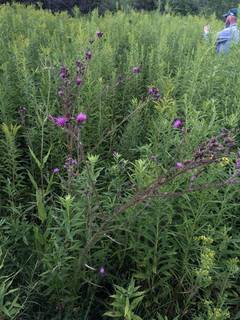
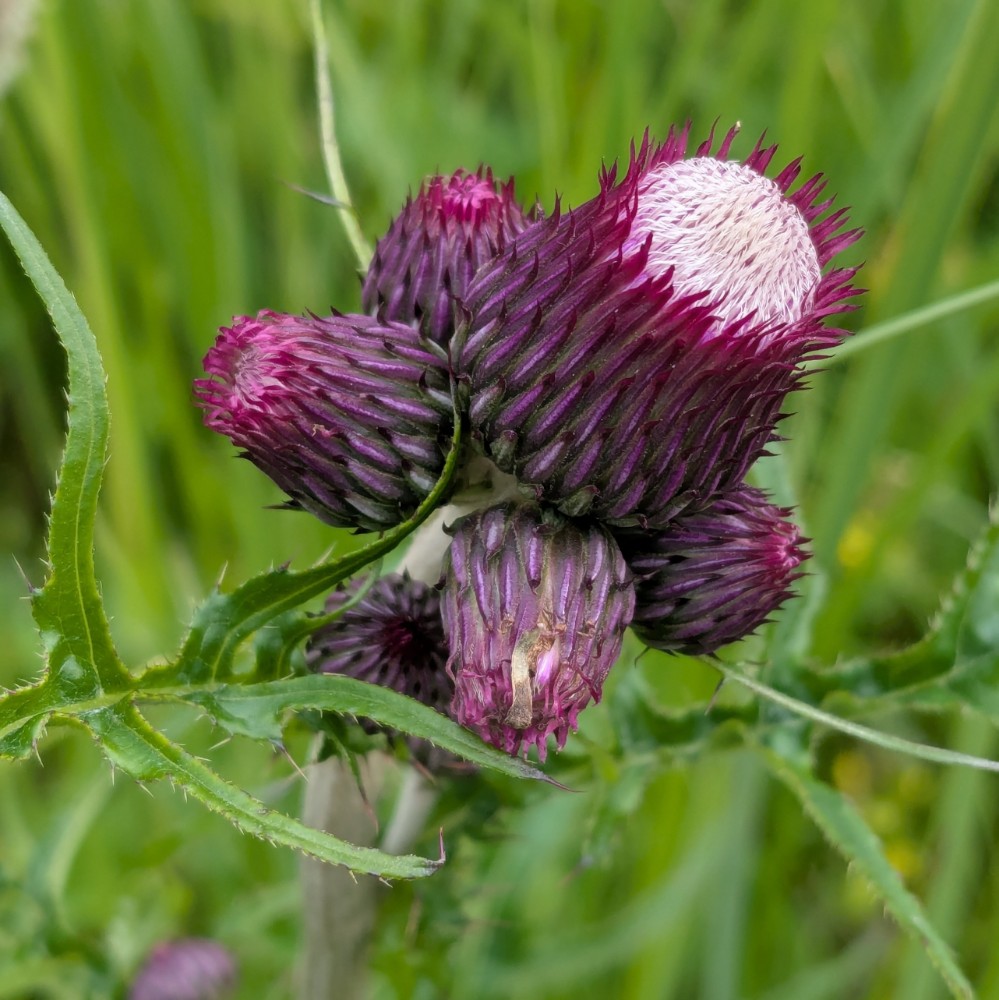
Cirsium rivulare is a clump-forming herbaceous perennial thistle in the Asteraceae family, sending up branching flower stems 3-4 feet (90-120 cm) tall above a basal rosette spreading 18-24 inches (45-60 cm) wide. From late spring into summer the stems carry rounded thistle flower heads about 1 inch (2.5 cm) across, in crimson to red-purple, held in small clusters at the stem tips. Unlike many thistles, the foliage is only softly spined and not sharply prickly; leaves are deeply cut, dark green, and form a low rosette, with smaller leaves clasping the upright stems. The plant grows from a fibrous, slightly spreading rootstock and stays clump-forming rather than running. It grows in full sun to part shade in moist, fertile soil and tolerates heavy clay and seasonal wetness; dry soil shortens bloom and the lower leaves brown early. Hardy in USDA zones 5 through 8, it dies back fully in winter. The species can self-seed where conditions suit, and the tall stems may lean on windy sites or in rich soil. Flower heads draw bees, butterflies, and other pollinators in quantity through summer, and goldfinches take the seed. Native to damp meadows and streamsides of central and southern Europe, it is grown in borders, wildlife plantings, and naturalistic schemes.
Native Range
Cirsium rivulare is native to central and southern Europe, where it grows in damp meadows, stream banks, and wet grassland. It is grown in gardens across temperate regions.Suggested Uses
Grown in mixed borders, damp meadows, wildlife gardens, and naturalistic plantings, spaced 18-24 inches (45-60 cm) apart. Flowers are cut for arrangements and draw pollinators in quantity. It suits moist, sunny sites and pond or stream margins.How to Identify
Appearance
Size & Dimensions
Height3' - 4'
Width/Spread1'6" - 2'
Bloom Information
Detailed Descriptions
Flower Description
Crimson to red-purpleFoliage Description
Dark greenGrowing Conditions
Sun Requirements
Requires 4-12 hours of direct sunlight daily
• Full Sun: 6+ hours of direct sunlight
• Partial Shade: 3-6 hours of direct sunlight
• Full Shade: Less than 3 hours of direct sunlight
Care & Maintenance
Care Guide
Grows in full sun to light part shade in moist, fertile soil, tolerating heavy clay and seasonally wet ground. Water needs are medium to high; dry soil shortens flowering and browns the lower leaves. In USDA zones 5 through 8 the plant is fully cold hardy and dies back to the rootstock in winter. Tall flower stems can lean in wind or rich soil and may need staking. Clumps can be divided in spring every few years to maintain vigor. The plant can self-seed, and removing spent heads limits unwanted seedlings.Pruning
Spent flower stems are cut back after blooming to encourage rebloom and reduce self-seeding. The whole plant is cut to the ground in late autumn or early spring as the foliage dies back. Division in spring renews older clumps.Pruning Schedule
Prune: March, July & November
summerfall