Cirsium, Genus, spp., Multiple species,
- Genus
- Multiple species
plume thistles
Temperate Northern Hemisphere (North America, Europe, Asia, and North Africa)
Overview
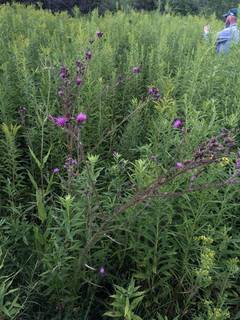
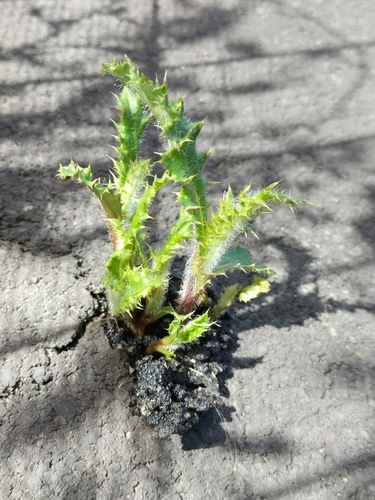
Cirsium is a genus of about 200 to 400 species of biennial and perennial herbs in the Asteraceae family, the plume thistles, native across the temperate Northern Hemisphere. Plants form a rosette of spiny leaves the first year and send up branching, often spiny stems 1 to 8 feet (30 to 240 cm) tall. Leaves are deeply lobed and edged with sharp prickles, green above and frequently white-woolly beneath. The flower heads are dense brushes of tiny disc florets in pink, purple, white, or yellow, ringed by spine-tipped bracts, and open from summer into fall. Seeds carry a feathery (plumose) pappus that separates Cirsium from the related Carduus, whose pappus is rough rather than feathered; the down lifts the seed long distances on the wind. The flowers are a heavy nectar and pollen source for bees and butterflies, and goldfinches eat the seeds and line their nests with the down. Several species, including Canada thistle (C. arvense) and bull thistle (C. vulgare), are aggressive weeds, and C. arvense spreads by deep creeping roots and is a regulated noxious weed across much of North America.
Native Range
Cirsium is native to the temperate Northern Hemisphere across North America, Europe, Asia, and North Africa. North America has many native species, such as C. discolor, C. altissimum, and the threatened C. pitcheri, while C. arvense and C. vulgare are introduced Eurasian weeds.Suggested Uses
Native species are grown in pollinator and prairie plantings, where the flowers feed bees and butterflies and the seeds feed finches. Most non-native species colonize pastures, roadsides, and disturbed land, where they are managed or controlled as weeds. The down was once gathered for stuffing and tinder.How to Identify
Appearance
Size & Dimensions
Height1' - 8'
Width/Spread1' - 3'
Bloom Information
Flowering runs from summer into fall, generally June through September, with biennial species blooming in their second year and dying after seeding. The brush-like heads open over many weeks and draw a steady stream of bees and butterflies. As heads finish, they break open into round puffs of wind-borne seed. A single plant can release hundreds to thousands of seeds.
Detailed Descriptions
Flower Description
pink, purple, white, and yellowFoliage Description
greenGrowing Conditions
Sun Requirements
Requires 6-12 hours of direct sunlight daily
• Full Sun: 6+ hours of direct sunlight
• Partial Shade: 3-6 hours of direct sunlight
• Full Shade: Less than 3 hours of direct sunlight