Best Grass Seed for Shade Under Trees: 5 Species That Actually Work
Pets & Toxicity
Recorded toxicity for plants linked in this guide. An unknown status is not a safety assessment.
No linked plant is recorded as toxicDetailsHide
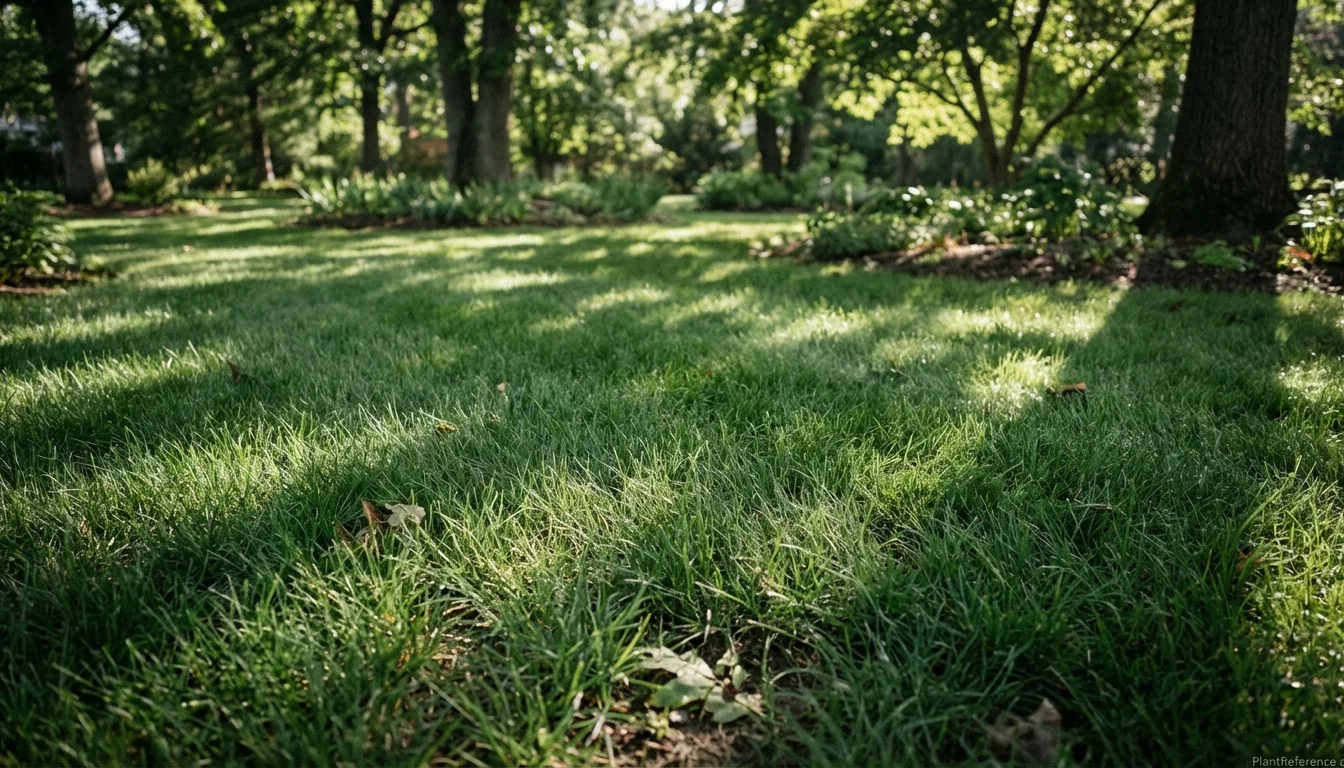
— Image © Plant Reference 2026
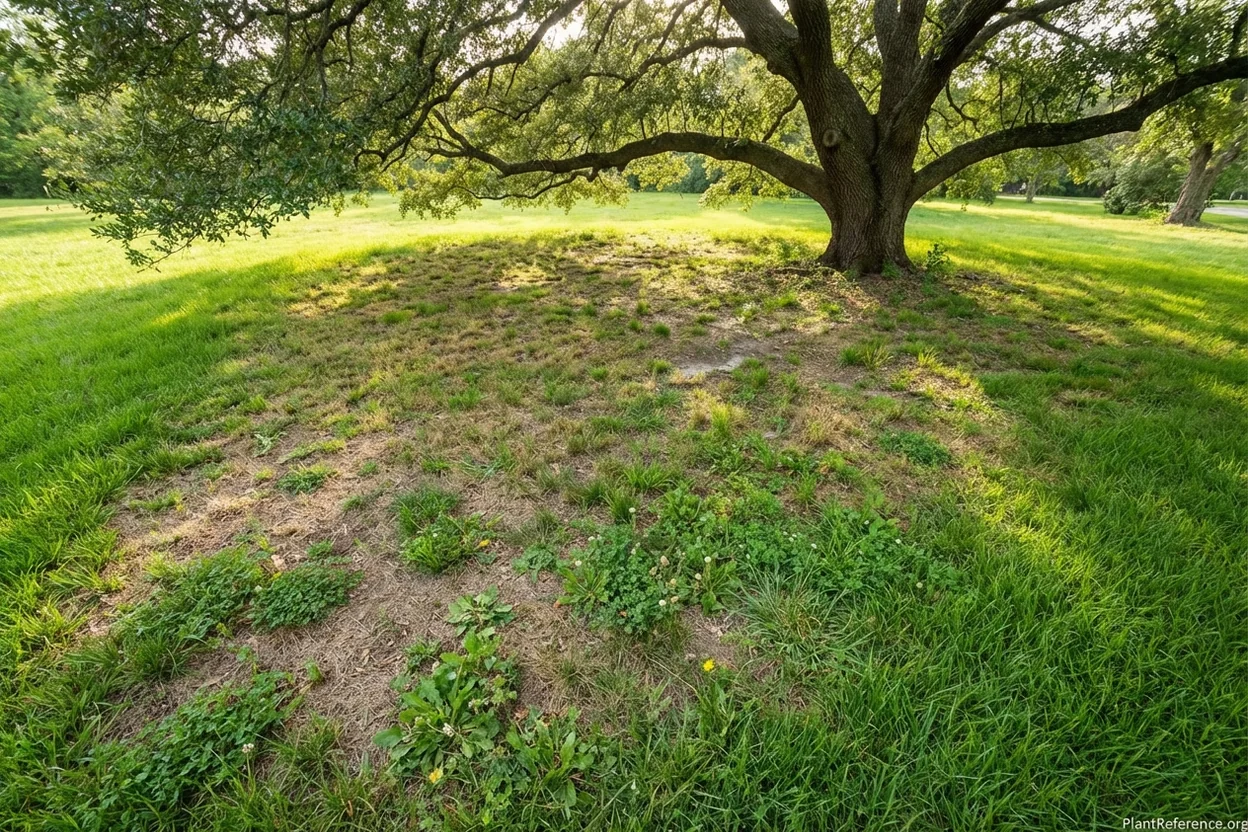
The most common question I get from homeowners is some version of "why won't grass grow under my oak tree?" The answer is almost always the wrong grass species. They planted 🌿Poa pratensis (poh-uh prah-TEN-sis) Kentucky bluegrass or a standard 🌿Festuca arundinacea tall fescue blend — grasses that need 6-8 hours of direct sunlight to maintain a dense stand. Under a mature tree canopy, they get 2-4 hours of filtered light at best. The grass thins, weeds move in, and the homeowner assumes the problem is soil or water. It is neither — it is light.
Why Shade Kills Most Grass
The Light Threshold
Every grass species has a minimum light requirement — the number of hours of sunlight needed to photosynthesize enough energy to maintain healthy growth. When light falls below this threshold, the grass stretches upward seeking light (etiolation), thins its canopy, and eventually dies. What Type of Grass Do I Have? Identify Your Lawn in 5 Steps
Grass Species | Minimum Sun Hours | Shade Tolerance |
|---|---|---|
🌿Poa pratensis Kentucky Bluegrass | 6-8 hours | Poor |
🌿Cynodon dactylon Bermudagrass | 6-8 hours | Very poor |
🌿Festuca arundinacea Tall Fescue | 4-6 hours | Moderate |
🌿Lolium perenne Perennial Ryegrass | 4-6 hours | Moderate |
🌿Zoysia japonica Zoysiagrass | 4-6 hours | Moderate |
Fine Fescues (creeping red, hard, chewings) | 2-4 hours | Excellent |
🌿Stenotaphrum secundatum St. Augustinegrass | 4-6 hours | Good (warm-season) |
Tree Competition
Shade is only half the problem under trees. Tree roots compete aggressively for water and nutrients in the top 6-12 inches (15-30 cm) of soil — the same zone where grass roots live. Mature oaks, maples, and beeches draw so much moisture from the surrounding soil that grass can be drought-stressed even in wet seasons. Fine fescues tolerate this competition better than other grasses because they require less water and fertilizer to maintain a healthy stand. How to Water Your Lawn the Right Way: Depth, Timing, and Drought
The Fine Fescue Family: Your Shade Solution
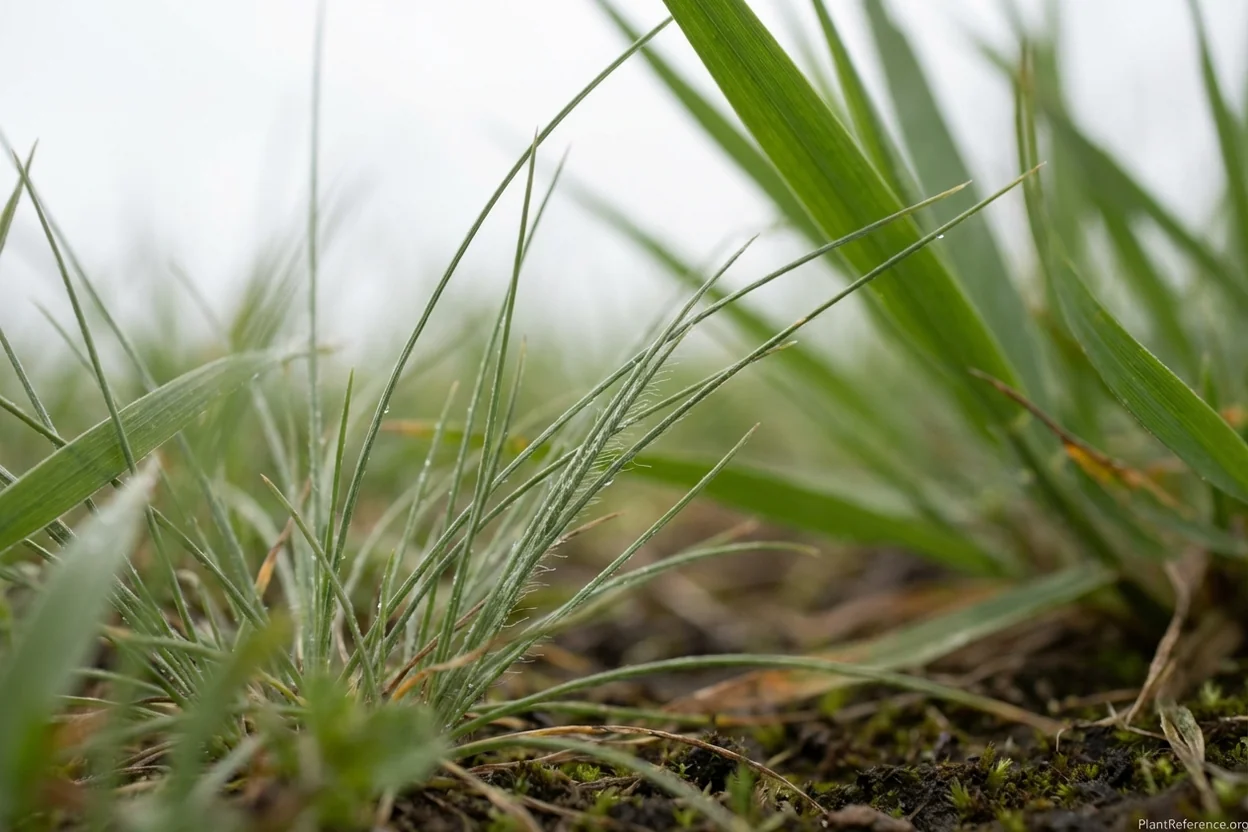
Fine fescues are a group of cool-season grasses with narrow, needle-like blades that evolved in low-light forest edge environments. They are the only commonly available lawn grasses that produce a dense, attractive stand in 2-4 hours of filtered sunlight. They also require less water, less fertilizer, and less mowing than any other lawn grass — traits that make them ideal for the low-resource environment under trees.
The three species used in shade lawn blends each contribute different strengths:
Creeping red fescue (🌿Festuca rubra) spreads by rhizomes, filling gaps and creating continuous coverage. It is the only fine fescue that actively spreads to repair thin spots.
Hard fescue (🌿Festuca brevipila) is the most drought-tolerant and lowest-maintenance fine fescue. It forms dense bunches that resist wear and require minimal mowing — some homeowners mow hard fescue only 3-4 times per season.
Chewings fescue (🌿Festuca rubra ssp. commutata) produces the finest leaf texture and densest growth habit. It creates the most carpet-like appearance of the three species.
A blend of all three outperforms any single species because the creeping red provides spreading coverage, the hard fescue contributes drought tolerance, and the chewings fescue delivers density and texture. Cool-Season vs Warm-Season Grass: Which Type Fits Your Lawn?
The 5 Best Shade Grass Seeds
1. Outsidepride Legacy Fine Fescue Blend — Best Overall Shade Mix
The Legacy blend combines 20% hard fescue, 40% chewings fescue, and 40% creeping red fescue — the ideal ratio for most shaded residential lawns. The OptiGrowth seed coating includes zinc, phosphorus, nitrogen, and kelp extract to boost germination in the nutrient-poor soil typically found under trees.
This blend thrives in full sun through full shade, making it versatile for yards with variable light — the same mix works in the shaded areas under trees and the sunnier spots between them. Endophyte-enhanced varieties provide natural insect resistance without chemical treatment. Germination in 10-14 days.
Price: $25-40 (5 lb) | Coverage: 1,000-1,250 sq ft (new lawn) | Light: 2-8 hours Best for: Residential shade lawns, mixed sun/shade yards, low-maintenance turf.
2. Outsidepride Hard Fescue — Best for Extreme Low Maintenance
If you want the absolute lowest-maintenance shade lawn possible, straight hard fescue (🌿Festuca brevipila) is the answer. It grows to a maximum height of approximately 8 inches, meaning you can mow it 3-4 times per season or let it naturalize as a low meadow. It requires less water and less fertilizer than any other lawn grass — thriving in poor, dry, infertile soil where other grasses fail.
Hard fescue is the best choice for shaded areas where you want coverage but do not want to maintain a manicured lawn — under trees at the back of the property, slopes, and naturalized areas. The OptiGrowth coating and endophyte enhancement match the Legacy blend's germination technology.
Price: $20-35 (5 lb) | Coverage: 1,000-1,250 sq ft (new lawn) | Light: 2-8 hours Best for: Ultra-low-maintenance shade areas, naturalized lawns, poor soil, slopes.
3. Jonathan Green Black Beauty Dense Shade — Best Shade Blend with Tall Fescue
Jonathan Green's Dense Shade mix includes shade-tolerant tall fescue varieties alongside fine fescues — a combination that provides the traffic tolerance of tall fescue with the shade adaptation of fine fescues. This is the better choice if the shaded area receives moderate foot traffic (play areas, paths) where pure fine fescue would thin from wear.
The Black Beauty waxy leaf coating reduces water loss — a significant advantage under trees where root competition makes soil moisture scarce. Named cultivars with high germination rates. Germinates in 14-21 days.
Price: $25-40 (3 lb) | Coverage: 750-1,500 sq ft (overseeding) | Light: 3-6 hours Best for: Shaded areas with foot traffic, partial shade (3-6 hours), homeowners who want a traditional lawn appearance. How to Overseed Your Lawn: Timing, Seed Selection, and Technique
4. Pennington Smart Seed Dense Shade — Best All-in-One with Fertilizer
Pennington's Dense Shade mix combines tall fescue and fine fescue with included starter fertilizer in the bag — a convenient all-in-one product for homeowners who want simplicity. The Penkoted seed technology enhances germination and disease resistance during the vulnerable establishment period.
The included fertilizer is a genuine advantage under trees where soil fertility is low — it provides the initial nutrient boost seedlings need without requiring a separate fertilizer application. The tall fescue component handles moderate shade (4-6 hours) while the fine fescue handles denser shade (2-4 hours).
Price: $15-25 (3 lb) | Coverage: 750-1,000 sq ft (new lawn) | Light: 2-6 hours Best for: Budget-friendly shade seeding, homeowners who want seed + fertilizer in one bag.
5. Creeping Red Fescue (Straight Species) — Best for Spreading Coverage
For shaded areas where you need grass that actively fills gaps on its own, straight creeping red fescue (🌿Festuca rubra) is the only fine fescue that spreads by underground rhizomes. Unlike the bunch-type fine fescues (hard and chewings), creeping red sends out lateral shoots that colonize bare spots without reseeding.
This spreading ability is especially valuable under trees where the canopy expands over time, gradually increasing shade and thinning existing grass. Creeping red fescue adapts to the changing light conditions and fills in as it goes. Seed it at 4-5 lbs per 1,000 sq ft for new lawns.
Price: $20-35 (5 lb) | Coverage: 1,000-1,250 sq ft (new lawn) | Light: 2-6 hours Best for: Areas where gaps need to fill naturally, expanding shade conditions, low-fertility soil. How to Fix Bare Spots in Your Lawn Fast
How to Establish Grass Under Trees
Prune for Light
Before seeding, raise the tree canopy by removing lower branches up to 8-10 feet (2.5-3 m) from the ground. This allows more filtered light to reach the turf and improves air circulation that reduces fungal disease pressure. Even fine fescues perform better with more light — pruning turns a 2-hour shade environment into a 3-4 hour environment.
Reduce Root Competition
Topdress the seeding area with 0.5-1 inch (1.3-2.5 cm) of compost before seeding. This adds a nutrient-rich layer above the tree root zone, giving grass seedlings a head start before their roots encounter tree root competition. Do not rototill under trees — this damages feeder roots and can stress or kill the tree. When and How to Aerate Your Lawn: Timing, Method, and Results
Seed in Early Fall
September is the best month to establish shade grass from seed. Soil is warm for germination, air temperatures are cooling (reducing seedling stress), and the deciduous canopy begins dropping leaves within weeks — flooding the new seedlings with additional light during the critical establishment period. Lawn Care Schedule by Month: Your Complete Cool-Season Grass Calendar
Reduce Inputs
Fine fescues in shade need less fertilizer and less water than the rest of your lawn. Apply nitrogen at 1-2 lbs per 1,000 sq ft per year (half the rate for sunny lawn areas). Water only during drought — fine fescues under established trees rarely need supplemental irrigation in climates that receive 30+ inches of annual rainfall. Over-fertilizing and over-watering shade grass promotes disease. Lawn Fertilization Schedule: When and What to Feed by Grass Type
When to Accept That Grass Will Not Grow
The Dense Shade Limit
No grass — not even fine fescue — survives in full, dense shade with less than 2 hours of filtered light per day. This includes areas directly under evergreen conifers (pines, spruces, hemlocks), the north side of buildings that receive zero direct sunlight, and under dense-canopy trees like Norway maples that block virtually all light.
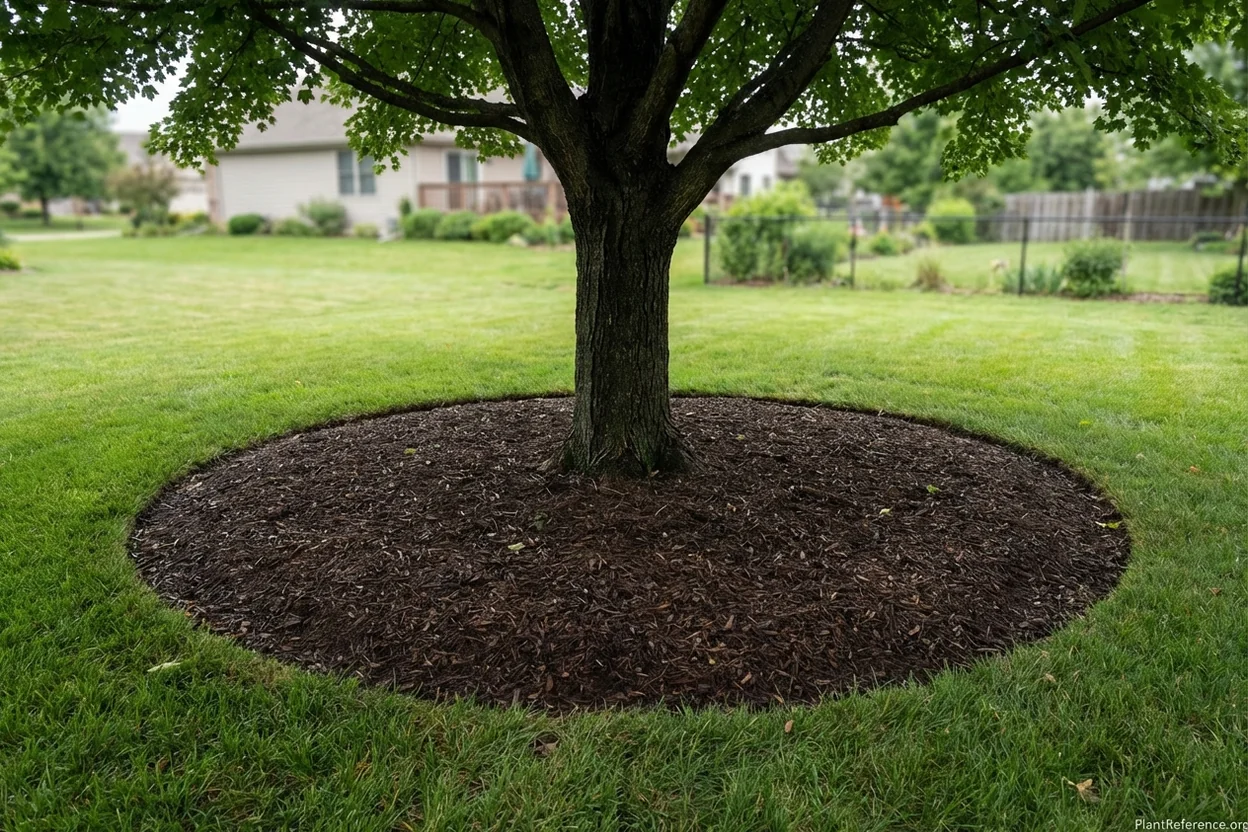
In these areas, the honest answer is to stop trying to grow grass and switch to shade-tolerant groundcovers (pachysandra, vinca, liriope, native ferns), mulch beds, or hardscape. A well-designed mulch ring around a tree base looks better than the perennial cycle of seeding, watching it thin, and reseeding every fall. Transition Zone Lawn Care: Growing Grass in America's Toughest Climate Belt
The Evergreen Exception
Evergreen trees present a double challenge: year-round dense shade plus acidic needle litter that lowers soil pH below the 5.5-6.5 range most grasses prefer. Under pines and spruces, consider acid-loving groundcovers (native ferns, wintergreen, bunchberry) or simply maintain a pine needle mulch bed. Fighting nature in these environments wastes time and money.
Frequently Asked Questions
Reading about plants and recognising them are different skills. These three build the second.
- Daily PlantIdentify the day’s mystery plant from a close-up photograph.
- Keyed OutWork a dichotomous key, lead by lead, to name a hidden specimen.
- Name That PlantName a specimen from botanical clues dealt hardest first.
Free to play, no account needed
Tagged with
James is a lawn care professional in Dallas who runs a small residential maintenance company. He started mowing lawns as a teenager and worked his way up to running crews for a large landscaping firm before going out on his own. James specializes in warm-season turf grasses—Bermuda, St. Augustine, and Zoysia—and knows how to keep a lawn alive through Texas summers without wasting water. He's also experienced with the transition zone challenges that Dallas faces, where warm-season and cool-season grasses overlap. James takes a practical, science-informed approach to lawn care and pushes back on the idea that a good lawn requires heavy chemical inputs.