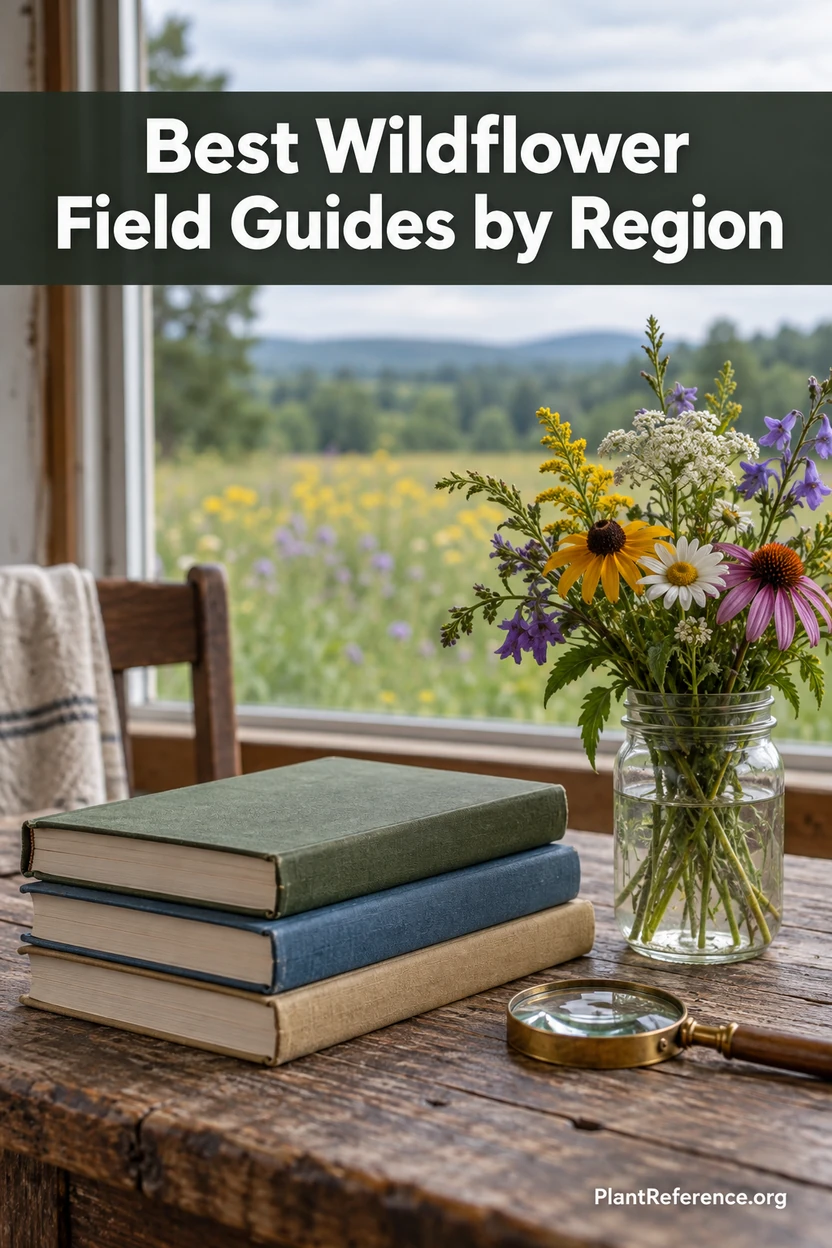
Best Wildflower Field Guide by Region: Top Picks Compared
Pets & Toxicity
Recorded toxicity for plants linked in this guide. An unknown status is not a safety assessment.
Asclepias tuberosa — Toxicity Warning
Toxic to pets and humans (cardiac glycosides — cardenolides — at moderate concentration; less toxic than other milkweed species but still toxic if ingested in quantity)View Asclepias tuberosa plant profile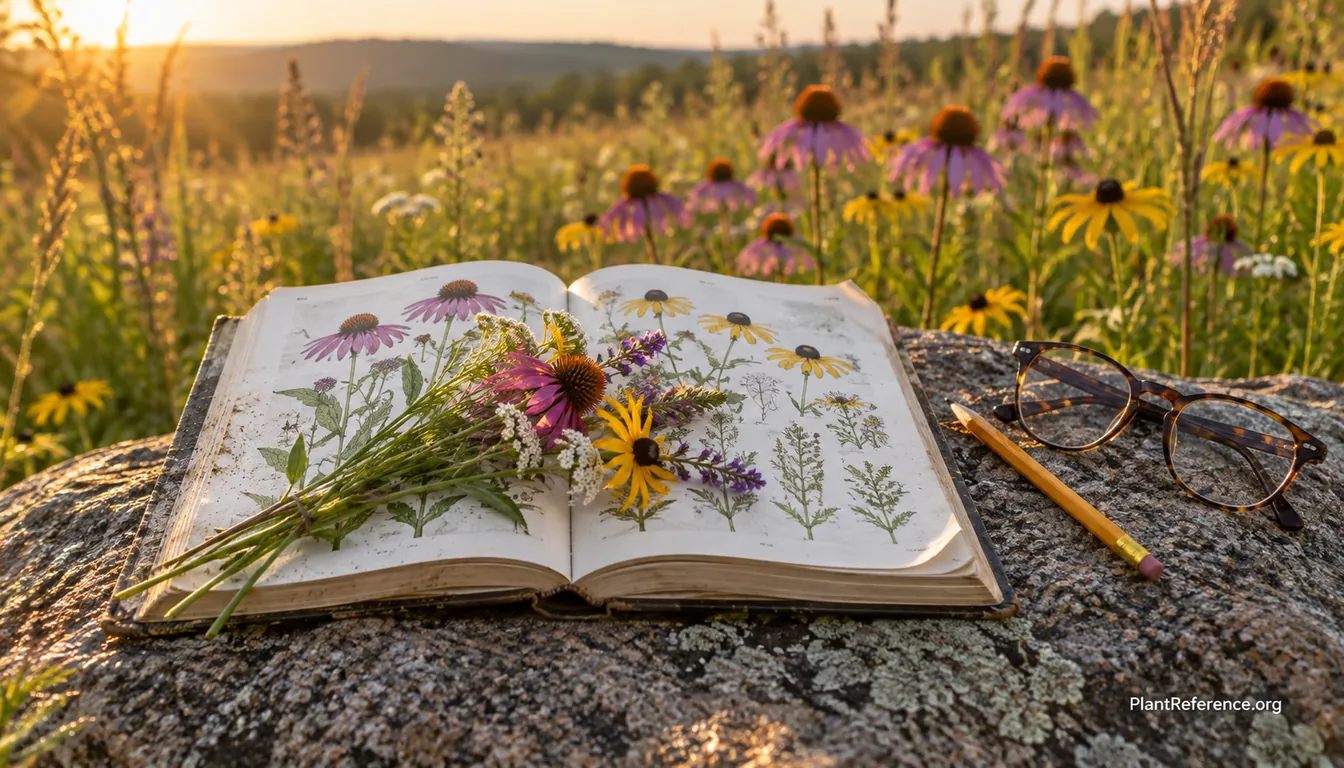
— Image © PlantReference.org 2026
There is no single best wildflower field guide—there is only the best guide for where you are standing. A book that makes you fluent in the wildflowers of New England will leave you stranded in the Sonoran Desert, and a beginner-friendly photo guide that delights a first-year botanist will frustrate someone keying out look-alike asters. I have hauled most of these guides into the field, and the differences come down to two things: how the book is organized, and whether it actually covers your flora. Get those two right and a meadow stops being a wall of color and becomes something you can read.
How to Choose a Wildflower Field Guide
Field guides fall into two camps, and knowing which you are buying saves a lot of frustration. Structural guides organize plants by botanical features—flower symmetry, number of petals, leaf arrangement—and walk you through a key. Visual guides organize by flower color or shape and let you flip until you find a match. Structural guides are faster once you learn the vocabulary; visual guides are gentler on day one.
Coverage matters just as much as method. A guide's title usually names its region, and that is not marketing—it reflects which species are actually inside. Buying the eastern edition for a western trip is the single most common mistake new botanists make.
Match the guide's region to where you will actually use it
Decide whether you want a key (faster) or a browse-by-color guide (easier)
Check whether it uses illustrations or photographs—each has trade-offs
Confirm it is current; range maps and names get revised over time
If the botanical terms in a structural key intimidate you, start with the fundamentals in How to Identify Any Plant: A Beginner's Guide to Leaves, Flowers, and Stems and the Flower Identification Guide: Petals, Shape & Color Explained. A little vocabulary makes every guide on this list far more usable.
Best Overall for the East & Midwest: Newcomb's
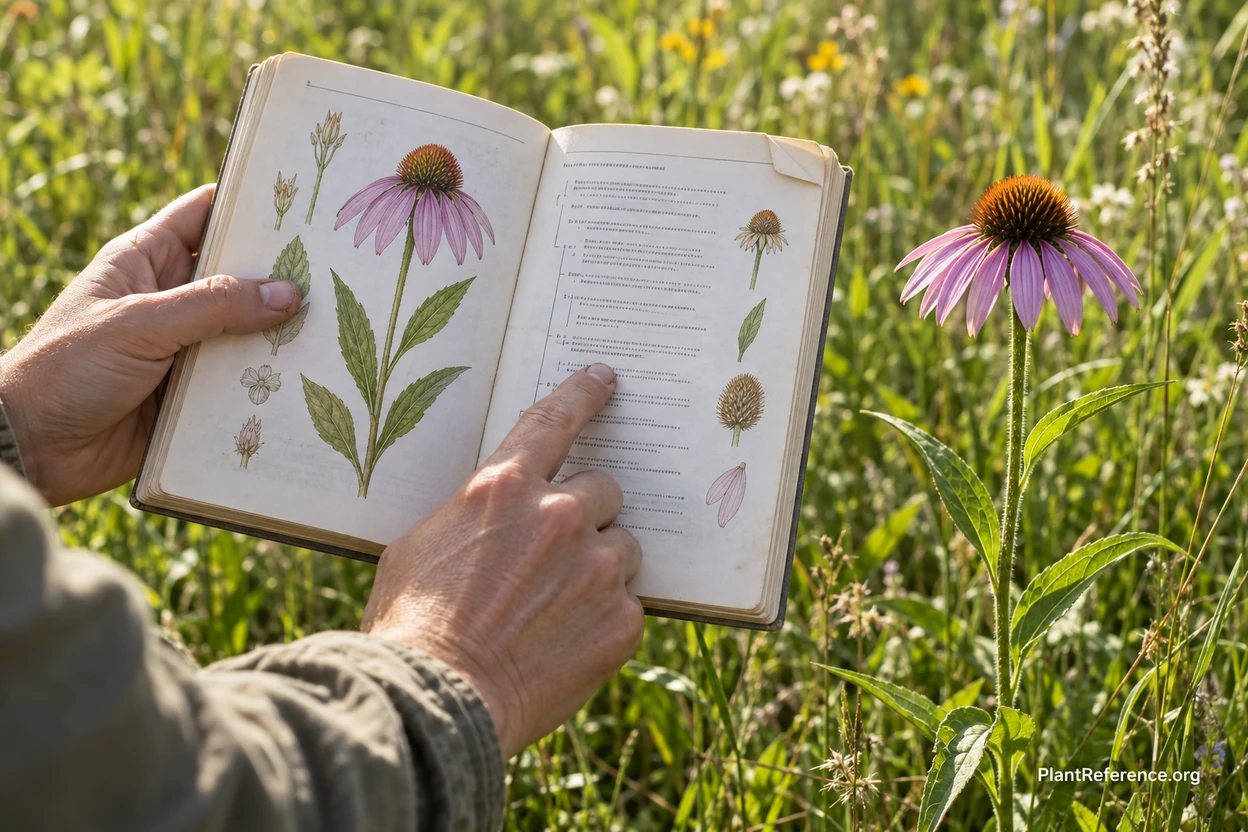
For the eastern United States and adjacent Canada, Newcomb's Wildflower Guide is the one I hand to people who want to actually learn. Its genius is a five-question key based on flower symmetry, the number of flower parts, and leaf type and arrangement. Answer those questions and the book funnels you straight to the correct genus—no flipping through hundreds of color plates hoping for a lucky match.
That structure teaches you to observe the way a botanist does. Instead of asking "what does this look like," it asks "how many petals, what symmetry, how are the leaves arranged." Run it on a roadside stand of butterfly weed, 🌿Asclepias tuberosa (as-KLEE-pee-as too-ber-OH-sah), and the key marches you to milkweeds quickly. The line-drawing illustrations are clean and diagnostic rather than pretty, which is exactly what you want when distinguishing similar species.
The trade-off is that the five-question key requires you to learn a small amount of vocabulary first. Spend twenty minutes with Simple vs Compound Leaves: How to Tell the Difference and Alternate vs Opposite Leaf Arrangement: The MADCapHorse Mnemonic Explained and the key becomes second nature.
Best for Beginners: National Audubon Society Guides
If you are brand new and the word "key" makes you nervous, the National Audubon Society field guides are the friendliest landing spot. They use color photographs organized by flower color and form, so you can flip to "yellow flowers" and visually browse until something matches. For confirming a candidate you already suspect, that visual approach is wonderfully fast.
The honest limitation is that photographs, however beautiful, are harder to use for fine-scale comparison than illustrations. A photo captures one individual in one light at one moment; an illustration can exaggerate the diagnostic features every member of a species shares. Audubon guides are slower for systematic identification than Newcomb's, but for a beginner who wants visual confirmation before committing to a structural key, they are a genuinely good on-ramp.
Best Illustrated System: Peterson Field Guides
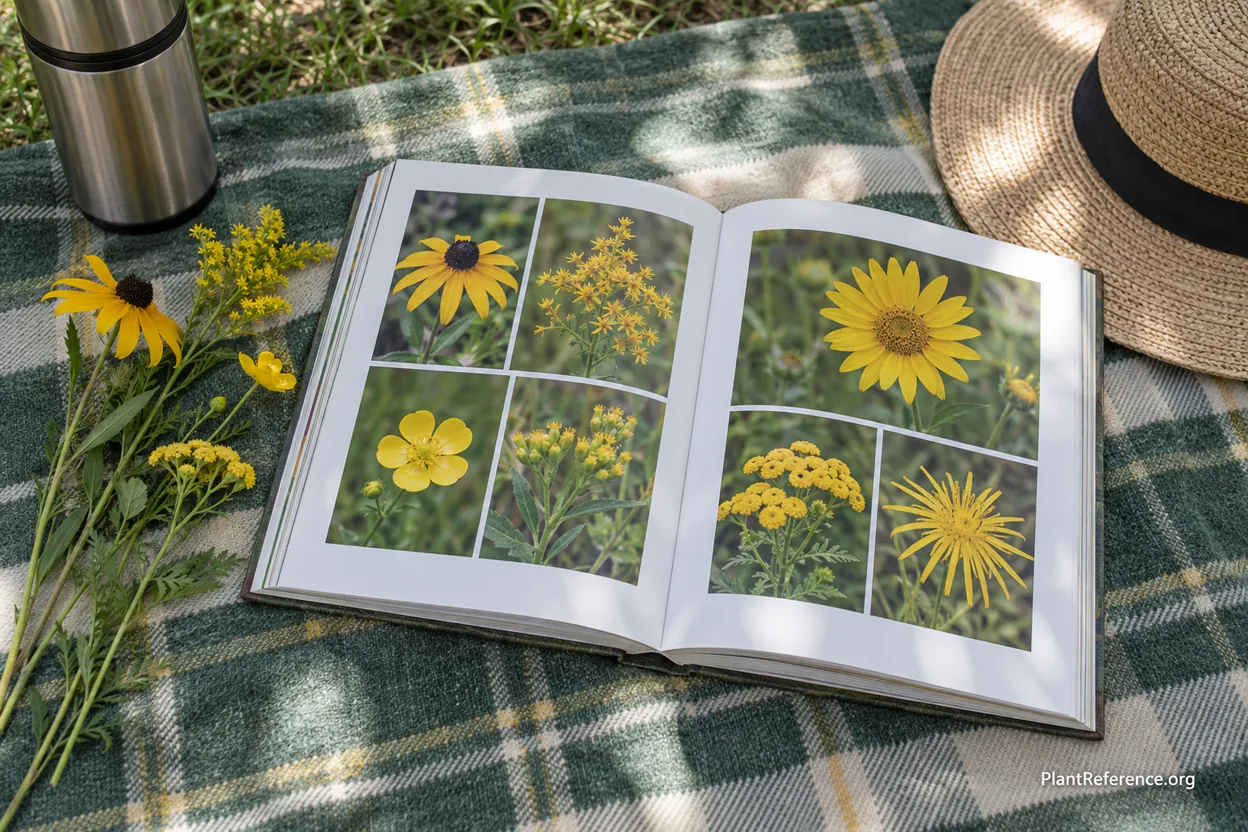
The Peterson series is a legend for a reason. Its signature innovation is the Peterson Identification System: illustrations with small arrows pointing directly to the field marks that separate similar species. When two flowers look nearly identical, those arrows tell you exactly where to look—the hairs on a stem, the shape of a leaf base, the spur on a petal.
Peterson publishes regional editions, and that is the version to buy. The Northeastern and North-Central wildflowers edition covers a huge swath of the country and arranges flowers by color and family, blending browsability with rigor. Peterson guides are my pick when you want the speed of visual matching but refuse to give up the precision of pointed-out field marks. They pair especially well with practice using How to Use a Dichotomous Key: Step-by-Step Guide to Keying Out Any Plant, since both train the same habit of looking for decisive details.
Best Regional Guides Beyond the East
Once you leave the Northeast, specialized regional guides earn their place on the shelf. These are the books locals actually carry.
For the Midwest, Wildflowers of the Tallgrass Prairie focuses on the specific forbs and grasses that define prairie ecosystems—the coneflowers, blazing stars, and 🌿Echinacea purpurea (ek-ih-NAY-shah pur-PUR-ee-ah) that a general guide treats only in passing. For the desert Southwest, the Jepson Desert Manual is the acknowledged gold standard, with high-quality keys and illustrations for arid-land species that simply do not appear in eastern guides; it is where you turn to key out a desert lupine like 🌿Lupinus arizonicus (loo-PIE-nus air-ih-ZON-ih-kus). For botanists who want every possible taxon in a single state, technical floras like Plants of Pennsylvania provide exhaustive keys, though they are denser than a casual hiker needs.
Northeast & Midwest: Newcomb's Wildflower Guide (best all-around key)
Tallgrass prairie: Wildflowers of the Tallgrass Prairie
Desert Southwest: Jepson Desert Manual
Single-state depth: technical state floras like Plants of Pennsylvania
A regional guide also keeps you safer, because it shows the toxic species you might actually encounter. Cross-reference anything suspicious with Poisonous Plants to Avoid: A Visual Safety Guide before touching it—several dangerous lookalikes hide among innocent-looking wildflowers.
Side-by-Side Comparison
No guide wins on every axis. Method, illustration style, and coverage each suit a different kind of user, so the smart move is matching the book to how you learn and where you roam.
Guide | Region | Method | Best For | Drawback |
|---|---|---|---|---|
Newcomb's Wildflower Guide | NE & Midwest | Five-question key, illustrations | Learning to key out genus fast | Requires basic vocabulary |
National Audubon Society | Eastern (by region) | Color photos by color/form | Beginners confirming a guess | Slower for fine comparison |
Peterson Field Guides | Regional editions | Illustrations with field-mark arrows | Spotting decisive details | Less of a true key |
Wildflowers of the Tallgrass Prairie | Midwest prairie | Regional, photos | Prairie forbs and grasses | Narrow geographic scope |
Jepson Desert Manual | Desert Southwest | Technical keys, illustrations | Arid-land species | Dense for casual hikers |
If you can only own one book and you live in the eastern half of the country, buy Newcomb's. If you live in the West, buy the best regional guide for your specific area first and add a national guide later.
Field Companions You Actually Need
A field guide is only as good as your ability to see what it asks about. Two inexpensive tools do more for your accuracy than a second book ever will.
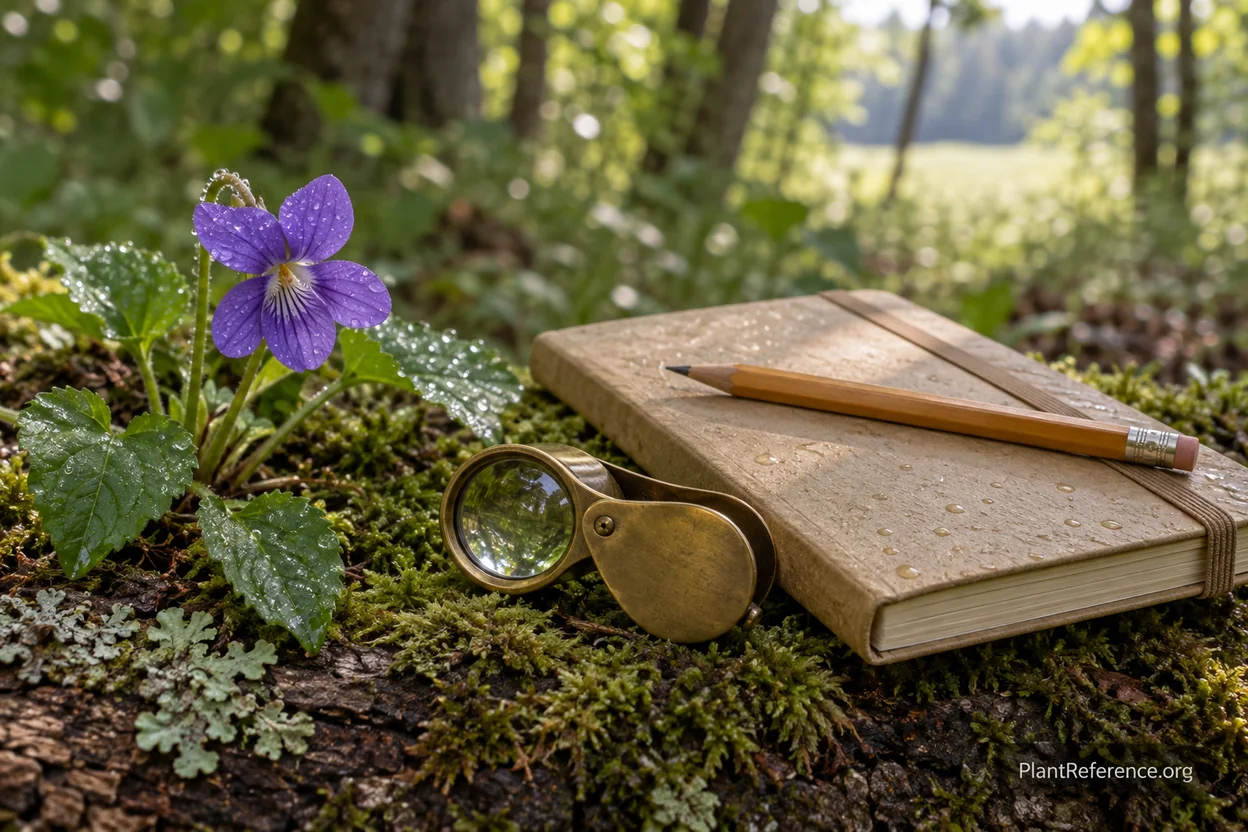
A 10x hand lens reveals the hairs, glands, and vein details that separate look-alike species—features the key references but your naked eye cannot resolve. A weatherproof notebook lets you sketch a flower's symmetry and leaf arrangement on the spot; the two-minute act of drawing a plant builds recognition faster than any amount of passive page-flipping. Neither costs much, and both fit in a vest pocket.
A 10x triplet hand lens for glands, hairs, and venation
A weatherproof field notebook for on-the-spot sketches
A pencil (ink smears when the page gets damp)
These companions matter most when you are comparing grass-like plants or tiny flowers. For the broader skill of reading foliage, How to Identify Trees by Their Leaves: Shapes, Margins, and Venation Explained and the Common Lawn Weeds Identification Guide show how much detail a good lens unlocks.
Learn Faster: Pair Your Guide with Study Tools
Here is what a field guide cannot do: build the long-term memory that turns identification from a chore into instant recognition. You can key out the same aster five summers in a row and still reach for the book, because flipping pages is not the same as practicing recall.
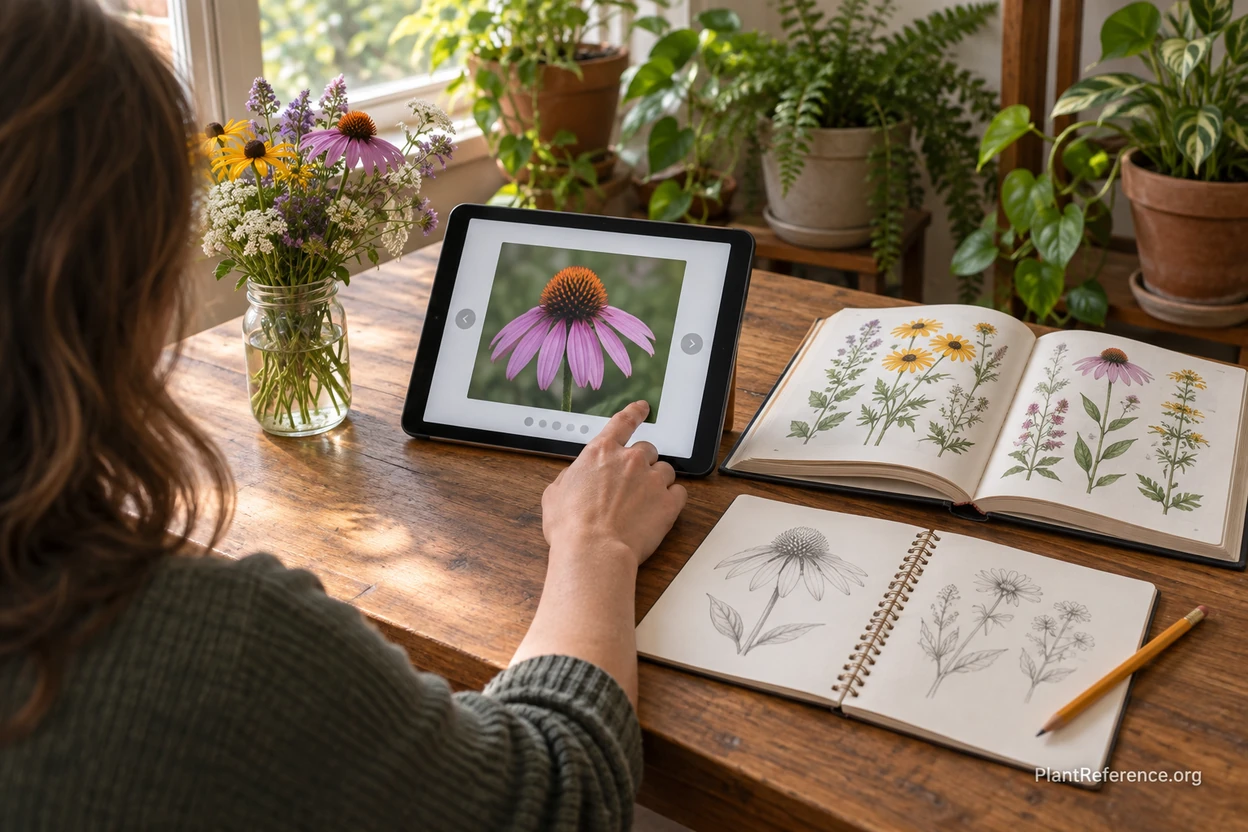
That is where pairing your guide with structured study pays off. PlantReference lets you study each species through multiple images that show how it actually varies across seasons, ages, and regions—so you recognize the living plant, not just one staged photo in a book. Its spaced-repetition flashcards resurface the species you find hard, quizzes turn passive looking into active recall, and proper botanical names with pronunciation make every field guide easier to read. Build a custom set for your local flora and you arrive at the meadow already knowing half of it.
Think of it as a division of labor: the field guide is your reference in the moment, and deliberate study is what makes the reference unnecessary over time. The botanists who seem to know every flower on a trail are not carrying a better book—they did the practice. Keep your regional guide in your pack, and use How to Use a Dichotomous Key: Step-by-Step Guide to Keying Out Any Plant plus daily flashcard reps to turn this season's lookups into next season's instant IDs.
Frequently Asked Questions
Reading about plants and recognising them are different skills. These three build the second.
- Daily PlantIdentify the day’s mystery plant from a close-up photograph.
- Keyed OutWork a dichotomous key, lead by lead, to name a hidden specimen.
- Name That PlantName a specimen from botanical clues dealt hardest first.
Free to play, no account needed
Tagged with
Helen is an interior plant stylist in Los Angeles who works with restaurants, offices, and residential clients to select and maintain indoor plants. She studied design in college and got into plants when a client asked her to "green up" a mid-century modern home. Helen's expertise sits at the intersection of design and plant care—she thinks about light, scale, texture, and color, but she also knows which plants will actually survive in a given space. She's killed enough fiddle leaf figs in dark corners to know better. Helen maintains her own collection of over 80 houseplants in her apartment and writes about indoor plant selection, styling, and the practical side of keeping plants alive in interior environments.