Echinacea, Genus, purpurea, Species,
- Genus & species
purple coneflower
Eastern and central North America, from Ontario south to Georgia and west to Iowa
Overview
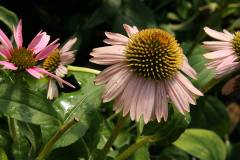
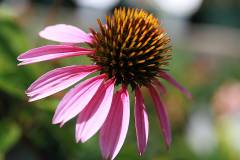
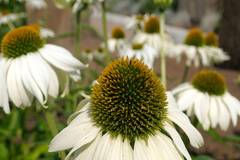
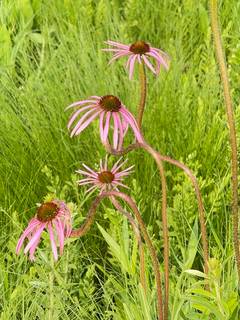
Echinacea purpurea is among the more widely grown native perennials in North American gardens, a clump-forming coneflower in the daisy family (Asteraceae) that grows 24-48 inches (60-120 cm) tall and 18-24 inches (45-60 cm) wide. Purple-pink to rose-pink broad ray florets 2-3 inches (5-8 cm) long radiate horizontally to slightly drooping from a prominent spiny orange-bronze central cone, creating the standard coneflower silhouette. The genus name Echinacea comes from the Greek 'echinos' (hedgehog), referring to the spiny cone. Individual flower heads are 3-5 inches (8-13 cm) across. Dark green, ovate to lance-shaped rough-textured coarsely toothed leaves on branching stems produce a fuller, bushier plant than the single-stemmed E. pallida and E. paradoxa. The species grows from a fibrous root system (not a deep taproot like E. pallida), making it easier to transplant and divide. The bloom period of 8+ weeks from July through September is longer than most coneflower species. The species tolerates a wider range of conditions than its relatives, growing in full sun to partial shade and in clay, loam, and sandy soils. In rich, moist conditions, plants become tall and may flop; lean soil produces shorter, sturdier growth. Self-sowing is moderate and maintains a population. The species has a long history of use in Native American and herbal medicine, though modern clinical evidence for efficacy is mixed. Deer avoid the rough foliage.
Native Range
Echinacea purpurea is native to eastern and central North America, from Ontario south to Georgia and west to Iowa and Louisiana. It grows in prairies, open woodlands, and along roadsides on a range of soil types.Suggested Uses
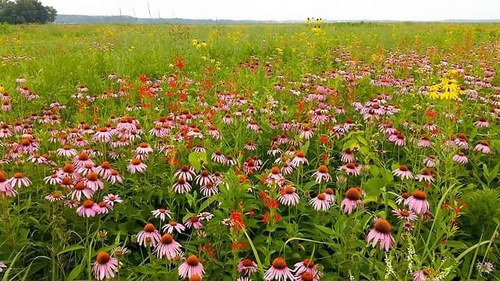
A backbone plant of native perennial borders, prairie plantings, meadows, and pollinator gardens. Mass plantings of 7-12 produce a concentrated summer display. Container culture works in pots of 5 gallons (19 liters) or more. The wide adaptability and long bloom season make this a reliable native perennial for home gardens across the eastern and central United States. Cut flowers are long-lasting in arrangements.How to Identify
Appearance
Size & Dimensions
Height2' - 4'
Width/Spread1'6" - 2'
Colors
Bloom Information
Flowering from July through September, approximately 8 weeks. Deadheading extends bloom; leaving seed cones supports birds. The long bloom period is a key advantage over E. pallida (4 weeks).
Detailed Descriptions
Flower Description
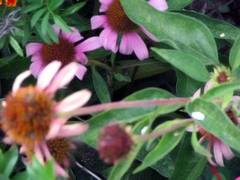
Purple-pink to rose-pink ray florets around a spiny orange-bronze coneFoliage Description
Dark green, ovate to lance-shaped, rough-textured, coarsely toothedGrowing Conditions
Sun Requirements
Requires 5-10 hours of direct sunlight daily
• Full Sun: 6+ hours of direct sunlight
• Partial Shade: 3-6 hours of direct sunlight
• Full Shade: Less than 3 hours of direct sunlight
Care & Maintenance
Care Guide
Plant in full sun to partial shade with at least 5 hours of light. Average, well-drained soil of any type. The species tolerates clay. Heavy fertilising in rich soil is avoided — lean conditions produce sturdier plants. Watering during establishment is sufficient; the species is drought-tolerant once rooted. Spent flowers are deadheaded for extended bloom, or cones are left for birds. All stems are cut to ground level in late winter.Pruning
Spent flowers are deadheaded to extend bloom, or cones are left standing through winter for wildlife. All stems are cut to 3-4 inches (8-10 cm) above ground in late February-March.Pruning Schedule
Prune: March & November
fallearly spring
Container Growing
Suitable for container growing
Minimum container size: 5 gallons