Echinacea, Genus, pallida, Species,
- Genus & species
pale purple coneflower
Central United States, from Michigan and Wisconsin south to Texas and Alabama
Overview
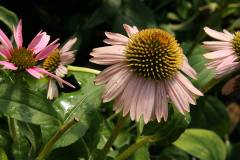
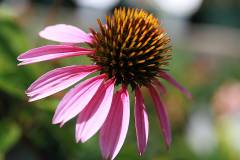
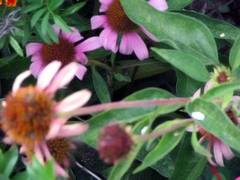
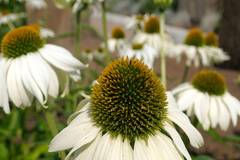
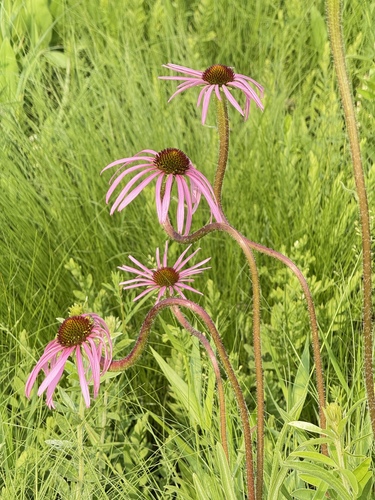
Echinacea pallida is a native prairie coneflower in the daisy family (Asteraceae) that grows 30-48 inches (75-120 cm) tall and 12-18 inches (30-45 cm) wide. The species is separated from the more familiar E. purpurea by its narrow, strongly drooping pale pink-lavender ray florets that hang nearly vertically below the prominent dark bronze-brown central cone, creating a shuttlecock or badminton birdie silhouette. The ray florets are narrow (0.25 inch / 6 mm wide) and 2-3 inches (5-8 cm) long, giving the flower a wispy, delicate appearance unlike the broad, horizontal rays of E. purpurea. The species name 'pallida' means 'pale', referring to the washed-out pink-lavender colour that is lighter than E. purpurea's saturated purple-pink. Dark green, narrow, lance-shaped rough-textured leaves concentrate along the lower stem; the upper stem is mostly bare. The plant develops a deep, black taproot that makes established plants extremely drought-tolerant but difficult to transplant. In the wild prairie, E. pallida occurs in drier, more calcareous conditions than E. purpurea, growing in thin-soiled prairies and open limestone glades. The dark seed cones persist through winter, providing goldfinch forage and adding structural interest to the dormant garden. Deer avoid the rough foliage.
Native Range
Echinacea pallida is native to the central United States, from Michigan and Wisconsin south through Iowa, Missouri, and Kansas to Texas and Alabama. It grows in dry to mesic tallgrass prairies, open glades, and rocky limestone outcrops on well-drained soils.Suggested Uses
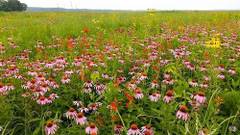
Used in prairie restorations, native meadow plantings, and naturalistic perennial borders. The wispy, drooping ray form gives a recognisable silhouette among other prairie plants. The species performs in dry, lean conditions where E. purpurea would become leggy. The persistent seed cones supply winter bird forage. Not suited to formal borders due to the wild, sparse growth habit.How to Identify
Appearance
Size & Dimensions
Height2'6" - 4'
Width/Spread1' - 1'6"
Colors
Bloom Information
Flowering in June and July, approximately 4 weeks. The bloom period is shorter and more concentrated than the extended summer bloom of E. purpurea. Dark seed cones persist through winter.
Detailed Descriptions
Flower Description
Pale pink-lavender drooping ray florets around a dark bronze-brown coneFoliage Description
Dark green, narrow, lance-shaped, rough-texturedGrowing Conditions
Sun Requirements
Requires 6-12 hours of direct sunlight daily
• Full Sun: 6+ hours of direct sunlight
• Partial Shade: 3-6 hours of direct sunlight
• Full Shade: Less than 3 hours of direct sunlight
Care & Maintenance
Care Guide
Plant in full sun with at least 6 hours of direct light. Well-drained soil of any type, including clay, sand, and rocky ground. Heavy fertilising is avoided. Watering during establishment is sufficient; the deep taproot makes established plants drought-tolerant. Established plants are not moved — the taproot resists transplanting. Seed cones are left standing through winter for birds. All stems are cut to ground level in late winter.Pruning
All stems and seed cones are left standing through fall and winter for wildlife value and structural interest. All stems are cut to 3-4 inches (8-10 cm) above ground in late February-March before new growth.Pruning Schedule
Prune: March & November
fallearly spring