Asclepias, Genus, tuberosa, Species,
- Genus & species
butterfly weed
Eastern and central North America (from southern Ontario south to Florida and west to Arizona and Colorado); dry prairies, open meadows, sandy roadsides, and well-drained open habitats across most of the eastern and central United States.
Overview
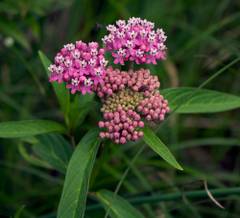
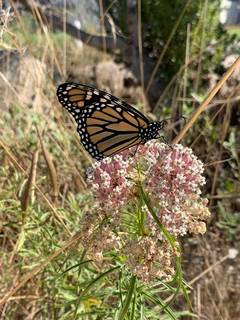
Asclepias tuberosa is butterfly weed (also called orange milkweed), a native eastern and central North American perennial in the dogbane family (Apocynaceae, formerly Asclepiadaceae before the 1990s-2000s molecular-phylogeny revision that absorbed the milkweed family into the broader dogbane family) growing 18-30 inches (45-75 cm) tall and 12-18 inches (30-45 cm) wide. The species name 'tuberosa' references the tuberous taproot system that the species develops to depths of 12+ inches as a drought-tolerance and dormancy-survival adaptation to the dry-prairie native habitat; the deep taproot makes the species among the more drought-tolerant native perennials in commercial cultivation but also makes the species among the more difficult to transplant — gardeners plant container-grown nursery stock and do not move established plants, because root disturbance damages the taproot and frequently kills the plant. Brilliant orange flat-topped umbels of densely packed five-petaled hooded flowers open at the tops of the upright stems from June through August across a 6-week active flowering window — the orange color is among the more visually impactful native-wildflower color displays in commercial cultivation and is the species' principal ornamental signature. Three identification characters distinguish A. tuberosa from the other commonly cultivated North American milkweed species: the orange flower color (other commonly cultivated milkweeds — A. incarnata, A. syriaca, A. speciosa — produce pink, white, or pinkish-purple flowers, and no other Asclepias species in commercial cultivation produces orange), the alternate leaf arrangement (other Asclepias species produce opposite leaves along the stems), and the clear watery latex sap (other Asclepias species produce the milky-white latex sap that gives the broader common name 'milkweed' to the genus). The clear-sap character of A. tuberosa is also reflected in the species' lower toxicity profile: the cardiac-glycoside (cardenolide) compounds that all milkweed species produce as defensive chemistry are present in A. tuberosa at lower concentration than in the milky-sapped relatives, though the species is still toxic if ingested in quantity. The species is the principal larval host plant for the monarch butterfly (Danaus plexippus) — monarch caterpillars feed on the foliage and sequester the cardenolide compounds into their tissues, where the chemistry is transferred through pupation into the adult butterfly tissues to serve as a predator deterrent: birds that taste a monarch butterfly experience the bitter cardenolide chemistry and avoid the species in future foraging, and the orange-and-black warning coloration of the adult monarch communicates the toxicity to predator species across the species' range. The monarch-host-plant role makes A. tuberosa a foundational species for monarch-conservation pollinator gardens across the eastern North American native range, and gardeners plant the species specifically to support monarch reproduction during the spring and summer breeding generations that precede the fall migration to the overwintering grounds in central Mexico. Pollination of the flowers is by butterflies (monarchs, swallowtails, fritillaries, hairstreaks), bumblebees, hummingbirds (which work the warm-orange tubular hooded floral architecture as a midsummer nectar source), and beneficial wasps and flies. Sharp drainage and lean soil are essential for long-term cultivation success: the species rots in wet-bottom or rich-substrate planting positions and produces leggy weak growth in over-fertilized conditions; gardeners site the species in well-drained sandy or gritty substrate matching the dry-prairie native habitat. Late spring emergence (often May) means gardeners mark the planting location to avoid spring-cleanup damage to the dormant rootstock. Hardy to zone 3 and reliable across zones 3-9. Drought-tolerant once established. Deer avoid the foliage from the cardenolide chemistry. The species is toxic to humans and pets if ingested in quantity.
Native Range
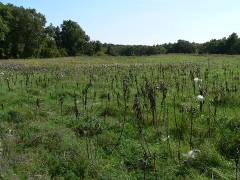
Asclepias tuberosa is native to eastern and central North America with a continuous native range from southern Ontario and Quebec south through New York, Pennsylvania, and the Appalachian foothills to Florida and west through the central plains to Texas, Arizona, and into eastern Colorado. The species occurs in dry prairies, open meadows, sandy roadside cuts, oak savannas, rocky open thickets, and well-drained open habitats across most of the eastern and central United States and the southern fringe of eastern Canada, with the species' physiological adaptation to lean dry sandy substrate, full sun, and warm-summer climate reflecting the dry-prairie open-habitat native range. The species is a foundational native perennial for native-plant gardens, prairie-restoration plantings, monarch-conservation pollinator gardens, and butterfly-supporting ornamental plantings across the eastern and central United States, with the species' monarch-host-plant role placing it at the top of native-perennial recommendations for gardeners interested in supporting monarch butterfly reproduction.Suggested Uses
Used in native-plant gardens, prairie-restoration plantings, monarch-conservation pollinator gardens, butterfly gardens, dry meadow plantings, sunny well-drained borders, and xeric drought-tolerant gardens where the lean-substrate cultivation requirement matches the planting position. The species is a foundational monarch-conservation cultivation choice — the principal larval host plant for the monarch butterfly across the eastern and central North American native range — and gardeners interested in monarch reproduction plant A. tuberosa specifically for the host-plant role. The brilliant orange umbel display gives the species a midsummer color contribution that few other native perennials match in saturation. The species pairs with companion native perennials including Echinacea purpurea, Rudbeckia fulgida, Liatris spicata, Monarda bradburiana, Coreopsis lanceolata, and warm-season ornamental grasses (Schizachyrium scoparium, Sporobolus heterolepis) for a multi-species native-plant prairie composition where the orange A. tuberosa umbels read at viewing distance against the warm-yellow, magenta-purple, and grass-tan companion colors. The species does not transplant — siting decisions are permanent.How to Identify
Appearance
Size & Dimensions
Height1'6" - 2'6"
Width/Spread1' - 1'6"
Colors
Bloom Information
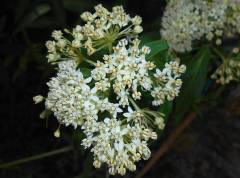
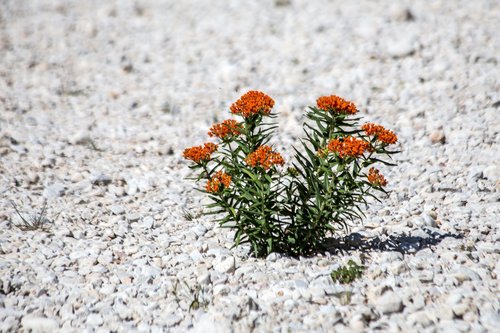
Brilliant orange flat-topped umbels of densely packed five-petaled hooded flowers open at the tops of the upright stems from June through August across a 6-week active flowering window. Each individual flower carries the characteristic Asclepias floral architecture of five reflexed petals below an inner crown of five hooded structures (called hoods) that hold nectar and serve as the principal pollinator-attracting feature; the hooded structures are particular to the genus and distinguish Asclepias flowers from the superficially similar umbels of other plant families. Pollination is by butterflies (monarchs, swallowtails, fritillaries, hairstreaks), bumblebees and large bees, hummingbirds (which work the warm-orange tubular hooded floral architecture as a midsummer nectar source), and beneficial wasps and flies — the broad pollinator support is one of the species' principal ecological contributions to native-plant gardens. Spindle-shaped seed pods 3-5 inches long develop after flowering and split open in fall to release silky-tufted wind-dispersed seeds.
Detailed Descriptions
Flower Description
Brilliant orange to occasionally yellow-orange in dense flat-topped umbels 2-4 inches (5-10 cm) across composed of dozens of individual five-petaled hooded flowers carried at the tops of the upright stems; each individual flower carries the characteristic Asclepias floral architecture of five reflexed petals below an inner crown of five hooded structures called hoods that hold nectar and serve as the principal pollinator-attracting featureFoliage Description
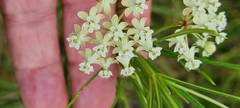
Dark green; lance-shaped to narrowly oblong leaves arranged alternately along upright unbranched stems (rather than opposite as in most other Asclepias species — the alternate leaf arrangement is one of the species' diagnostic field-identification characters at the foliage level), with the foliage carrying a clear watery latex sap rather than the milky-white latex sap that other milkweeds produce when brokenGrowing Conditions
Sun Requirements
Requires 6-12 hours of direct sunlight daily
• Full Sun: 6+ hours of direct sunlight
• Partial Shade: 3-6 hours of direct sunlight
• Full Shade: Less than 3 hours of direct sunlight
Care & Maintenance
Care Guide
Plant in full sun with at least 6 hours of direct light. Sharply drained lean sandy or gritty soil at pH 6.0-7.5 supports the species; the species' dry-prairie native habitat reflects a strong physiological preference for sharp drainage and lean substrate, and the species rots in wet-bottom or rich-substrate planting positions and produces leggy weak growth in over-fertilized conditions. Watering is during establishment only because the species is drought-tolerant once the deep taproot system develops (typically by the second growing season). Fertilization is omitted because the species is adapted to lean substrate and over-fertilization produces excessive vegetative growth at the expense of flowering. Critical cultivation point: the species develops a deep taproot to 12+ inches and resists transplanting — gardeners plant container-grown nursery stock at the intended permanent location and do not move established plants, because root disturbance damages the taproot and frequently kills the plant. The species emerges late in spring (often May) compared to most border perennials, and gardeners mark the planting location to avoid spring-cleanup damage to the dormant rootstock. Allow the spindle-shaped seed pods to develop and release silky seeds for wildlife support and natural self-sowing, or deadhead the flowering stems before pod maturity in strictly contained plantings. The species is hardy to zone 3 and reliable across zones 3-9. The species is the principal larval host plant for the monarch butterfly and gardeners interested in monarch conservation plant A. tuberosa specifically for the monarch-host-plant role; minor leaf damage from monarch caterpillar feeding is the intended cultivation outcome and is not pest damage to be controlled.Pruning
No regular pruning is needed because the species produces a single annual flush of upright unbranched flowering stems that complete the seasonal growth cycle from spring emergence through fall seed-pod release. Allow the spindle-shaped seed pods to develop and split open in fall for silky-seed-tuft display and natural self-sowing, or deadhead the flowering stems before pod maturity if strictly contained plantings are required. Spring cleanup is delayed until late May or June when new growth confirms the dormant rootstock survived winter — early-spring cleanup risks accidentally damaging the late-emerging rootstock if the planting location is not clearly marked.Toxicity Warning
Toxic to pets and humans (cardiac glycosides — cardenolides — at moderate concentration; less toxic than other milkweed species but still toxic if ingested in quantity)Planting Guide
Planting Methods & Timing
Planting Method
transplant