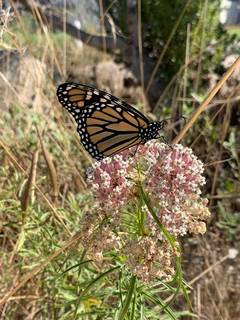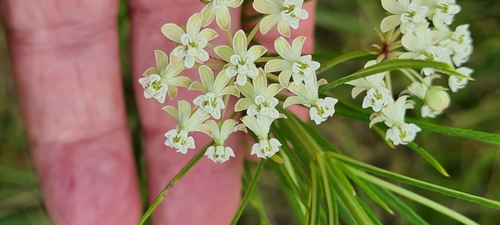
Asclepias, Genus, verticillata, Species,
- Genus & species
whorled milkweed
Central and eastern North America, from Ontario south to Florida and west to the Great Plains
Overview
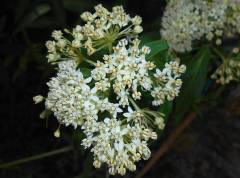
Asclepias verticillata is a slender upright perennial milkweed in the family Apocynaceae growing 12-24 inches (30-60 cm) tall and 12-18 inches (30-45 cm) wide. The most identifying feature is the very narrow thread-like leaves arranged in whorls of 3-6 around the stem, giving the plant an airy thread-like appearance separated from broad-leaved milkweed species. Small clusters of greenish-white to white flowers appear at stem tips and upper leaf axils from July through September. The flowers are smaller and less showy than those of A. tuberosa or A. incarnata, but they attract a similar range of pollinators and serve as a nectar source for butterflies and bees. The species is a larval host for monarch butterflies. Underground rhizomes spread laterally, forming loose colonies in favorable conditions; in cultivated garden soil, this spread can be moderately aggressive and may require containment or periodic thinning. The species tolerates poor dry sandy soils where other milkweeds struggle, filling a habitat niche on droughty infertile sites. Milky sap contains cardiac glycosides toxic to humans, pets, and livestock; this species is among the milkweeds most toxic to cattle when consumed in large quantities. Deer avoid the foliage.
Native Range
Asclepias verticillata is native to central and eastern North America, from Ontario and Manitoba south through Florida and west to the Great Plains and Arizona. It grows in dry prairies, roadsides, open woodlands, rocky glades, and disturbed ground on lean well-drained soils.Suggested Uses
Used in native meadow restorations, prairie plantings, and monarch butterfly habitat gardens on dry poor soils. The thread-like foliage adds a contrasting airy quality among broader-leaved companions. Suited to roadside plantings and dry-site naturalization. Not recommended for irrigated fertile garden beds due to rhizome aggressiveness.How to Identify
Appearance
Size & Dimensions
Height1' - 2'
Width/Spread1' - 1'6"
Bloom Information
Flowering occurs from July through September. Small clusters of greenish-white flowers appear at stem tips and in upper leaf axils over approximately 6 weeks. Individual flower clusters are small, 1-1.5 inches (2.5-4 cm) across. Slender seed pods develop after bloom and split in fall to release silk-tufted seeds.
Detailed Descriptions
Flower Description
Greenish-white to white; small clusters at stem tips and upper leaf axilsFoliage Description
Medium green; very narrow thread-like; whorled in groups of 3-6 around stemsGrowing Conditions
Sun Requirements
Requires 6-12 hours of direct sunlight daily
• Full Sun: 6+ hours of direct sunlight
• Partial Shade: 3-6 hours of direct sunlight
• Full Shade: Less than 3 hours of direct sunlight
Care & Maintenance
Care Guide
Sited in full sun with at least 6 hours of direct light. Well-drained lean soil produces the strongest growth; tolerates poor sandy and rocky ground. Watered during establishment only; drought-tolerant once rooted. Fertilization is not used; rich conditions promote excessive rhizome spread. Rhizomatous spread is contained with root barriers or periodic removal of outlying stems if the colony exceeds its intended area. All stems are cut to ground level in late fall or early spring. Milky sap from broken stems can irritate skin and eyes; gloves support handling during pruning and division.Pruning
All stems are cut to 2-3 inches (5-8 cm) above ground in late fall or early spring. Wandering rhizome shoots are removed during the growing season if spread exceeds desired boundaries. No deadheading is needed.Pruning Schedule
Prune: March & November
fallearly spring