Prunus, Genus, serotina, Species,
- Genus & species
black cherry
Eastern North America (Nova Scotia and Ontario south to central Florida and west to eastern Texas; disjunct populations in Mexico, Guatemala, and mountains of South America)
Overview
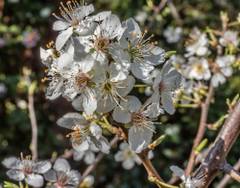
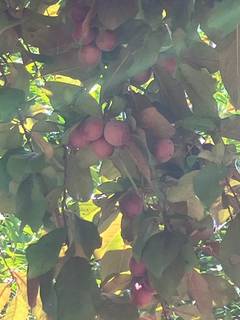
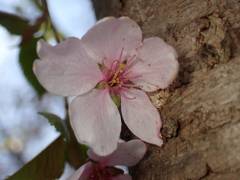
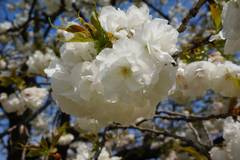
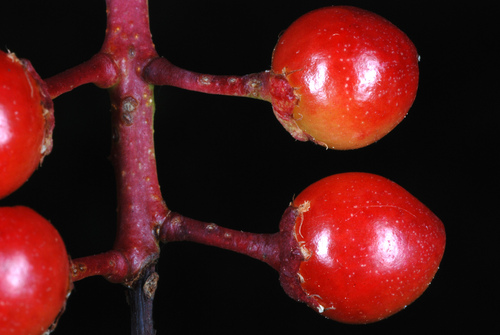
Prunus serotina is a deciduous tree in the rose family (Rosaceae) reaching 50-80 feet (15-24 m) tall and 30-50 feet (9-15 m) wide at maturity, with a pyramidal to broadly oval crown. Trunk bark is smooth and reddish-brown on young trees, maturing to dark grey-black with a characteristic pattern of irregular, scaly, plate-like segments that curl outward at the edges — often described as resembling burnt potato chips. Inner bark is aromatic, with a bitter almond scent due to cyanogenic glycosides (prunasin). Leaves are alternate, simple, elliptic-lanceolate, 2-5 inches (5-13 cm) long, glossy dark green above with a narrowly serrate margin, bearing 1-2 pairs of small reddish-brown glands on the petiole near the leaf base — visible with a hand lens. In mid-spring, dense, pendulous racemes 3-6 inches (8-15 cm) long bear 30-50+ small white five-petalled flowers, each 0.3 inch (8 mm) across. Fruit is a round drupe 0.3-0.4 inch (8-10 mm) in diameter, ripening from red through dark purple-black in July-August. Fruit is edible but astringent when raw; cooked, it is used in jams, wines, and syrups. Wilted leaves and twigs contain hydrocyanic acid (prussic acid) released from prunasin by the enzyme emulsin — toxic to livestock, particularly cattle and horses. The wood is valued in furniture making and cabinetry for its reddish-brown heartwood and dense grain. The species is the largest native cherry in North America. In Europe (particularly the Netherlands, Belgium, and Germany), it is classified as an invasive species, colonising woodland understories and heathland.
Native Range
Prunus serotina is native to eastern North America, from Nova Scotia and Ontario south through the eastern United States to central Florida and west to eastern Texas, with disjunct populations in Mexico, Guatemala, and the mountains of South America, where the species occurs in deciduous and mixed forests, old fields, fencerows, and disturbed ground from sea level to approximately 5,000 feet (1,500 m).Suggested Uses
Planted as a shade tree, specimen tree, or in native woodland plantings, spaced 30-40 feet (9-12 m) apart. The wood is commercially valuable — second only to black walnut among native American hardwoods for furniture. Fruit supports wildlife — over 70 bird species and many mammals consume the drupes. In urban settings, the aggressive self-seeding habit and surface root tendency limit suitability for small residential lots. Used in reforestation and old-field succession plantings in its native range.How to Identify
Appearance
Size & Dimensions
Height50' - 80'
Width/Spread30' - 50'
Bloom Information
White flower racemes open from late April through May in the Pacific Northwest. Each raceme bears 30-50+ flowers opening sequentially over 10-14 days. Bloom period is 2-3 weeks. Pollination is by bees, flies, and beetles. Dark purple-black drupes ripen in July-August and are consumed rapidly by birds — cedar waxwings, robins, and thrushes are primary dispersers.
Detailed Descriptions
Foliage Description
Glossy dark greenGrowing Conditions
Sun Requirements
Requires 4-10 hours of direct sunlight daily
• Full Sun: 6+ hours of direct sunlight
• Partial Shade: 3-6 hours of direct sunlight
• Full Shade: Less than 3 hours of direct sunlight
Care & Maintenance
Care Guide
Plants grow in full sun to partial shade in moist, well-drained, slightly acidic to neutral soil with a pH of 5.0-7.0. Trees are spaced 30-40 feet (9-12 m) apart. The species tolerates a wide range of soil types including sandy, loamy, and moderately clay soils. Watering is regular during the first 2-3 years; once established, the species is moderately drought-tolerant. No fertilising is needed in reasonably fertile soil. In the Pacific Northwest, the species is not native but grows readily in USDA zones 6-8. Eastern tent caterpillar (Malacosoma americanum) can defoliate trees in spring — egg masses and web tents are pruned out in early spring. Wilted branches and fallen leaves are kept away from livestock enclosures because cyanogenic glycosides become bioavailable as foliage wilts.Pruning
Pruning takes place in late winter (February-March) while dormant. Dead, crossing, and damaged branches are removed. When training as a single-trunk shade tree, lower branches are removed to 6-8 feet (1.8-2.4 m) over the first 5-10 years. Sucker growth from the base is removed at any time. Pruning during active growth is avoided — Prunus species are susceptible to bacterial canker (Pseudomonas syringae) through fresh wounds in wet conditions.Pruning Schedule
Prune: February–March
late spring