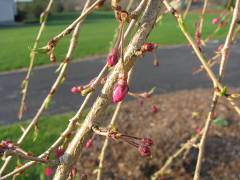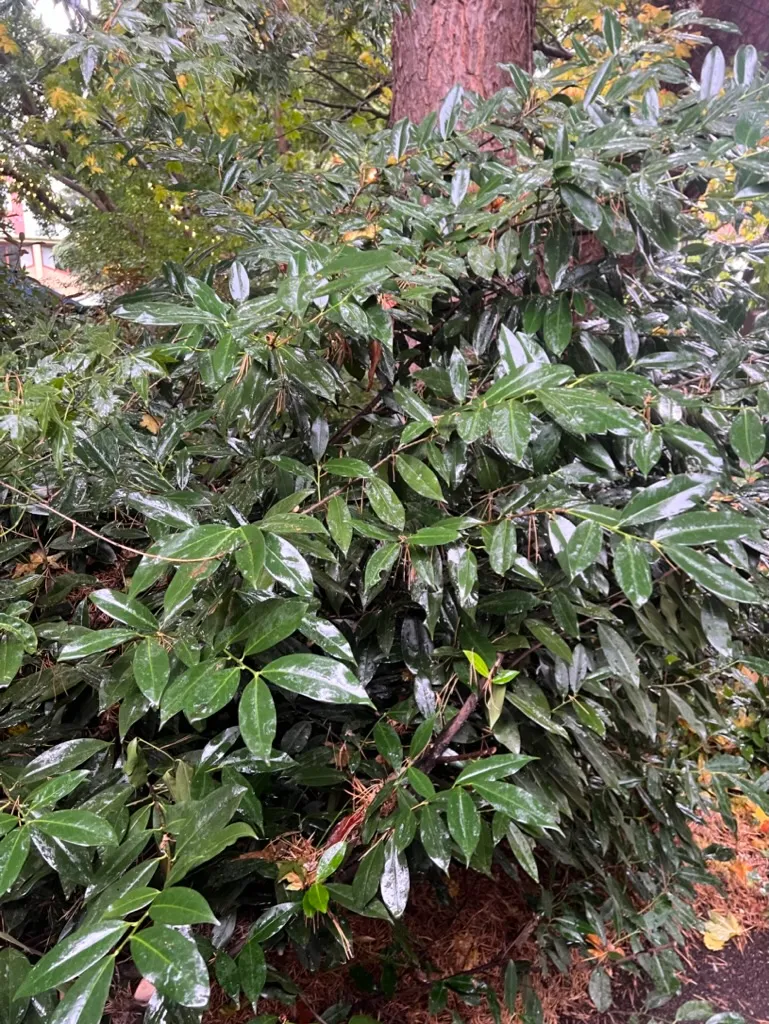
Image 1 of 4
1 / 4
Plant Reference
Prunus, Genus, laurocerasus, Species, 'Zabeliana', Cultivar,
- Genus & species
- Cultivar
Zabel laurel
Cultivar of garden origin selected in the Späth Nursery near Berlin, Germany in the late 19th century; species type {P. laurocerasus} native to southeastern Europe (Balkans) and southwestern Asia (Turkey, Caucasus, Iran)
Overview
Prunus laurocerasus 'Zabeliana' is a wide-spreading semi-dwarf cultivar of cherry laurel in the rose family Rosaceae growing only 3–5 feet (0.9–1.5 m) tall but spreading 8–12 feet (2.4–3.6 m) wide on horizontal layered branches that emerge nearly parallel to the ground from a multi-stemmed base, producing a low-mounding wide-spreading habit fundamentally different from the upright tree-like form of the species type. The cultivar was selected in the Späth Nursery near Berlin, Germany in the late 19th century and bears the cultivar name 'Zabeliana' in honor of Hermann Zabel (1832–1912), the German pomologist and dendrologist who served as the head of the forestry experimental station at Hannoversch Münden and who described and catalogued many of the Späth Nursery cultivars in the late 19th century horticultural literature. Leaves are glossy dark green, narrow, willow-like, and 2–5 inches (5–13 cm) long but only 0.5–1 inch (1.3–2.5 cm) wide — significantly narrower than the broad oblong leaves of the species type and the cultivar's primary identifying character that produces a softer textural effect than the coarse broad-leaved species form. The cultivar is among the hardier P. laurocerasus selections at zone 5 hardiness — the species type is reliably hardy only to zone 6, and 'Zabeliana' extends the cultivated range of the species into colder Mid-Atlantic and Upper Midwestern garden zones. White small 5-petaled flowers 0.3 inch (8 mm) across open in upright erect terminal racemes 2–4 inches (5–10 cm) long at the leaf axils in April through May across a 3-week bloom period and carry the species' characteristic sweet bitter-almond fragrance at close range, and glossy black cherry-like drupes develop in late summer and are dispersed by birds. Limitation: like the species type, 'Zabeliana' produces fertile fruit that contributes to the species' invasive spread in the Pacific Northwest of North America (Oregon, Washington, British Columbia) and in parts of western Europe — the cultivar does not solve the invasive-spread problem of the species, and gardeners in jurisdictions where P. laurocerasus is restricted should consult regional invasive species lists before planting and should remove the flower racemes before fruit set if planting is permitted. All parts contain cyanogenic glycosides (prunasin and amygdalin) that release hydrogen cyanide when the plant tissue is damaged or chewed, and ingestion is severely toxic to humans, livestock, cats, dogs, and horses. The wide-spreading 8–12 foot habit calls for substantial lateral garden space — the cultivar is not a small-site plant despite the modest 3–5 foot height. Tolerates almost any soil type, deep shade through full sun, and significant drought once established. Hand pruners or loppers are the appropriate pruning tools; hedge shears cut the leaves in half and produce browned cut edges that mar the ornamental display. Deer-resistant.
Native Range
Cultivar of garden origin selected in the Späth Nursery near Berlin, Germany in the late 19th century. The species type Prunus laurocerasus is native to southeastern Europe (the Balkan Peninsula) and southwestern Asia (Turkey, the Caucasus region, and northern Iran). The cultivar bears the cultivar name 'Zabeliana' in honor of Hermann Zabel (1832–1912), the German pomologist and dendrologist who served as the head of the forestry experimental station at Hannoversch Münden and who described and catalogued many of the Späth Nursery cultivars in the late 19th century horticultural literature.Suggested Uses
Used as a wide-spreading low evergreen hedge, slope-cover planting, foundation planting on the wider side of a building, woodland-edge transition planting, and informal mass planting at 8–12 foot (2.4–3.6 m) spacing between plants in USDA zones 5 through 9. The narrow willow-like glossy dark green evergreen foliage on horizontal layered branches, the modest 3–5 foot mature height, the wide-spreading 8–12 foot lateral coverage, the zone 5 cold hardiness that exceeds the species type, and the tolerance of almost any soil and of deep shade through full sun combine to make the cultivar a foundation low evergreen shrub for cold-winter regions and for slope-cover applications. Tight foundation plantings with less than 8 feet of lateral space, jurisdictions where P. laurocerasus is classified as invasive without acceptance of seed-control measures, and households or properties where the severe cyanogenic glycoside toxicity to people, pets, and grazing livestock cannot be managed are unsuitable.How to Identify
Appearance
Size & Dimensions
Height3' - 5'
Width/Spread8' - 12'
Bloom Information
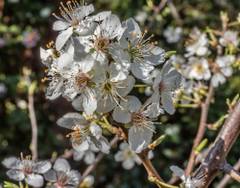
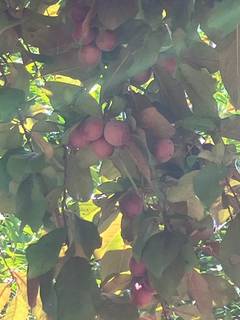
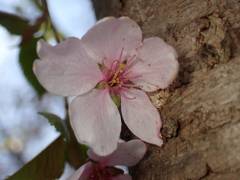
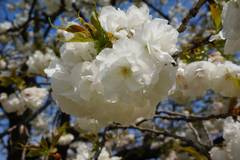
White small 5-petaled flowers 0.3 inch (8 mm) across open in upright erect terminal racemes 2–4 inches (5–10 cm) long at the leaf axils in April through May across a 3-week bloom period and carry the species' characteristic sweet bitter-almond fragrance at close range. Honeybees and other early-spring pollinators work the flowers for nectar across the bloom window. Glossy black cherry-like drupes develop in late summer and are dispersed by birds — the cultivar produces fertile fruit and contributes to the species' invasive spread in the Pacific Northwest of North America, and removal of the flower racemes before fruit set is the cultural intervention that limits the bird-dispersed seed contribution from cultivated plantings.
Detailed Descriptions
Flower Description
white small 5-petaled flowers 0.3 inch (8 mm) across in upright erect terminal racemes 2-4 inches (5-10 cm) long at the leaf axils in April through May across a 3-week bloom period; lightly fragrant with the species' characteristic sweet bitter-almond scent at close range; followed by glossy black cherry-like drupes that ripen in late summer and that are dispersed by birds — like the species type, the cultivar produces fertile fruit that contributes to the species' invasive spread in the Pacific Northwest of North AmericaFoliage Description
glossy dark green narrow willow-like leaves 2-5 inches (5-13 cm) long and only 0.5-1 inch (1.3-2.5 cm) wide — significantly narrower than the broad oblong leaves of the species type (P. laurocerasus carries leaves 2-3 inches / 5-7.5 cm wide); the narrow leaf shape is the cultivar's primary identifying character and produces a softer textural effect than the coarse broad-leaved species form; carried on horizontal layered branches that emerge nearly parallel to the ground from the multi-stemmed base; evergreen year-roundGrowing Conditions
Sun Requirements
Requires 2-10 hours of direct sunlight daily
• Full Sun: 6+ hours of direct sunlight
• Partial Shade: 3-6 hours of direct sunlight
• Full Shade: Less than 3 hours of direct sunlight
Care & Maintenance
Care Guide
Site in full sun to deep shade with 2–10 hours of direct sun per day in well-drained soil of almost any type — acidic loam, clay, sand, or alkaline chalk — with a pH range of 5.0–8.0. Drought tolerance develops once the root system is established. The cultivar is among the hardier P. laurocerasus selections at zone 5 hardiness and is the practical cherry laurel choice for cold-winter Mid-Atlantic and Upper Midwestern garden zones where the species type is unreliable. The wide-spreading 8–12 foot mature width calls for substantial lateral garden space and rules out the cultivar for tight foundation plantings or narrow border positions. The species type is classified as a noxious invasive plant in the Pacific Northwest of North America, and the cultivar produces fertile fruit that contributes to the spread; regional invasive species lists should be consulted before planting in restricted jurisdictions and removal of flower racemes before fruit set reduces the seed contribution. All parts contain cyanogenic glycosides and are severely toxic to humans, livestock, cats, dogs, and horses. Hand pruners or loppers (not hedge shears) are the appropriate pruning tools. Deer-resistant. Hardy in USDA zones 5–9.Pruning
Pruning is done after flowering finishes in late spring (May or June) to maintain the natural wide-spreading horizontal layered form, and the cultivar requires minimal shaping in established plantings because the natural branching habit produces the desired low-spreading silhouette without intervention. Hand pruners or loppers are the appropriate tools because hedge shears cut the leaves in half and produce browned cut edges on the canopy surface that mar the ornamental display for several months. Removal of flower racemes before fruit set in early summer reduces the bird-dispersed seed spread in regions where the species has naturalized as an invasive. The cultivar tolerates hard renovation pruning back to bare wood when an overgrown plant has lost its lower branching, with reliable regrowth from latent buds within 1–2 growing seasons.Pruning Schedule
Prune: May–June
late spring