Prunus, Genus, spinosa, Species,
- Genus & species
blackthorn
Europe, western Asia, and northwest Africa
Overview
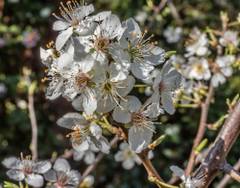
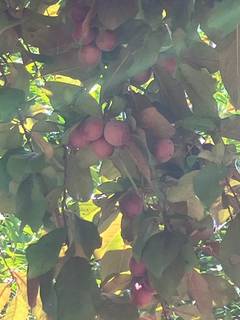
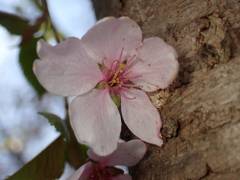
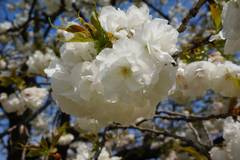
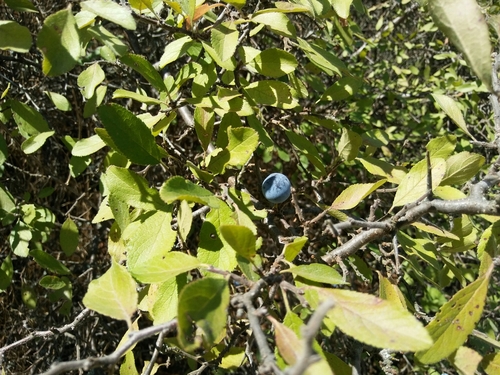
Prunus spinosa is a deciduous, densely branched shrub or small tree in the rose family, growing 6-15 feet (1.8-4.5 m) tall with rigid, spine-tipped twigs and near-black bark. In early spring, before the small oval leaves unfurl, the bare branches are covered in masses of white five-petaled flowers about 0.6 inch (1.5 cm) across. The leaves are 0.8-1.6 inches (2-4 cm) long with finely toothed margins. By autumn the plant carries blue-black, plum-like drupes called sloes, 0.4-0.6 inch (1-1.5 cm) wide, with a waxy bloom and sharply astringent flesh that softens after frost. It spreads by root suckers to form dense, impenetrable thickets, which has made it long-used as a stock-proof hedge across Europe. The fruit flavors sloe gin and preserves, and the hard wood is worked into walking sticks. The seeds and foliage contain cyanogenic compounds that are poisonous if eaten in quantity. In parts of North America it has naturalized and is treated as an invasive thicket-former.
Native Range
Native to Europe, western Asia, and northwest Africa, where it grows in hedgerows, woodland edges, scrub, and rough grassland. It has naturalized in parts of northeastern North America and New Zealand.Suggested Uses
Used as a stock-proof hedge, in shelterbelts, and in wildlife plantings where its thorns shelter nesting birds. The fruit is harvested for sloe gin, jams, and country wines. It suits rural and naturalistic settings rather than small formal gardens.How to Identify
Appearance
Size & Dimensions
Height6' - 15'
Width/Spread6' - 12'
Bloom Information
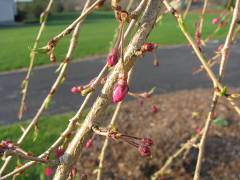
Flowers in early spring, generally March to April, with white blossom appearing on bare twigs ahead of the foliage. The lightly almond-scented flowers draw early bees and other pollinators. Fruit develops through summer and ripens to blue-black sloes in autumn.
Detailed Descriptions
Foliage Description
Dark green, turning yellow in autumnGrowing Conditions
Sun Requirements
Requires 5-10 hours of direct sunlight daily
• Full Sun: 6+ hours of direct sunlight
• Partial Shade: 3-6 hours of direct sunlight
• Full Shade: Less than 3 hours of direct sunlight