Prunus, Genus, serrula, Species,
- Genus & species
Tibetan cherry
Western China: Sichuan, Yunnan, and southeastern Xizang
Overview
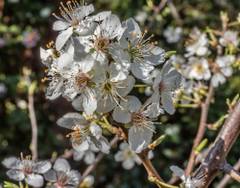
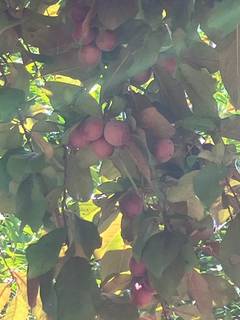
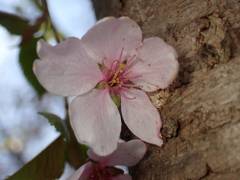
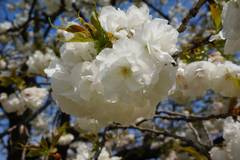
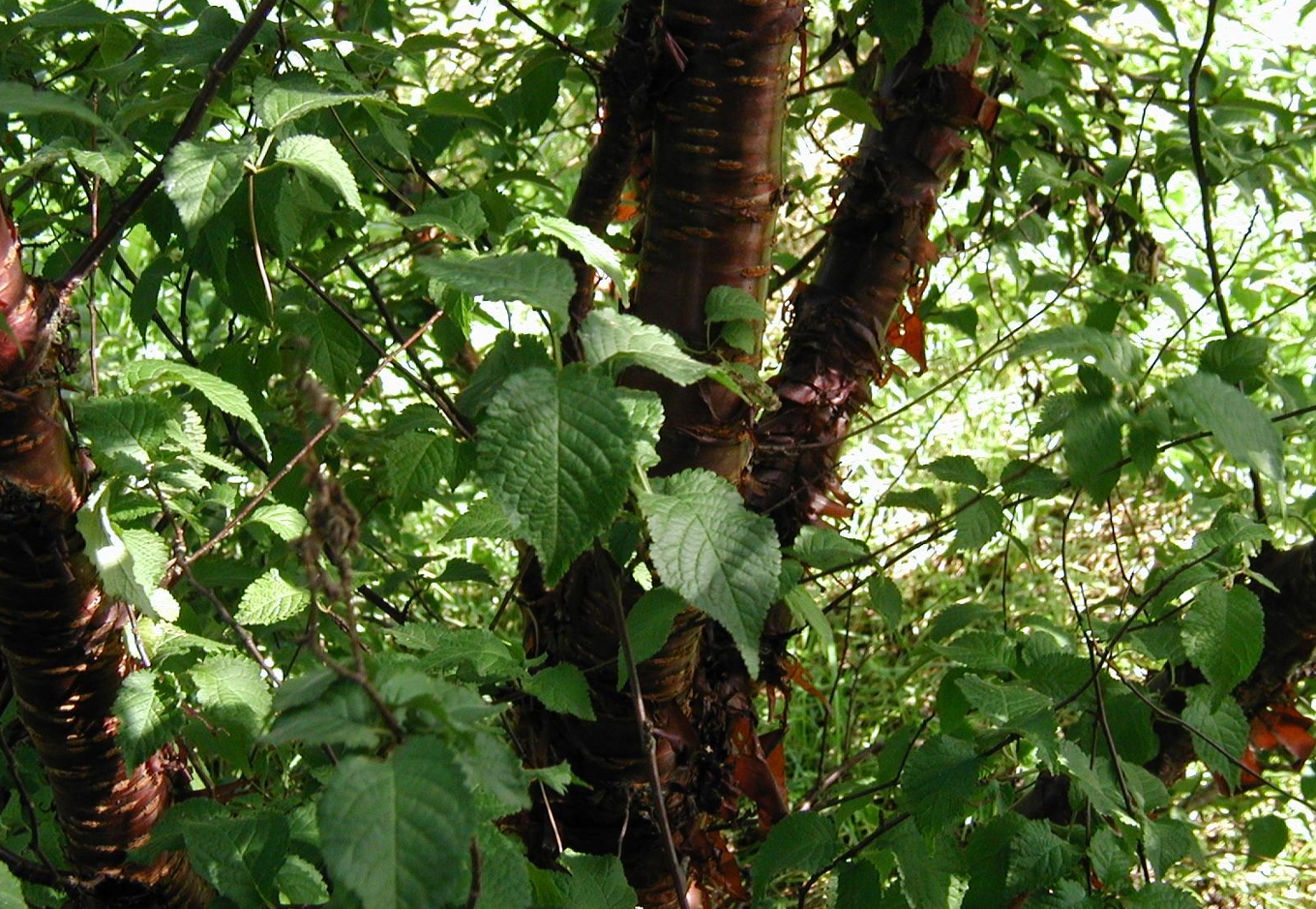
Prunus serrula is a deciduous tree reaching 20-30 feet (6-9 m) tall and wide, carrying a rounded crown on a short trunk. Bark is glossy mahogany-red to copper-brown, banded with raised horizontal lenticels 0.1-0.2 inch (3-5 mm) wide, and peels in thin horizontal strips that curl and shed each summer. The polished surface dulls and roughens on trunks over 8-10 inches (20-25 cm) in diameter as gray corky tissue builds. Leaves are lance-shaped, 2-4 inches (5-10 cm) long and 0.8-1.2 inches (2-3 cm) wide, finely toothed, dark green above, turning yellow over 2 weeks in October. Flowers open with the young leaves in late April and May, each white and 0.5-0.75 inch (12-20 mm) across, in clusters of 1-3 on stalks 0.8-1.6 inches (2-4 cm) long, largely screened by the expanding foliage. Fruit is an ovoid red drupe 0.4 inch (1 cm) long, bitter, ripening in August. Most nursery stock is grafted onto P. avium rootstock, and the graft union stays visible as a change in bark texture 4-12 inches (10-30 cm) above ground. Trees live 20-40 years.
Native Range
Native to western China across Sichuan, Yunnan, and southeastern Xizang, growing in mixed woodland, forest margins, and river valleys at 6,500-11,500 feet (2,000-3,500 m). Brought into European cultivation in 1908 from seed collected by Ernest Wilson.Suggested Uses
Planted as a specimen on lawns and in courtyards at 20-25 foot (6-7.5 m) spacing, and beside paths and seating where the trunk is seen at close range in winter. Lower branches are commonly cleared to 6 feet (1.8 m) to expose the bark. Container culture is limited to nursery size, and the 20-40 year lifespan is shorter than that of most landscape trees.How to Identify
Appearance
Size & Dimensions
Height20' - 30'
Width/Spread20' - 30'
Colors
Bloom Information
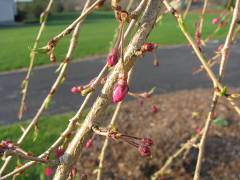
Flowers for 7-10 days in late April and May, opening as the leaves expand so that much of the bloom sits behind foliage. Flowering starts in mid-April in zones 7-8 and early May in zones 5-6. Frost below 28F (-2C) during bloom removes the fruit crop for that season. Flower buds form on short spurs on wood two years old and older.
Detailed Descriptions
Foliage Description
Dark greenGrowing Conditions
Sun Requirements
Requires 6-8 hours of direct sunlight daily
• Full Sun: 6+ hours of direct sunlight
• Partial Shade: 3-6 hours of direct sunlight
• Full Shade: Less than 3 hours of direct sunlight
Care & Maintenance
Care Guide
Water weekly for the first three seasons; established trees hold through 3-4 weeks without rain but shed leaves early in longer droughts. Soil at pH 6.0-7.5 with steady drainage matches the species, and waterlogging beyond 7-10 days kills roots. Bacterial canker, caused by Pseudomonas syringae, forms sunken stem lesions that weep amber gum and kills branches, entering through autumn and winter wounds. Silver leaf, caused by Chondrostereum purpureum, spreads through spores landing on cuts between September and May and silvers the foliage of affected limbs. Cutting is therefore confined to June through August, when wounds seal fastest. Rain keeps the bark surface clean on open-grown trees, while trunks in still shaded positions gather algae and moss that mask the color within 3-5 years.Pruning
Cutting is limited to June through August, since wounds made between September and May admit silver leaf and bacterial canker spores. Work is confined to dead, crossing, or damaged branches, as the rounded crown needs no shaping. Shoots rising below the graft union belong to the P. avium rootstock and are cut flush at the point of origin; left in place they extend 3-5 feet (0.9-1.5 m) per year and overtake the grafted crown.Pruning Schedule
Prune: June–August
summer