Image 1 of 9
1 / 9
Plant Reference
Prunus, Genus, 'Kanzan', Cultivar,
- Genus
- Cultivar
Kwanzan flowering cherry
Cultivar of Japanese garden origin; a selection from the Sato-zakura (village cherry) group cultivated in Japan for centuries; derived from {Prunus serrulata} and related cherry species
Overview
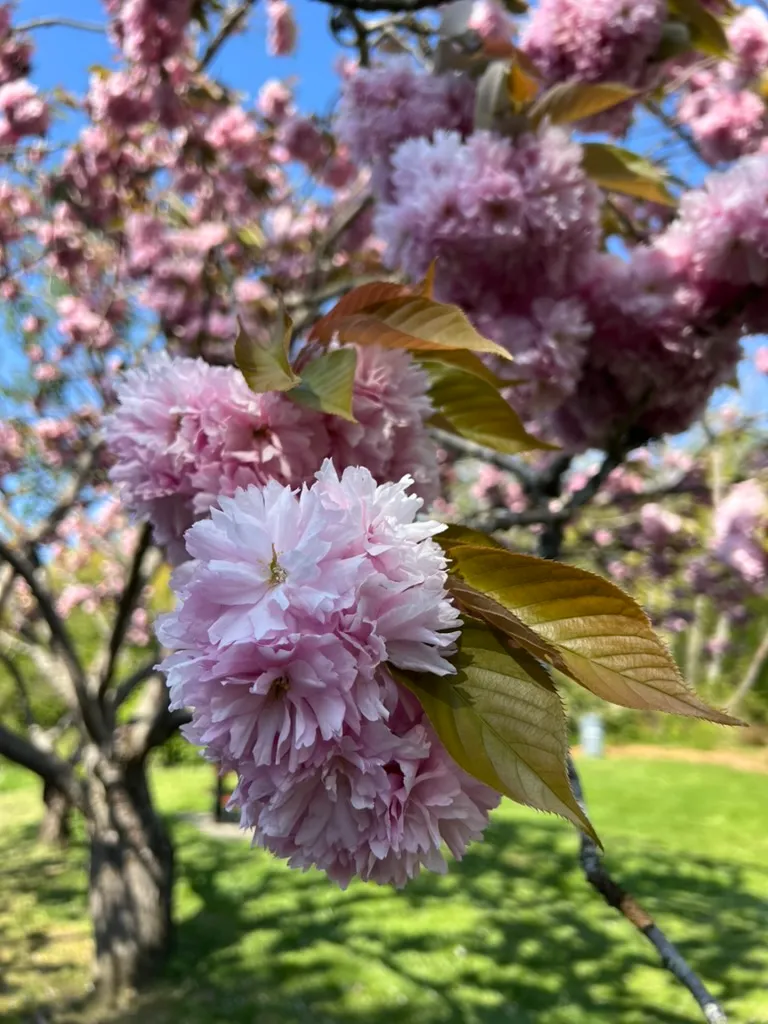
Prunus 'Kanzan' is an upright to vase-shaped deciduous tree in the family Rosaceae reaching 25–35 feet (7.5–10.5 m) tall and 20–30 feet (6–9 m) wide, with a crown that spreads horizontally as the tree matures. 'Kanzan' is a double-flowered cultivar from the Sato-zakura (village cherry) group, cultivated in Japan for centuries and derived from Prunus serrulata and related cherry species; it has been widely planted as a flowering cherry across North America and Europe since the early 20th century. Deep pink fully double flowers with 20–30 petals per flower, 2–2.5 inches (5–6 cm) across, open in hanging clusters of 3–5 along the branches in April over about 2 weeks, and the coppery-bronze new foliage emerges at the same time so that the tree carries pink flowers against bronze leaves during the bloom period. The double flowers are fully sterile and produce no fruit, so there is no summer fruit drop and no seedling spread into the surrounding landscape. Leaves are simple, ovate-lanceolate with finely serrated margins, 2–5 inches (5–13 cm) long, dark green through the growing season, and turn bronze to orange in fall. Limitation: 'Kanzan' is short-lived for a landscape tree at a typical lifespan of 15–25 years, which is shorter than most flowering ornamental trees of comparable size, and the cultivar is susceptible to peach tree borer (Synanthedon exitiosa), bacterial canker (Pseudomonas syringae), and root rot in poorly drained soil; grafted trees also produce rootstock suckers below the graft union that call for removal each season. All parts of the tree including the leaves, bark, and seeds contain cyanogenic glycosides that release hydrogen cyanide when chewed, and wilted foliage on broken or pruned branches is a hazard to grazing livestock.
Native Range
Cultivar of Japanese garden origin. 'Kanzan' is a selection from the Sato-zakura (village cherry) group of flowering cherries cultivated in Japan for centuries, derived from Prunus serrulata and related wild cherry species, and has been propagated vegetatively by grafting onto Prunus rootstock for landscape use since its introduction to Western horticulture in the early 20th century.Suggested Uses
Used as a specimen spring-flowering tree in residential front yards, entry courtyards, streetscapes, and parks at 20–30 foot (6–9 m) spacing where the April bloom is the reason for planting. The sterile double flowers produce no fruit drop and no seedling carpet in the surrounding landscape, which makes the cultivar cleaner than single-flowered fruiting cherries for lawn and patio positions. Gardens with grazing livestock, sites with poor drainage, and positions where a long-lived shade tree is the design goal are unsuitable because of the cyanogenic toxicity of wilted foliage, the root rot susceptibility, and the 15–25 year lifespan of the cultivar.How to Identify
Appearance
Size & Dimensions
Height25' - 35'
Width/Spread20' - 30'
Bloom Information
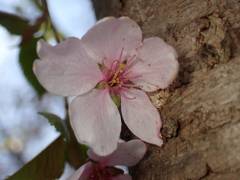
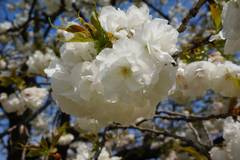
Deep pink fully double flowers with 20–30 petals per flower, 2–2.5 inches (5–6 cm) across, open in hanging clusters of 3–5 along the branches in April across about 2 weeks. The double flowers are sterile and produce no fruit, so the flowers provide limited nectar or pollen for bees compared with single-flowered flowering cherries. Coppery-bronze new foliage emerges at the same time as the flowers and matures to dark green as the bloom period ends.
Detailed Descriptions
Flower Description
deep pink fully double flowers with 20-30 petals per flower, 2-2.5 inches (5-6 cm) across, in hanging clusters of 3-5 along the branches; the double flowers are sterile and produce no fruitFoliage Description
dark green at maturity; simple, ovate-lanceolate with finely serrated margins, 2-5 inches (5-13 cm) long; emerging coppery-bronze in spring alongside the flowers; turns bronze to orange in fallGrowing Conditions
Sun Requirements
Requires 6-12 hours of direct sunlight daily
• Full Sun: 6+ hours of direct sunlight
• Partial Shade: 3-6 hours of direct sunlight
• Full Shade: Less than 3 hours of direct sunlight
Care & Maintenance
Care Guide
Site in full sun with 6–12 hours of direct sun per day in well-drained soil with a pH of 5.5–7.0. Poorly drained sites produce root rot and shorten the already-short lifespan of the cultivar. 'Kanzan' is not drought-tolerant and soil moisture should remain consistent through summer dry periods. Pruning is done after flowering in June and July rather than in winter because winter cuts expose the tree to bacterial canker infection (Pseudomonas syringae) through the wounds. Rootstock suckers that emerge below the graft union are removed as they appear because they grow faster than the grafted top and can outcompete the cultivar. Hardy in USDA zones 5–8. All parts of the tree contain cyanogenic glycosides and are toxic to humans and pets if ingested.Pruning
Pruning is done after flowering in June and July because winter pruning cuts expose the tree to bacterial canker infection (Pseudomonas syringae) that enters through the wounds and girdles branches. Dead, crossing, or damaged branches can be removed at the same time, and cuts should be clean and kept to the minimum needed to correct structural faults. Rootstock suckers that emerge below the graft union are removed at the soil line as they appear because they grow faster than the grafted top and will outcompete the cultivar. The vase-shaped to spreading form develops naturally and requires little training.Pruning Schedule
Prune: June–July
summer