Prunus, Genus, americana, Species,
- Genus & species
American plum
Overview
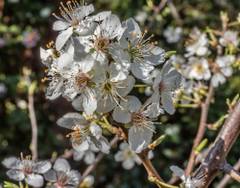
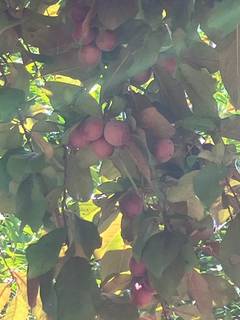
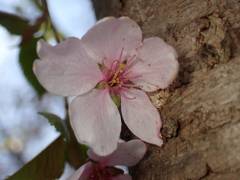
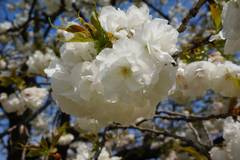
Prunus americana is a deciduous large shrub or small tree in the rose family (Rosaceae), reaching 10-25 feet (3-8 m) tall with a broad, spreading, often thicket-forming crown. It commonly grows multi-stemmed and suckers from the roots to form dense colonies. The reddish-brown to gray bark develops scaly plates with age, and the twigs bear short, sharp spur-shoots. Oval, sharply toothed leaves 2-4 inches (5-10 cm) long turn yellow to red in fall. In early spring, before or as the leaves expand, clusters of white five-petaled flowers about 1 inch (2.5 cm) across open along the branches and carry a strong fragrance. The fruit is a round red to reddish-purple plum 0.8-1.2 inches (2-3 cm) wide with tart, edible yellow flesh and a single stone, ripening in late summer. The suckering habit can spread the plant well beyond its planting spot. Leaves, twigs, and seeds contain cyanogenic compounds that are toxic to people and livestock if eaten in quantity.
Native Range
Native to North America, Prunus americana ranges across much of the continent from Quebec and the Maritimes west to Montana and south to Florida, Texas, and New Mexico. It grows in moist woods, thickets, streambanks, prairies, and fencerows, often in colonies on open or disturbed ground.Suggested Uses
Used in native plant gardens, wildlife and edible landscapes, hedgerows, and erosion control on banks and disturbed ground. The thicket habit suits informal screens and shelterbelts. Flowers feed early pollinators, the fruit is eaten fresh or made into jam and feeds birds and mammals, and the thickets provide nesting cover.How to Identify
Appearance
Size & Dimensions
Height10' - 25'
Width/Spread10' - 25'
Bloom Information
Flowers open in early spring, generally March to May, before or just as the leaves emerge, and last about 1-2 weeks. The white, fragrant blooms draw early bees and other pollinators. Cross-pollination between separate plants improves fruit set, and plums ripen from August to September.
Detailed Descriptions
Foliage Description
dark greenGrowing Conditions
Sun Requirements
Requires 4-10 hours of direct sunlight daily
• Full Sun: 6+ hours of direct sunlight
• Partial Shade: 3-6 hours of direct sunlight
• Full Shade: Less than 3 hours of direct sunlight
Care & Maintenance
Care Guide
Grows in full sun to part shade in moist, well-drained soil of average fertility, tolerating clay, loam, and sand and a pH from about 6.0 to 8.0. It withstands cold, heat, wind, and brief drought once established, and fruits most heavily in full sun. Root suckers form thickets, and unwanted shoots are removed at the base to limit spread. Two or more plants set fruit more reliably than a single isolated tree. It is prone to the same pests and diseases as other plums, including black knot, plum curculio, and tent caterpillars. Little feeding is needed in reasonable soil.Pruning
Prune in late winter while dormant to remove dead, crossing, or diseased wood and to thin crowded stems. Black knot galls are cut out well below the swelling and destroyed. Suckers are removed through the season to keep colonies in check.Pruning Schedule
Prune: February–March
winterearly spring