Prunus, Genus, mume, Species,
- Genus & species
Japanese apricot
Southern China, chiefly the Yangtze River basin; cultivated in Japan and Korea for more than 1,500 years
Overview
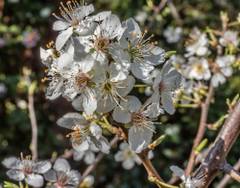
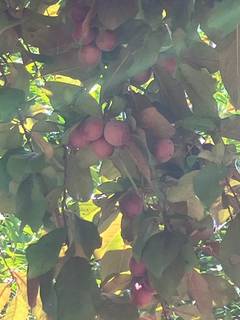
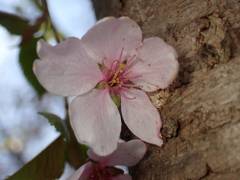
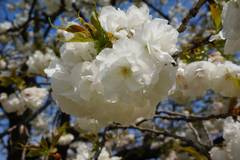
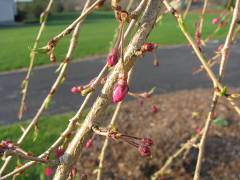
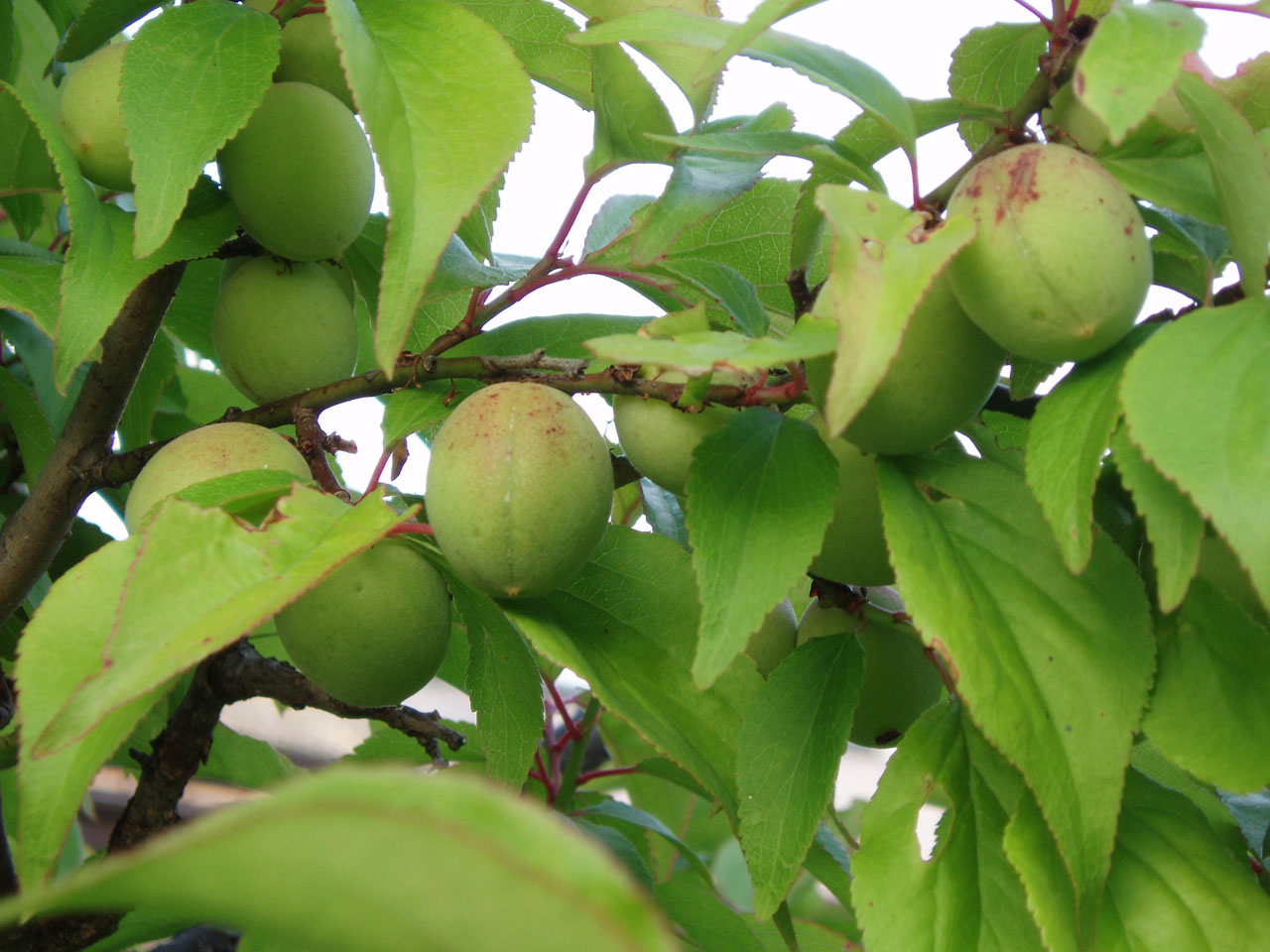
Prunus mume is a deciduous tree in the Rosaceae reaching 15-25 feet (4.5-7.5 m) tall and about as wide, with a rounded crown and greyish-green bark that darkens and roughens with age. Flowering begins in January and runs into March, ahead of leaf expansion, with five-petalled blossoms 0.8-1 inch (2-2.5 cm) across in white, pink, or deep rose, carried singly or in pairs almost directly on the previous season wood. Scent is strong and carries 15-30 feet (4.5-9 m) in still air. Leaves follow in March and April: alternate, broadly ovate, 1.5-4 inches (4-10 cm) long, with an abruptly tapered tip and small marginal teeth. The fruit is a globose drupe 1-1.2 inches (2.5-3 cm) across, densely velvety, yellow-green flushed red on the sun side, ripening in June and July. Flesh is highly acidic and is salted, dried, or steeped rather than eaten fresh. Kernels contain amygdalin and release cyanide when crushed, causing poisoning in dogs, cats, horses, and people. Midwinter flowering exposes the buds to hard freezes, and a drop below 20 F (-7 C) after bud swell destroys the season bloom. Hardy in USDA zones 6-9.
Native Range
Prunus mume is native to the mountain forests and river valleys of southern China, chiefly the Yangtze basin in Sichuan, Hubei, and Yunnan, at 3,000-8,000 feet (900-2,400 m). It reached Japan and Korea more than 1,500 years ago through cultivation and has naturalised in parts of both. Plantings in the southeastern United States occasionally self-sow near old gardens.Suggested Uses
Planted as a small specimen tree in lawns, courtyards, and mixed borders where the January to March bloom sits in view of a window or path. Used in bonsai, in trained fan and espalier forms against warm walls, and in orchard rows in Japan and China for fruit destined for salting and steeping. Fallen fruit stains paving and draws wasps in June and July, so seating areas set below the canopy carry a cleanup load.How to Identify
Appearance
Size & Dimensions
Height15' - 25'
Width/Spread15' - 25'
Bloom Information
Flowering runs from mid-January to early March in USDA zone 8, and from late February to late March in zone 6. Buds open over three to five weeks on a single tree, with individual blossoms holding five to eight days. Bloom occurs on wood grown the previous summer, so late-summer cutting removes the coming flowers. Temperatures below 20 F (-7 C) after buds swell blacken open blossoms within a day.
Detailed Descriptions
Flower Description
white, pink, or deep roseFoliage Description
dark green, turning yellow before leaf dropGrowing Conditions
Sun Requirements
Requires 6-10 hours of direct sunlight daily
• Full Sun: 6+ hours of direct sunlight
• Partial Shade: 3-6 hours of direct sunlight
• Full Shade: Less than 3 hours of direct sunlight
Care & Maintenance
Care Guide
Six to eight hours of direct sun daily carries the heaviest flowering; shaded trees flower along the outer canopy only. Soil is well-drained loam or sandy loam at pH 6.0-7.5, and standing water at the root crown brings on Phytophthora root rot within one or two seasons. Water use is about 1 inch (2.5 cm) per week during establishment, reducing to periodic deep irrigation in drought after year three. A spring application of balanced fertiliser at 0.1 pound of nitrogen per 100 square feet (50 g per 9 sq m) covers average soils. Peach tree borer, San Jose scale, aphids, and bacterial canker caused by Pseudomonas syringae occur across the southeastern United States. Trees in zones colder than 6 lose flower buds to midwinter freezes in most years.Pruning
Cutting is done within four weeks of petal fall, since flower buds for the next season form on shoots produced from late spring onward. Thinning takes out crossing and inward-growing branches to open the crown, with cuts made back to a lateral rather than leaving stubs. Water sprouts arising after heavy cuts are removed at the base in summer. Trees held as bonsai or trained against walls are cut back to two or three buds per spur each spring.Pruning Schedule
Prune: March–April
early springlate spring
Container Growing
Suitable for container growing
Minimum container size: 15 gallons