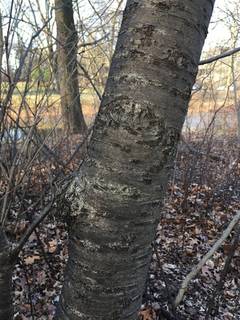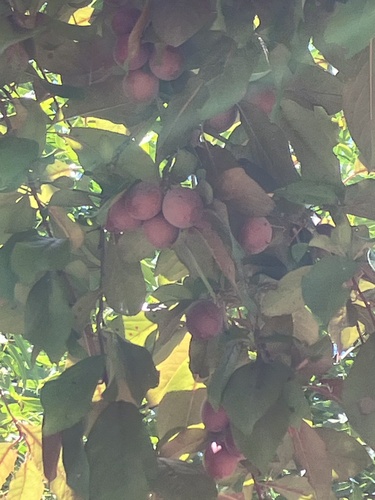
Prunus, Genus, domestica, Species,
- Genus & species
European plum
Caucasus region, western Asia (hybrid cultigen)
Overview
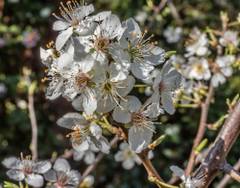
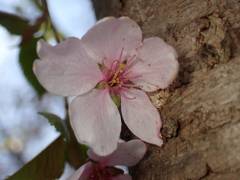
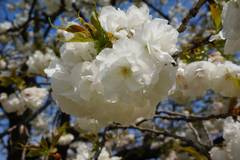
Prunus domestica is a deciduous orchard tree growing 15-20 feet (4.6-6 m) tall and 12-18 feet (3.7-5.5 m) wide, with a rounded crown. It is an ancient hybrid cultigen tracing back to Prunus spinosa and Prunus cerasifera, grown for fruit for over two thousand years. White, five-petaled flowers about 0.75-1 inch (2-2.5 cm) across open in small clusters on short spurs in early spring, before or with the leaves. Most European-plum cultivars set fruit with their own pollen, unlike Japanese plums, which usually need a partner. The fruit is an oval drupe 1.5-3 inches (4-8 cm) long, ranging from green and gold to deep blue-black, ripening between July and September. Cultivars sort roughly into fresh-eating types, sugary drying types, and dual-purpose kinds. Leaves are oval, 2-4 inches (5-10 cm) long, with a slightly puckered surface and finely toothed edges; bark turns gray-brown and scaly with age. The tree needs roughly 700-1,000 winter chill hours to crop well. Brown rot, bacterial canker, plum curculio, and aphids are the recurring pressures, and a heavy fruit set can break unsupported limbs.
Native Range
Not a true wild species but a cultigen of the Caucasus and western Asia, derived from Prunus spinosa crossed with Prunus cerasifera. It has been cultivated since antiquity and now survives only in orchards and as hedgerow and roadside escapes across Europe.Suggested Uses
Grown in home orchards, kitchen gardens, and small farm plots, spaced 18-22 feet (5.5-6.7 m) apart; self-fruitful kinds can stand alone. Fruit is eaten fresh, dried into prunes, canned, or made into preserves. In the Pacific Northwest, 'Italian', 'Stanley', 'Seneca', and 'Brooks' are dependable choices. The spring bloom and late-summer fruit add two seasons of interest to an edible planting.How to Identify
Appearance
Size & Dimensions
Height15' - 20'
Width/Spread12' - 18'
Bloom Information
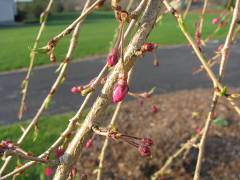
White flowers appear over one to two weeks in early spring, late March to early April in the Pacific Northwest, opening with or just before the foliage. Many cultivars are self-fruitful, but a second European plum flowering at the same time lifts fruit set and size. Frost during bloom thins the crop.
Detailed Descriptions
Foliage Description
Medium green, slightly rugoseGrowing Conditions
Sun Requirements
Requires 6-12 hours of direct sunlight daily
• Full Sun: 6+ hours of direct sunlight
• Partial Shade: 3-6 hours of direct sunlight
• Full Shade: Less than 3 hours of direct sunlight
Care & Maintenance
Care Guide
Plant in full sun with six to eight hours of direct light and space standard trees 18-22 feet (5.5-6.7 m) apart. Water deeply through establishment and give 1-2 inches (2.5-5 cm) a week while fruit swells from spring to harvest. Feed a balanced fertilizer at bud break and go easy on nitrogen, which pushes leaves over fruit. Thin marble-sized fruitlets in June to 4-6 inches (10-15 cm) apart for size and to spare the limbs. Manage brown rot with well-timed bloom and pre-harvest sprays, and prune only in dry weather to hold bacterial canker in check.Pruning
Train young trees to an open-center shape over the first three to five years. Each year, clear out water sprouts, crossing limbs, and inward growth to keep the center light and airy, which curbs brown rot and ripens fruit evenly. On older trees, renew fruiting spurs by cutting back tired wood. Time the work for dry summer days to reduce canker risk.Pruning Schedule
Prune: June–July
summer