Prunus, Genus, virginiana, Species,
- Genus & species
chokecherry
North America (Newfoundland and Labrador west to British Columbia and south to Georgia, New Mexico, and California)
Overview
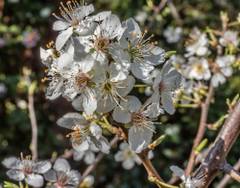
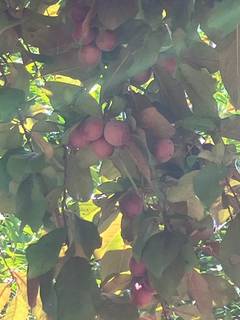
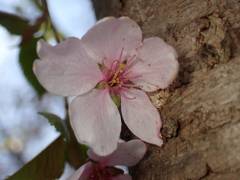
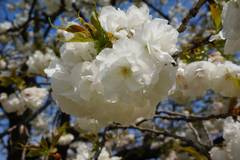
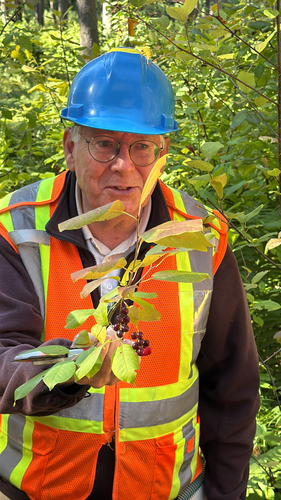
Prunus virginiana is a deciduous large shrub or small tree in the rose family (Rosaceae) reaching 10-25 feet (3-7.5 m) tall and 10-20 feet (3-6 m) wide, typically multi-stemmed and suckering to form dense thickets. Bark is grey-brown, smooth on young stems, roughening with age but lacking the curling scaly plates that characterise P. serotina. Leaves are alternate, broadly elliptic to obovate, 2-4 inches (5-10 cm) long, with a finely serrate margin, dark green above and paler beneath. Petioles bear 2 small glands near the leaf base. In spring, upright to slightly drooping racemes 2-4 inches (5-10 cm) long bear 20-40 small white five-petalled flowers, each 0.3-0.4 inch (8-10 mm) across, with a sweet, slightly pungent scent. Fruit is a round drupe 0.3-0.4 inch (8-10 mm) in diameter, ripening from red to dark purple-black in August-September. Fruit is extremely astringent when raw — the common name references the puckering effect on the mouth — but cooking removes the astringency, and the species is widely used in jams, jellies, syrups, and wine. All parts except ripe fruit pulp contain cyanogenic glycosides (amygdalin and prunasin); wilted leaves are particularly toxic to livestock. The species has the widest native distribution of any North American cherry — from Newfoundland to British Columbia and south to Georgia and California. The purple-leaved cultivar 'Schubert' (P. virginiana 'Schubert') is commonly planted as an ornamental. Susceptible to eastern tent caterpillar, X-disease (phytoplasma), and black knot (Apiosporina morbosa).
Native Range
Prunus virginiana is native across North America, from Newfoundland and Labrador west to British Columbia and south to Georgia, New Mexico, and California, where the species occurs in woodland edges, thickets, fencerows, stream banks, and disturbed ground from sea level to approximately 8,500 feet (2,600 m). The species ranks among the more widely distributed native shrubs on the continent.Suggested Uses
Planted in native plant gardens, wildlife habitat restoration, shelterbelts, and windbreaks. The suckering habit supports slope stabilisation and erosion control. Fruit is a critical food source for wildlife. The cultivar 'Schubert' ('Canada Red') with purple summer foliage is used as an ornamental specimen or street tree. In the Pacific Northwest, the species is native east of the Cascades; west-side plantings are suitable but not native provenance.How to Identify
Appearance
Size & Dimensions
Height10' - 25'
Width/Spread10' - 20'
Bloom Information
White flower racemes open from April through May, approximately 1-2 weeks after leaves emerge. Each raceme of 20-40 flowers opens over 7-10 days. Total bloom period is 2-3 weeks. The fragrance is sweet and noticeable from 3-5 feet (1-1.5 m). Pollination is by bees, flies, and beetles. Dark purple-black drupes ripen in August-September and are consumed by over 70 species of birds and mammals.
Detailed Descriptions
Foliage Description
Dark greenGrowing Conditions
Sun Requirements
Requires 4-10 hours of direct sunlight daily
• Full Sun: 6+ hours of direct sunlight
• Partial Shade: 3-6 hours of direct sunlight
• Full Shade: Less than 3 hours of direct sunlight
Care & Maintenance
Care Guide
Plants grow in full sun to partial shade in moist, well-drained soil with a pH of 5.5-7.5. The species tolerates a wide range of soil types from sandy to clay. Plants are spaced 10-15 feet (3-4.5 m) apart for a screen or thicket; 15-20 feet (4.5-6 m) as a specimen. Watering is regular during the first 2 years; once established, the species is moderately drought-tolerant. The species suckers freely from roots — a root barrier limits spread when containment matters. Feeding is unnecessary in most soils. Black knot galls (dark, swollen stem cankers) are pruned out immediately upon detection — cuts are made 4-6 inches (10-15 cm) below the visible gall into healthy wood.Pruning
Pruning takes place in late winter while dormant. Dead, damaged, and crossing branches are removed. To maintain a tree form, 1-3 main stems are selected and suckers and lower branches are removed annually. For thicket management, one-third of the oldest stems is cut to ground level annually to rejuvenate. Black knot galls are removed promptly — tools are sterilised between cuts.Pruning Schedule
Prune: February–March
late spring