Prunus, Genus, cerasifera, Species, 'Thundercloud', Cultivar,
- Genus & species
- Cultivar
thundercloud plum
Cultivar of garden origin selected from {Prunus cerasifera} (cherry plum), the species type native to western Asia and southeastern Europe from the Caucasus and Iran west through the Balkans
Overview
Prunus cerasifera 'Thundercloud' is the Thundercloud plum (purple-leaf plum), a small upright deciduous flowering tree in the rose family Rosaceae growing 15-25 feet (4.5-7.5 m) tall and 15-20 feet (4.5-6 m) wide in cultivation across a 3-5 year establishment to ornamental size and a 15-25 year typical lifespan. The cultivar is one of the dark-purple-foliaged selections of the cherry plum species P. cerasifera, and was selected from the older purple-leaved cultivar 'Atropurpurea' for the trait that defines its ornamental value: the deep purple-red to dark maroon leaf coloration is retained through the full growing season without the mid-summer fade to green-bronze that develops on 'Atropurpurea' and other earlier purple-leaved selections. Foliage emerges deep purple at bud break, holds the saturated purple through summer, and carries the same purple coloration into fall before leaf drop. The five-petaled pink flowers 0.75 inch (18 mm) across appear in dense clusters along the bare branches in early spring (March through April) before or with the emerging purple foliage, and the bloom period lasts 1-2 weeks. Small reddish-purple edible plum fruits 1 inch (2.5 cm) follow sporadically in summer, with lighter fruit set than the species type. The species name cerasifera is from Latin cerasus (cherry) and -fer (bearing) and records the cherry-like fruits that distinguish the species from the larger plum species in the genus. Limitation: the cultivar inherits the species' susceptibility to bacterial canker (Pseudomonas syringae pathovars), brown rot (Monilinia laxa and Monilinia fructicola), and a range of trunk and limb borers including the peachtree borer (Synanthedon exitiosa) — the combined disease and pest pressure produces progressive limb dieback and trunk canker development that is the primary cause of the cultivar's short 15-25 year typical lifespan compared with the multi-decade lifespans of disease-resistant ornamental cherries and crabapples. Pruning is restricted to summer (June and July) because pruning cuts made during winter dormancy or during wet spring weather permit Pseudomonas bacterial canker entry through unhealed cuts and accelerate the decline. The leaves, bark, and pits contain cyanogenic glycosides — amygdalin and prunasin — that release hydrogen cyanide (HCN) when the tissue is crushed or chewed, and the toxicity is the family-level Rosaceae pattern shared with all Prunus species that supports the genus's role as a cyanide-defended browse-resistant lineage. The fruits are toxic to dogs and cats if the pits are crushed during chewing, and the leaves and bark are toxic to grazing livestock if browsed. Full-sun siting (6 or more hours of direct sun per day) is the practical requirement for retaining the saturated purple coloration that motivates the cultivar's selection — partial-shade siting reduces the purple intensity. The cultivar adapts to clay soils more readily than many ornamental flowering trees and is drought-tolerant once established.
Native Range
Cultivar of garden origin selected from the species type Prunus cerasifera (cherry plum), which is native to western Asia and southeastern Europe — from the Caucasus and Iran west through the Balkans. The 'Thundercloud' selection was made for the deep persistent purple foliage character that holds through the full growing season without fading to green-bronze, an improvement over the older purple-leaved cultivar 'Atropurpurea' from which it was derived. The species name cerasifera is from Latin cerasus (cherry) and -fer (bearing) and records the cherry-like fruits.Suggested Uses
Used as a small flowering specimen tree on residential lawns, in mixed shrub borders for purple-foliage color contrast against green-foliaged companions, in front-yard accent positions where the early-spring pink flowers + season-long deep purple foliage supply two ornamental seasons in a single tree, and as a parking-strip or street-tree planting in confined-root positions at 15-20 foot (4.5-6 m) spacing in USDA zones 5 through 8. The deep purple-red to dark maroon foliage retained through the full growing season without fading to green-bronze (the trait that selected 'Thundercloud' from the older 'Atropurpurea'), the early-spring pink flowers along bare branches before leaf emergence, the compact small-tree stature that fits residential lots, and the soil adaptability across loam and clay substrates combine to make 'Thundercloud' a foundation small purple-foliaged flowering tree for full-sun residential design. Partial-shade and full-shade positions are unsuitable because the purple coloration declines toward bronze-green under reduced light. Sites accessible to grazing livestock and to dogs and cats that may chew fruit pits carry the cyanogenic-glycoside poisoning hazard. The 15-25 year typical lifespan is shorter than that of disease-resistant ornamental cherries and crabapples and the cultivar is most usefully treated as a 15-25 year garden investment rather than a multi-decade legacy tree.How to Identify
Appearance
Size & Dimensions
Height15' - 25'
Width/Spread15' - 20'
Bloom Information
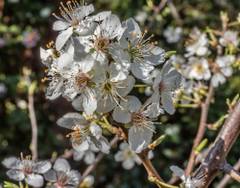
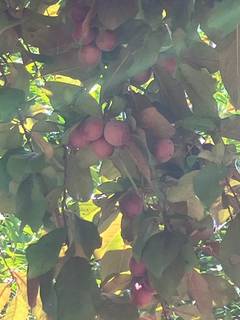
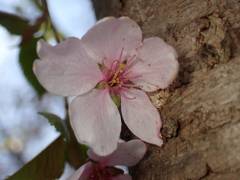
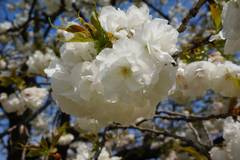
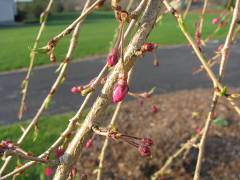
Early spring (March through April) across a 1-2 week concentrated bloom period. Pink to light pink five-petaled flowers 0.75 inch (18 mm) in dense clusters along the bare branches before or with the emerging deep purple foliage. The early-spring pink-flowers-on-bare-branches display is the cultivar's first ornamental moment of the season, but the persistent deep purple foliage that follows the bloom is the cultivar's primary year-round ornamental feature. Small reddish-purple edible plum fruits 1 inch (2.5 cm) follow sporadically in summer with lighter fruit set than the species type. Honeybees, bumblebees, and small native bees work the early-spring flowers across the bloom period.
Detailed Descriptions
Flower Description
pink to light pink five-petaled flowers 0.75 inch (18 mm) across in dense clusters along the bare branches in early spring (March through April) appearing before or with the emerging deep purple foliage across a 1-2 week bloom period; the early-spring pink flowers against the dark new foliage produce the cultivar's secondary ornamental display, and the small reddish-purple edible plum fruits 1 inch (2.5 cm) follow sporadically in summer with lighter fruit set than the species type Prunus cerasiferaFoliage Description
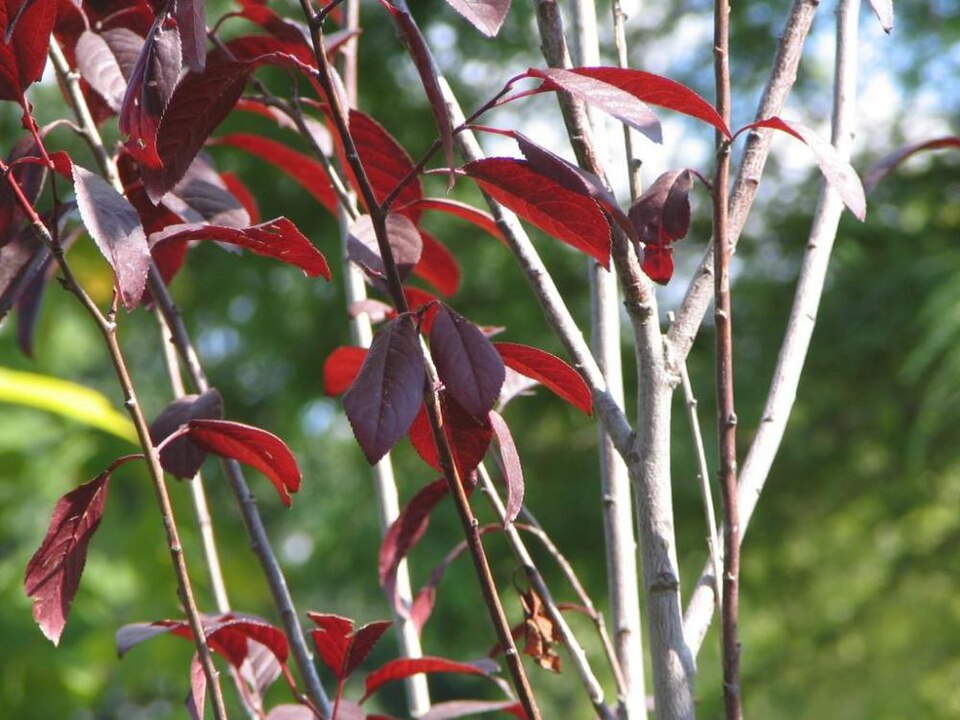
deep purple-red to dark maroon throughout the growing season, with oval finely serrated leaves 1.5-3 inches (4-7 cm) long alternately arranged along the stems; the deep purple coloration is retained from spring leaf emergence through summer and fall without fading to the green-bronze that develops on older purple-leaved cherry-plum cultivars including 'Atropurpurea' (the predecessor cultivar from which 'Thundercloud' was selected for darker and more persistent purple) — color persistence through the full growing season is the cultivar's primary selection character; foliage holds the purple coloration into fall before droppingGrowing Conditions
Sun Requirements
Requires 6-10 hours of direct sunlight daily
• Full Sun: 6+ hours of direct sunlight
• Partial Shade: 3-6 hours of direct sunlight
• Full Shade: Less than 3 hours of direct sunlight
Care & Maintenance
Care Guide
Site in full sun with 6-10 hours of direct sun per day for the deepest and most persistent purple foliage coloration — partial-shade siting reduces the purple intensity and shifts the foliage color toward bronze-green. Site in well-drained loam or clay soil with a pH of 5.5-7.5; the cultivar adapts to clay more readily than many ornamental flowering trees. Water weekly during the first two growing seasons to establish the root system; established trees tolerate moderate drought. Pruning is restricted to summer (June and July) because pruning cuts made during winter dormancy or during wet spring weather permit Pseudomonas syringae bacterial canker entry through unhealed cuts. Bacterial canker, brown rot (Monilinia laxa and M. fructicola), and a range of trunk and limb borers including the peachtree borer (Synanthedon exitiosa) produce progressive limb dieback and trunk canker development that is the primary cause of the short 15-25 year typical cultivated lifespan. Pruning tools are sterilized between cuts when removing diseased wood to limit canker spread on the same tree. The leaves, bark, and pits contain cyanogenic glycosides (amygdalin and prunasin) that release hydrogen cyanide when crushed or chewed — fruits are toxic to dogs and cats if the pits are crushed during chewing, and the leaves and bark are toxic to grazing livestock. Hardy in USDA zones 5-8.Pruning
Pruning is restricted to summer (June and July) — never in winter dormancy or during wet spring weather — because pruning cuts made outside the summer window permit Pseudomonas syringae bacterial canker entry through unhealed cuts and accelerate the cultivar's decline. Crossing, rubbing, dead, and visibly cankered branches are removed first, with cankered cuts made 6-8 inches (15-20 cm) below the visible canker margin to ensure removal of the infected tissue. Pruning tools are sterilized between cuts when removing cankered wood to prevent canker spread between cuts on the same tree. The natural rounded to vase-shaped crown develops without intervention and the cultivar does not call for shaping cuts to maintain form. Heavy renovation pruning into old wood is not productive on declining specimens and whole-tree replacement is the typical management response when canker and borer damage exceed the tree's capacity to compartmentalize.Pruning Schedule
Prune: June–July
summer