Prunus, Genus, avium, Species, 'Rainier', Cultivar,
- Genus & species
- Cultivar
Rainier cherry
Europe, western Asia, northern Africa (species)
Overview
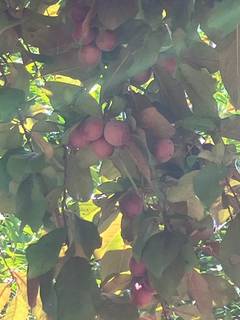
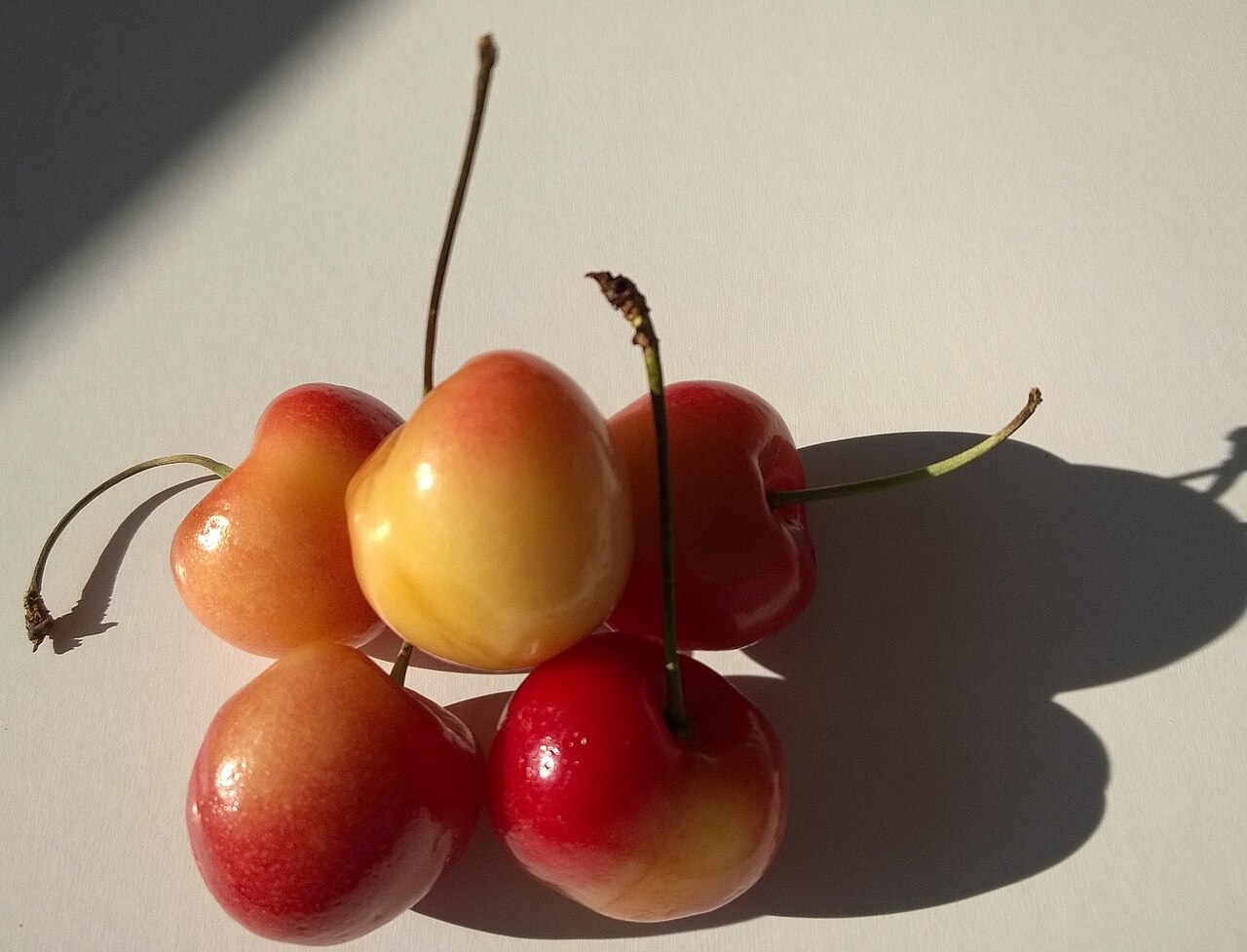
Prunus avium 'Rainier' is a yellow sweet cherry cultivar developed at Washington State University in 1952 from a cross of P. avium 'Bing' × 'Van'. Trees on standard rootstock reach 240-360 inches (6-9 m) tall and 240-300 inches (6-7.6 m) wide; trees on Gisela 5 dwarfing rootstock reach 96-144 inches (2.4-3.6 m). Heart-shaped fruit 1-1.25 inches (2.5-3 cm) across with yellow skin overlaid with red blush, yellow flesh, and clear juice. Sugar content typically 17-23 °Brix. Ripens mid season — late June to mid July depending on zone, about 1-3 days before 'Bing'. Self-incompatible — requires a compatible pollinator such as 'Bing', 'Van', 'Lapins', or 'Lambert' planted within 50-100 feet (15-30 m). White flowers about 1 inch (2.5 cm) across in early to mid spring before leaf-out. Lance-shaped medium green leaves 3-6 inches (7-15 cm) long with serrated margins. Bird damage to the yellow-skinned fruit is heavier than on dark-fruited sweet cherries because the color is more visible. Rain during ripening causes fruit cracking; cherry leaf spot (Blumeriella jaapii) and brown rot (Monilinia fructicola) recur in wet seasons. Lifespan 25-40 years on standard rootstock. Zones 5-8.
Native Range
The species P. avium is native to Europe, western Asia, and northern Africa, occurring in deciduous forest edges and open woodlands. The cultivar 'Rainier' originated at Washington State University, Prosser, Washington, in 1952.Suggested Uses
Grown in home orchards and small commercial plantings at 180-240 inch (4.5-6 m) spacing on standard rootstock or 96-144 inch (2.4-3.6 m) on Gisela 5 dwarfing rootstock in zones 5-8. Requires a compatible P. avium pollinator within 50-100 feet (15-30 m). Bird netting is the typical control for the yellow fruit.How to Identify
Appearance
Size & Dimensions
Height20' - 30'
Width/Spread20' - 25'
Bloom Information
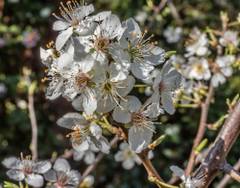
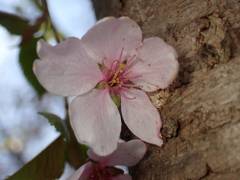
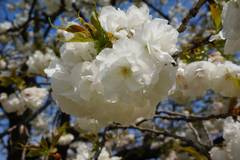
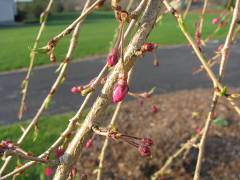
White flowers 1 inch (2.5 cm) across in early to mid spring (April in zones 5-7) before leaf emergence. Bloom lasts 5-10 days. Self-incompatible — fruit set requires a compatible P. avium pollinator such as 'Bing', 'Van', 'Lapins', or 'Lambert'. Frost damage occurs below 28°F (-2°C) on open flowers.
Detailed Descriptions
Foliage Description
Medium green, lance-shaped, serrated; yellow in fallGrowing Conditions
Sun Requirements
Requires 6-12 hours of direct sunlight daily
• Full Sun: 6+ hours of direct sunlight
• Partial Shade: 3-6 hours of direct sunlight
• Full Shade: Less than 3 hours of direct sunlight
Care & Maintenance
Care Guide
Full sun (6+ hours) for fruit production and sugar development. Loam to sandy loam soils with pH 6.0-7.5 and good drainage; root rot (Phytophthora species) develops on wet sites. Water deeply weekly through the first 2 growing seasons; established trees tolerate 2-3 weeks without rain but fruit size decreases under drought. Bird damage to the yellow fruit is heavy through ripening; netting at color break is the typical control. Cherry leaf spot (Blumeriella jaapii), brown rot (Monilinia fructicola), and bacterial canker (Pseudomonas syringae) recur in wet springs. Black cherry aphid (Myzus cerasi) curls new growth in late spring. Zones 5-8.Pruning
Prune in summer (after harvest) rather than winter to reduce risk of bacterial canker and silver leaf (Chondrostereum purpureum) infection. Train to a central leader or modified central leader with 4-6 scaffold branches spaced vertically. Remove crossing, inward-growing, and water sprout shoots. Sweet cherries fruit on long-lived spurs; renewal pruning of older fruiting wood every 5-7 years maintains production.Pruning Schedule
Prune: July–August
summer