Prunus, Genus, laurocerasus, Species,
- Genus & species
English laurel
Southeastern Europe (Balkans) and southwestern Asia (Turkey, Caucasus, Iran); mesic mountain forests on a range of soil types from acidic to chalk
Overview
Prunus laurocerasus is an upright broadleaf evergreen large shrub or small tree in the rose family Rosaceae growing 10–25 feet (3–7.5 m) tall and 10–25 feet (3–7.5 m) wide from a multi-stemmed base or single trunk that produces a dense rounded canopy clothed in large glossy dark green leathery leaves to ground level on open-grown specimens. The specific epithet laurocerasus is from Latin laurus meaning laurel and cerasus meaning cherry and refers to the species' superficial leaf resemblance to true bay laurel (Laurus nobilis) combined with the cherry-like fruit produced by the species — the common name cherry laurel reflects the same dual reference. Despite the leaf resemblance to bay laurel, P. laurocerasus is unrelated to L. nobilis (which is in the family Lauraceae) and the leaves are not edible — the bitter-almond scent released when the leaves are torn or crushed is the diagnostic field test that separates the species from culinary bay laurel. White small 5-petaled flowers 0.3 inch (8 mm) across open in upright erect terminal racemes 3–5 inches (7–13 cm) long at the leaf axils in April through May across a 3-week bloom period and carry a moderately sweet bitter-almond fragrance, and glossy black cherry-like drupes 0.5 inch (1.3 cm) across develop in late summer and are dispersed by birds. Limitation: the species is classified as a noxious invasive plant in the Pacific Northwest of North America (Oregon, Washington, British Columbia) and as an invasive in parts of western Europe — the bird-dispersed drupes establish escape populations in moist shaded forest understory where the species' shade tolerance and its cherry-laurel-leaf litter chemistry support displacement of native understory vegetation, and regional invasive species lists should be consulted before planting in jurisdictions where the species is restricted or prohibited. All parts of the plant — leaves, stems, flowers, nectar, and the seed kernels inside the cherry-like drupes — contain cyanogenic glycosides (prunasin and amygdalin) that release hydrogen cyanide when the plant tissue is damaged or chewed, and ingestion is severely toxic to humans, livestock, cats, dogs, and horses with documented fatalities from accidental ingestion of large quantities of leaves or seed kernels. Hand pruners or loppers are the appropriate pruning tools — hedge shears cut the large leaves in half rather than between the leaves and produce browned brown-edged cut leaves on the canopy surface that mar the ornamental display for several months until the next growth flush hides the damage. The large mature size at 10–25 feet calls for ample garden space. Tolerates almost any soil type from acidic to chalk and from sand to heavy clay, deep shade to full sun, and significant drought once established. Native to southeastern Europe and southwestern Asia. Deer-resistant.
Native Range
Native to southeastern Europe (the Balkan Peninsula) and southwestern Asia (Turkey, the Caucasus region of Armenia, Georgia, and Azerbaijan, and northern Iran), growing in mesic mountain forests on a range of soil types from acidic forest soils to alkaline chalk soils. The species was introduced to British horticulture from Constantinople (modern Istanbul) in the late 16th century and has been a foundation tall evergreen hedge plant in British and western European gardens since the 17th century, where the dense glossy evergreen foliage and tolerance of shade and pruning made the species the standard tall hedge plant for grand-garden plantings before the modern shift toward more ecologically appropriate native alternatives.Suggested Uses
Used as a tall evergreen hedge, screen, windbreak, woodland-edge shrub, and large-property foundation planting at 10–25 foot (3–7.5 m) spacing for full-size plantings or at 4–6 foot (1.2–1.8 m) spacing for clipped formal hedges in USDA zones 6 through 9. The dense glossy dark green coarse-textured leathery evergreen foliage, the year-round screening density, the tolerance of almost any soil type and of deep shade through full sun, and the centuries-long history of European garden cultivation combine for a foundation tall evergreen shrub on properties with the space to accommodate the 10–25 foot mature size and where the invasive risk and the toxicity considerations are accepted. Jurisdictions where the species is classified as invasive (the Pacific Northwest of North America, parts of western Europe) are unsuitable because of the bird-dispersed seed colonization of native forest understory, and gardeners in those regions should select native evergreen alternatives such as Mahonia aquifolium (Oregon grape, native to the Pacific Northwest) or other regionally native broadleaf evergreens. Households with grazing livestock, gardens where children, cats, dogs, or horses may access the foliage or the seed kernels inside the drupes, and properties near grazing pastures should account for the severe cyanogenic glycoside toxicity of all plant parts.How to Identify
Appearance
Size & Dimensions
Height10' - 25'
Width/Spread10' - 25'
Bloom Information
White small 5-petaled flowers 0.3 inch (8 mm) across open in upright erect terminal racemes 3–5 inches (7–13 cm) long at the leaf axils in April through May across a 3-week bloom period and carry a moderately sweet bitter-almond fragrance at close range that derives from the cyanogenic glycoside chemistry of the species. Honeybees, bumblebees, and several butterfly species work the flowers for nectar across the spring bloom window. Glossy black cherry-like drupes 0.5 inch (1.3 cm) across develop from the spent flowers in late summer and are dispersed by birds — the bird-dispersed drupes are the mechanism behind the species' invasive spread in the Pacific Northwest of North America and in parts of western Europe.
Detailed Descriptions
Flower Description
white small 5-petaled flowers 0.3 inch (8 mm) across carried in upright erect terminal racemes 3-5 inches (7-13 cm) long at the leaf axils in April through May across a 3-week bloom period; moderately fragrant with a sweet bitter-almond scent at close range that derives from the cyanogenic glycoside (prunasin) chemistry of the species and that releases the same hydrogen cyanide compound found at higher concentrations in the leaves and seed kernels; followed by glossy black cherry-like drupes 0.5 inch (1.3 cm) across that ripen in late summer and that are dispersed by birds — the bird-dispersed drupes are the mechanism behind the species' invasive spread in the Pacific Northwest of North AmericaFoliage Description
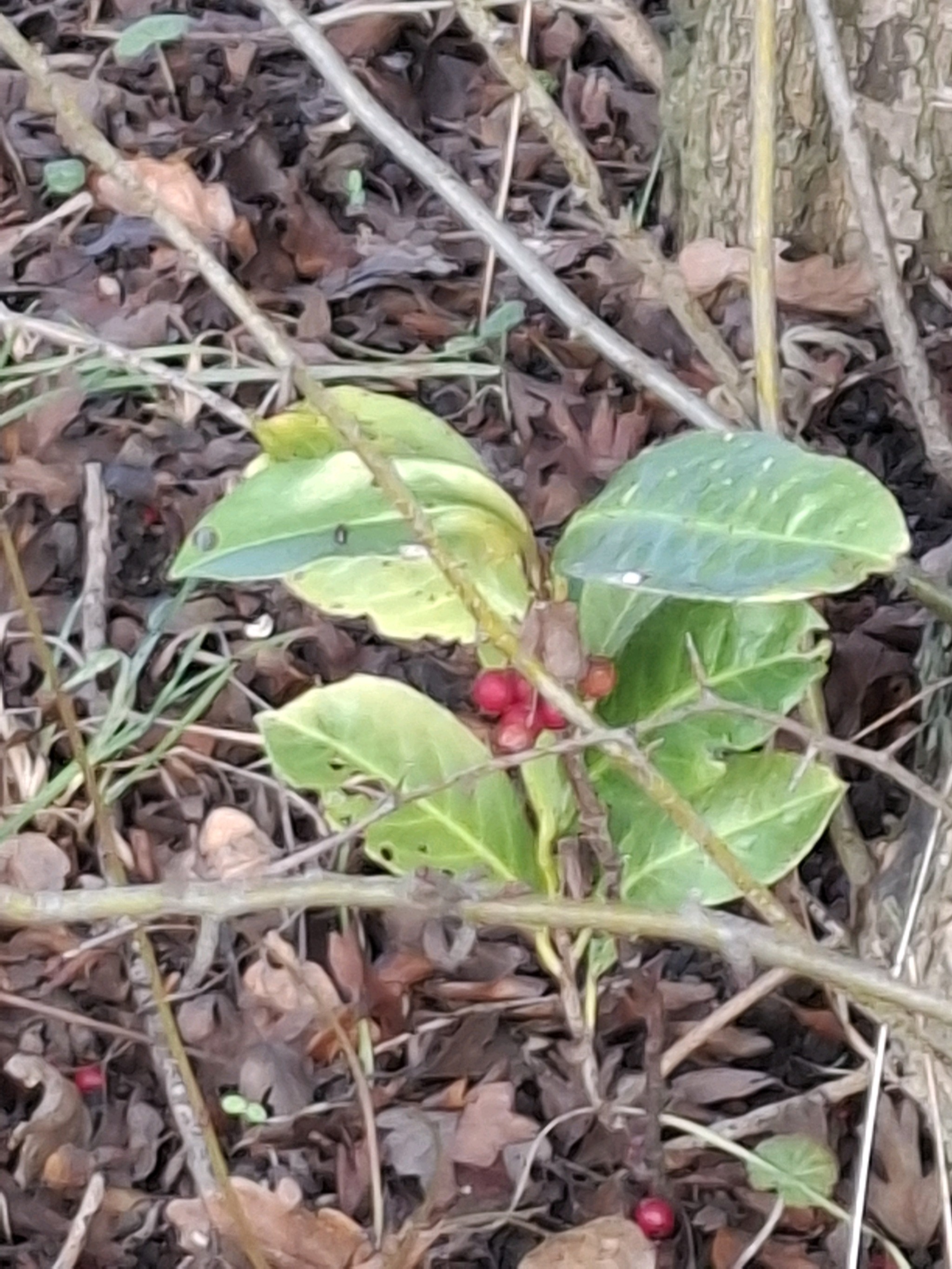
glossy dark green oblong to oblanceolate leaves 3-7 inches (7-18 cm) long with a thick leathery texture and entire (smooth, untoothed) margins; the large glossy leaves produce a coarse bold foliage texture that supplies the species' year-round screening density and that has supported the species' centuries-long use as a tall evergreen hedge plant in British and European gardens; evergreen year-roundGrowing Conditions
Sun Requirements
Requires 2-10 hours of direct sunlight daily
• Full Sun: 6+ hours of direct sunlight
• Partial Shade: 3-6 hours of direct sunlight
• Full Shade: Less than 3 hours of direct sunlight
Care & Maintenance
Care Guide
Site in full sun to deep shade with 2–10 hours of direct sun per day in well-drained soil of almost any type — acidic loam, clay, sand, or alkaline chalk — with a pH range of 5.0–8.0. Drought tolerance develops once the root system is established. The species is classified as a noxious invasive plant in the Pacific Northwest of North America (Oregon, Washington, British Columbia) and as an invasive in parts of western Europe, and regional invasive species lists should be consulted before planting in jurisdictions where the species is restricted or prohibited; removal of flower racemes before fruit set reduces the bird-dispersed seed spread in regions where the species has naturalized. All parts contain cyanogenic glycosides (prunasin and amygdalin) and are severely toxic to humans, livestock, cats, dogs, and horses if ingested. Hand pruners or loppers are the appropriate pruning tools — hedge shears cut the large leaves in half and produce browned brown-edged cut leaves on the canopy surface that mar the ornamental display for several months. Pruning is done in late spring (May or June) and again in midsummer (August) to maintain size and shape. Deer-resistant. Hardy in USDA zones 6–9.Pruning
Pruning is done in late spring (May or June) after the flush of new growth has hardened, and again in midsummer (August) for plants maintained as formal hedges or screens. Hand pruners or loppers are the appropriate tools because hedge shears cut the large leaves in half rather than passing between the leaves at the petiole, and the half-cut leaves brown along the cut edges and produce a browned canopy surface that mars the ornamental display for several months until the next growth flush hides the damage. Removal of flower racemes before fruit set in early summer reduces the bird-dispersed seed spread in regions where the species has naturalized as an invasive. The species tolerates hard renovation pruning back to bare wood with reliable regrowth from latent buds within 1–2 growing seasons.Pruning Schedule
Prune: May–June & August
late springsummer