Prunus, Genus, cerasus, Species, 'North Star', Cultivar,
- Genus & species
- Cultivar
north star cherry
Southeastern Europe, southwest Asia (species)
Overview
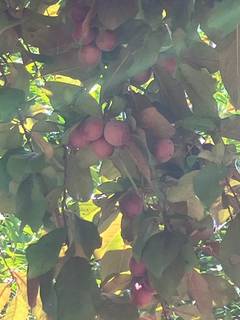
Prunus cerasus 'North Star' is a genetic dwarf sour cherry released by the University of Minnesota in 1950 from a cross of 'English Morello' × 'Serbian Pie No. 1'. Trees reach 96-144 inches (2.4-3.6 m) tall and 96-120 inches (2.4-3 m) wide on standard seedling rootstock — the dwarf habit is genetic rather than rootstock-induced. All pruning, harvest, and netting can be done from the ground because the canopy stays below 144 inches (3.6 m). Round fruit 0.6-0.8 inch (1.5-2 cm) across with dark red skin, red flesh, and red juice — darker than 'Montmorency'. Sugar content 14-17 °Brix balanced by malic acid producing the tart flavor characteristic of pie cherries. Ripens mid to late July depending on zone. Self-fertile — single trees produce fruit without a cross-pollinator. White flowers 0.75-1 inch (2-2.5 cm) across in mid spring with the leaves. Medium green leaves 2-4 inches (5-10 cm) long with serrated margins. Hardy to USDA zone 3, surviving winter low temperatures to -40°F (-40°C). Cherry leaf spot (Blumeriella jaapii), brown rot (Monilinia fructicola), and plum curculio (Conotrachelus nenuphar) are recurring pest pressures. Lifespan 15-25 years. Zones 3-8.
Native Range
The species P. cerasus is native to southeastern Europe and southwest Asia, likely a hybrid of P. avium and P. fruticosa that arose in cultivation. The cultivar 'North Star' was released by the University of Minnesota in 1950 and was bred for cold hardiness in northern North American conditions.Suggested Uses
Grown in home orchards, edible landscapes, and small yards at 96-120 inch (2.4-3 m) spacing in zones 3-8. The 96-144 inch (2.4-3.6 m) mature size suits sites where standard sour cherries are too large. Self-fertile — single trees set fruit without a pollinator.How to Identify
Appearance
Size & Dimensions
Height8' - 12'
Width/Spread8' - 10'
Bloom Information
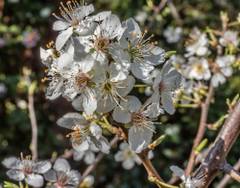
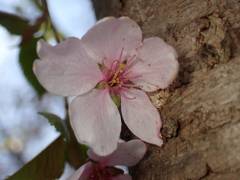
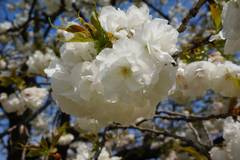
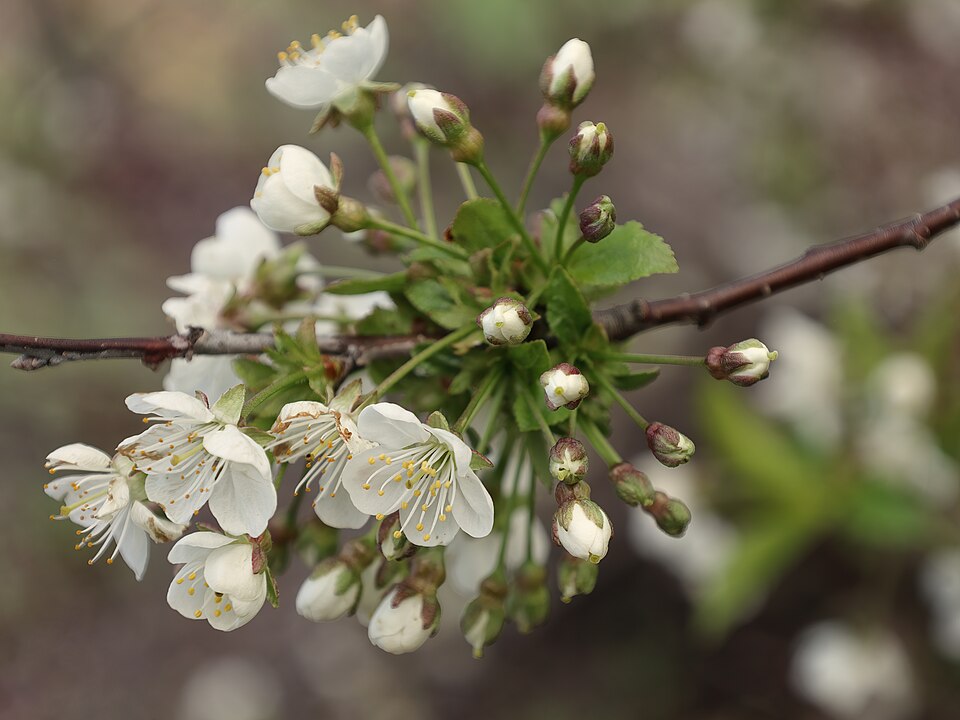
White flowers 0.75-1 inch (2-2.5 cm) across in mid spring (April-May depending on zone), opening with leaf emergence. Bloom lasts 7-10 days. Self-fertile — single trees set fruit without a pollinator. Bloom is 7-14 days later than sweet cherry, reducing late spring frost loss in cold zones.
Detailed Descriptions
Foliage Description
Medium green, smaller than sweet cherry, serrated; yellow in fallGrowing Conditions
Sun Requirements
Requires 6-12 hours of direct sunlight daily
• Full Sun: 6+ hours of direct sunlight
• Partial Shade: 3-6 hours of direct sunlight
• Full Shade: Less than 3 hours of direct sunlight
Care & Maintenance
Care Guide
Full sun (6+ hours). Loam, sandy loam, or clay loam soils with pH 6.0-7.5 and good drainage. Water deeply weekly during establishment; mature trees tolerate 2-3 weeks without rain. Cherry leaf spot (Blumeriella jaapii) defoliates trees in wet midsummers and reduces winter hardiness; fungicide programs target the post-bloom period. Plum curculio (Conotrachelus nenuphar) and brown rot (Monilinia fructicola) recur in the eastern United States. Hardy to USDA zone 3, surviving winter low temperatures to -40°F (-40°C). Zones 3-8.Pruning
Prune in late winter to early spring before bud break. Train to an open-center or modified central leader form with 4-5 scaffold branches. Sour cherry fruits on lateral buds of one-year-old wood and on short spurs; thin out older unproductive wood every 3-4 years. Remove dead, crossing, and inward-growing branches annually; the dwarf habit limits the size of cuts to less than 1 inch (2.5 cm) diameter in most years.Pruning Schedule
Prune: February–March
winterearly spring
Container Growing
Suitable for container growing
Minimum container size: 25 gallons