Prunus, Genus, ×, Hybrid, cistena, Species,
- Genus & species
- Hybrid
purple-leaved sand cherry
Garden hybrid; raised in South Dakota, United States
Overview
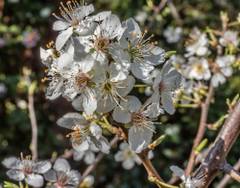
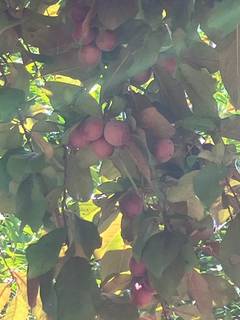
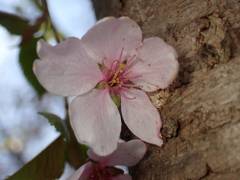
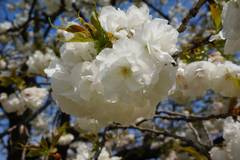
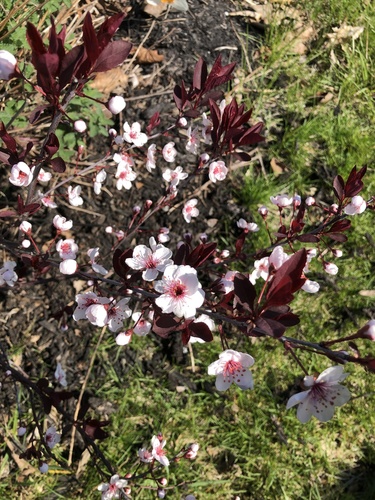
Prunus × cistena is a deciduous shrub bred from P. cerasifera and P. pumila, introduced in 1910. It grows upright to 6-10 feet (1.8-3 m) tall and 5-8 feet (1.5-2.4 m) wide, with multiple slender stems forming a rounded to vase-shaped outline. Leaves are oval, 1.5-2.5 inches (4-6 cm) long, opening bright red in spring and holding a reddish-purple color through summer before turning bronze-red in autumn. Single white to pale pink flowers about 0.5 inch (1.3 cm) across open along the bare or newly leafing stems in mid to late spring, lasting roughly 1-2 weeks. Small blackish-purple cherries 0.5-0.75 inch (1.3-2 cm) follow in summer and are eaten by birds. The shrub grows at a moderate rate and tends to be short-lived, often declining after 10-15 years. Stems sucker readily from the base, and the leaves and seeds contain cyanogenic compounds that are toxic if eaten.
Native Range
A hybrid of garden origin, raised in South Dakota and not found in the wild. Its parents are the European and western Asian P. cerasifera and the North American sand cherry P. pumila. It is grown across cold-temperate regions of North America and Europe.Suggested Uses
Planted as an informal hedge, a shrub-border accent, or a small single specimen, spaced 4-6 feet (1.2-1.8 m) apart for screening. The purple foliage is used for contrast against green and gold-leaved shrubs. Its short lifespan and suckering habit make it less suited to permanent formal plantings.How to Identify
Appearance
Size & Dimensions
Height6' - 10'
Width/Spread5' - 8'
Bloom Information
Flowers in mid to late spring, generally April to May, with bloom arriving a few days before or as the leaves expand. The display lasts about 1-2 weeks and is shorter during warm spells. Cold late-spring weather can reduce flowering in the coldest zones.
Detailed Descriptions
Flower Description
white to pale pinkFoliage Description
reddish-purpleGrowing Conditions
Sun Requirements
Requires 6-8 hours of direct sunlight daily
• Full Sun: 6+ hours of direct sunlight
• Partial Shade: 3-6 hours of direct sunlight
• Full Shade: Less than 3 hours of direct sunlight
Care & Maintenance
Care Guide
Set plants in full sun, where the foliage holds the deepest purple; in shade the leaves turn bronze-green. Water weekly through the first season to establish, after which the shrub tolerates short dry spells, though even moisture supports steadier growth. It adapts to loam, sand, and clay loams across a soil pH of 5.5-7.5 where drainage is adequate. Like other cherries it is subject to aphids, borers, tent caterpillars, and fungal leaf spot, and is often short-lived because of canker and trunk dieback. Suckers arising from the base can be removed through the season to keep a single clump. Older plants are commonly replaced once vigor declines after 10-15 years.Pruning
Prune immediately after flowering in late spring, since flower buds form on the previous year's wood. Thin the oldest stems at the base each year to renew the shrub and keep the purple foliage dense. Remove dead, broken, or cankered wood whenever it appears, cutting back to healthy growth.Pruning Schedule
Prune: May–June
late spring