Image 1 of 3
1 / 3
Plant Reference
Conium, Genus, maculatum, Species,
- Genus & species
poison hemlock
Europe, western Asia, and northern Africa (native); naturalized across most of North America
Overview
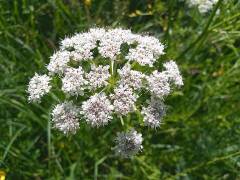
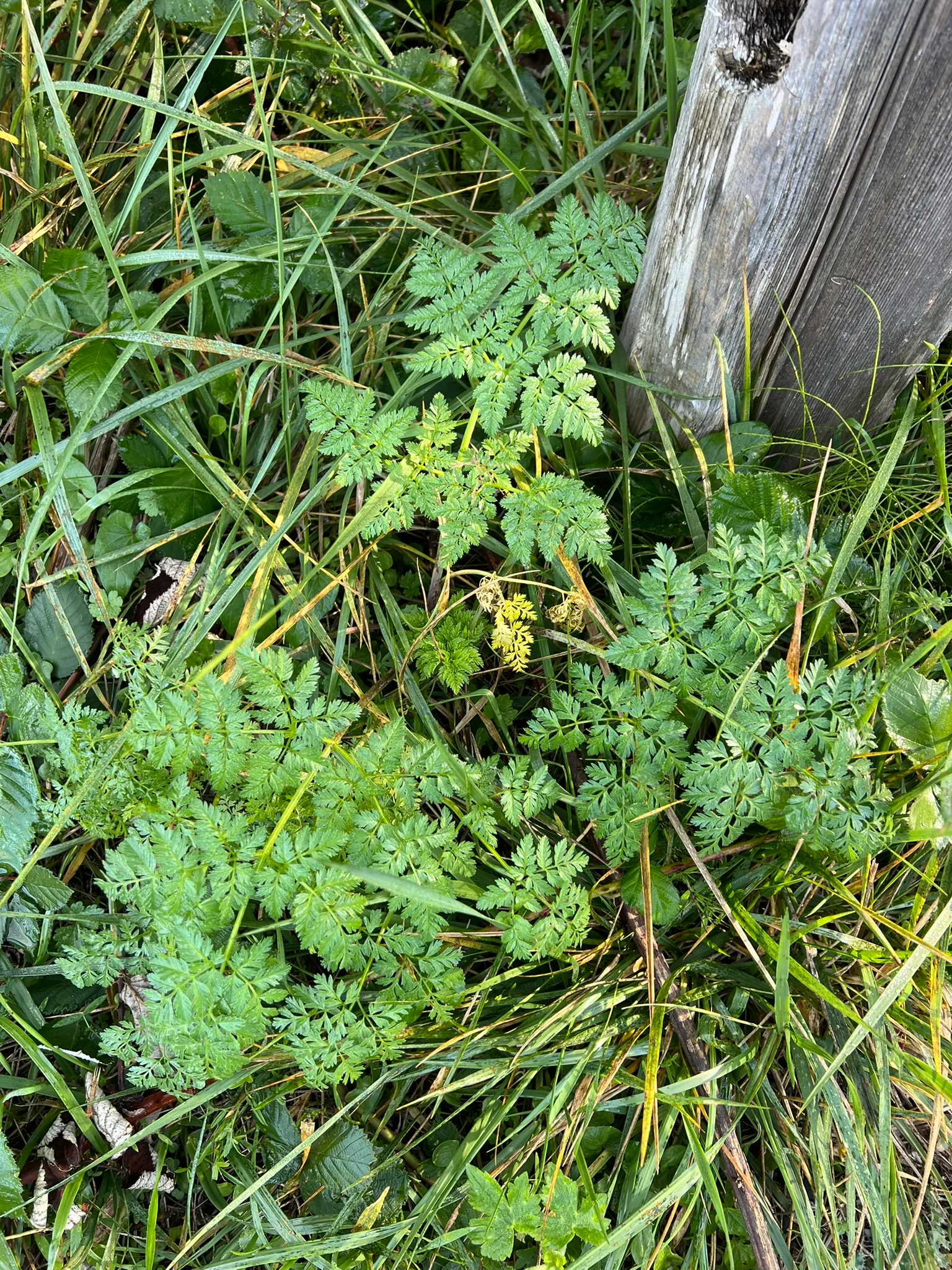
Conium maculatum is a tall biennial in the carrot family (Apiaceae) reaching 36–96 inches (90–240 cm) tall and 24–48 inches (60–120 cm) wide. First-year plants form a basal rosette of glossy dark-green 3- to 4-times pinnately compound leaves up to 20 inches (50 cm) long, resembling fern fronds or large parsley. Second-year stems are erect, hollow, smooth, and marked with purple to reddish-purple blotches and streaks. Crushed foliage produces a pungent musty odor often described as mouse-like. Flowers are white and small, carried in compound umbels 2–4 inches (5–10 cm) across. Fruit is a pair of rounded ribbed mericarps 0.1 inch (2.5–3 mm) long. All parts contain piperidine alkaloids (coniine, γ-coniceine) that cause respiratory failure in mammals; ingestion of as little as 0.2% of body weight of fresh foliage is lethal to cattle, and the plant was used in the execution of Socrates in 399 BCE. A single plant produces 35,000–40,000 seeds that remain viable in soil for 3–6 years. The species is naturalized widely across North America in ditches, riparian areas, roadsides, and waste ground, and populations are expanding rapidly in the Pacific Northwest.
Native Range
Conium maculatum is native to Europe, western Asia, and northern Africa, occurring in moist meadows, streambanks, roadsides, and waste areas from sea level to approximately 5,000 feet (1,500 m). The species was introduced to North America as a garden plant in the 1800s and is now naturalized across most of the United States and southern Canada, with expanding populations in the Pacific Northwest, California, and the eastern United States.Suggested Uses
Used in toxic plant identification training for veterinary students, livestock producers, land managers, and poison control professionals. Studied in toxicology and pharmacology as a source of piperidine alkaloids. Included in Apiaceae identification courses for teaching critical differentiation from edible species such as Daucus carota (wild carrot) and Anthriscus cerefolium (garden chervil). Intentional cultivation is not a standard horticultural use.How to Identify
Appearance
Size & Dimensions
Height3' - 8'
Width/Spread2' - 4'
Bloom Information
Flowers from May through July in the second year. Individual umbels bloom for 7–10 days. Compound umbels carry 8–16 umbellets that flower from the outside inward. In the Pacific Northwest, peak bloom occurs in June. Seeds ripen by July or August, approximately 4–6 weeks after pollination. Pollination is by a wide range of insects including flies, beetles, and small bees.
Detailed Descriptions
Flower Description
White; small; in compound umbels 2–4 inches (5–10 cm) acrossFoliage Description
Dark green, glossy; 3- to 4-times pinnately compound with a fern-like appearance; leaflets deeply cutGrowing Conditions
Sun Requirements
Requires 4-10 hours of direct sunlight daily
• Full Sun: 6+ hours of direct sunlight
• Partial Shade: 3-6 hours of direct sunlight
• Full Shade: Less than 3 hours of direct sunlight