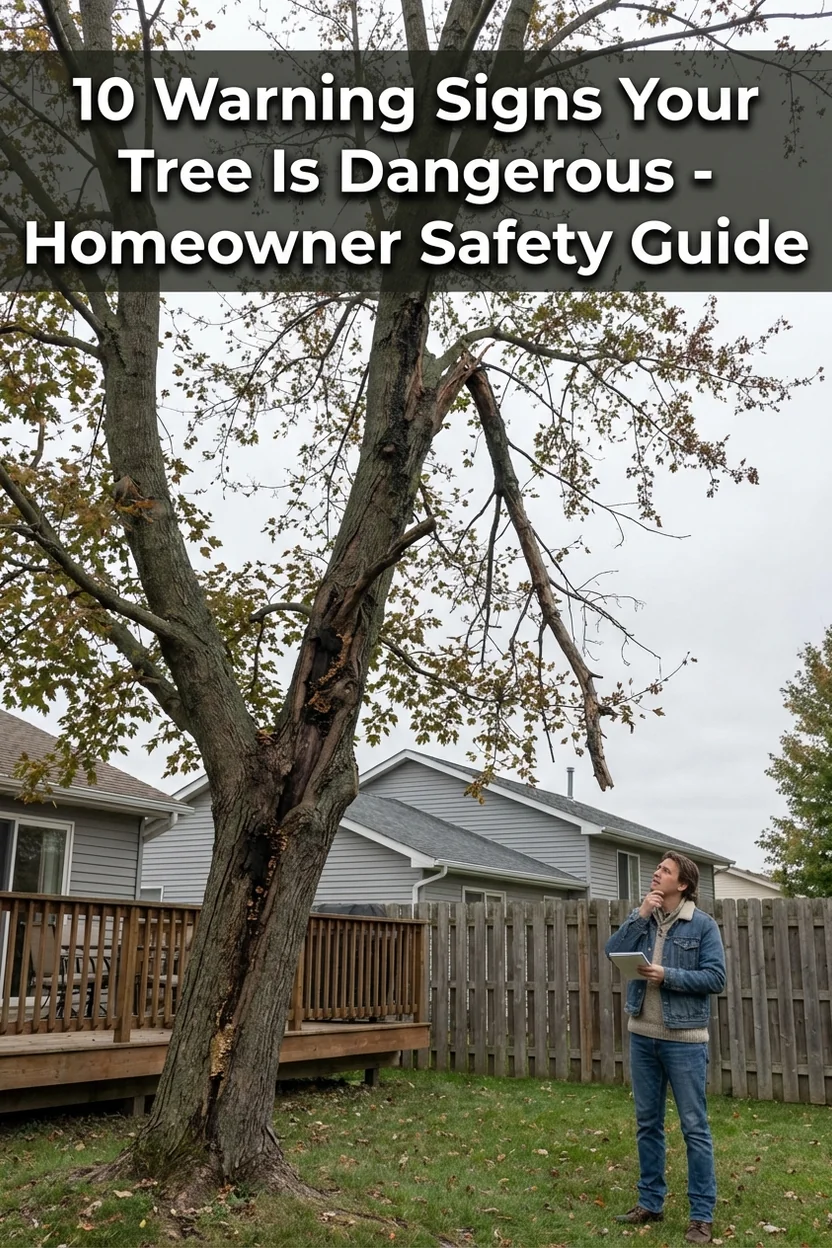
Is My Tree Dangerous? 10 Warning Signs Every Homeowner Should Know
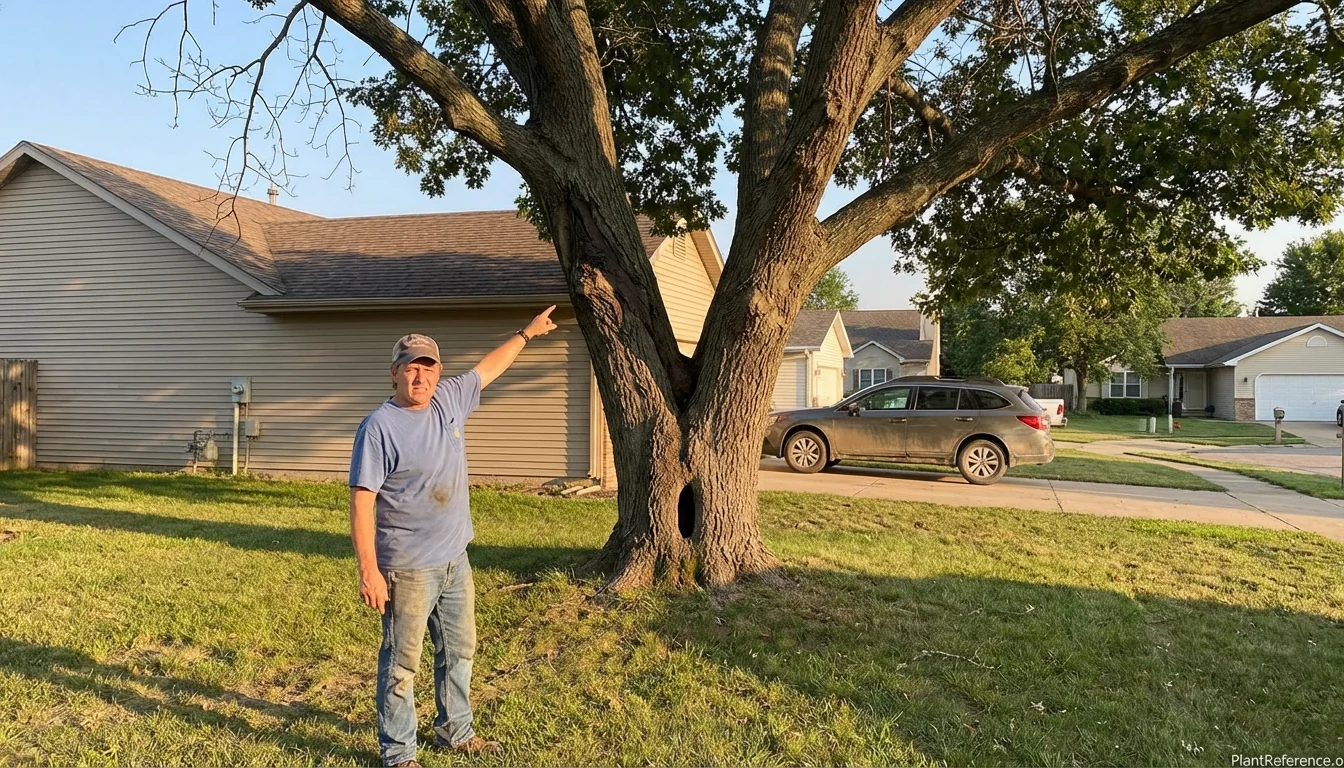
— Image © Plant Reference 2026
Let's be honest—most homeowners look at their trees and see landscaping, not potential hazards. But that oak in your front yard or the maple shading your deck could be silently developing structural weaknesses that put your family and property at serious risk.
What Makes Trees Dangerous to Homeowners
Tree failures don't just happen—they're the result of structural defects that develop over years or decades. Unlike a house foundation that settles predictably, trees are living organisms constantly adapting to stress, weather, and environmental changes. The danger lies in their ability to look healthy from the outside while harboring serious internal weaknesses.
Your tree becomes hazardous when three factors align: a structural defect (the tree has a weakness), a target (your house, car, or family), and environmental stress (wind, rain, or soil saturation). Remove any one element, and the risk drops dramatically.
The key difference between hazard and risk? Hazard is the tree's potential to fail—risk is the likelihood that failure will cause damage or injury. A dead tree in the middle of an empty field is hazardous but low-risk. The same tree hanging over your child's swing set is both hazardous and high-risk.
10 Critical Warning Signs of Tree Failure
1. Co-Dominant Stems (The "Y" Formation)
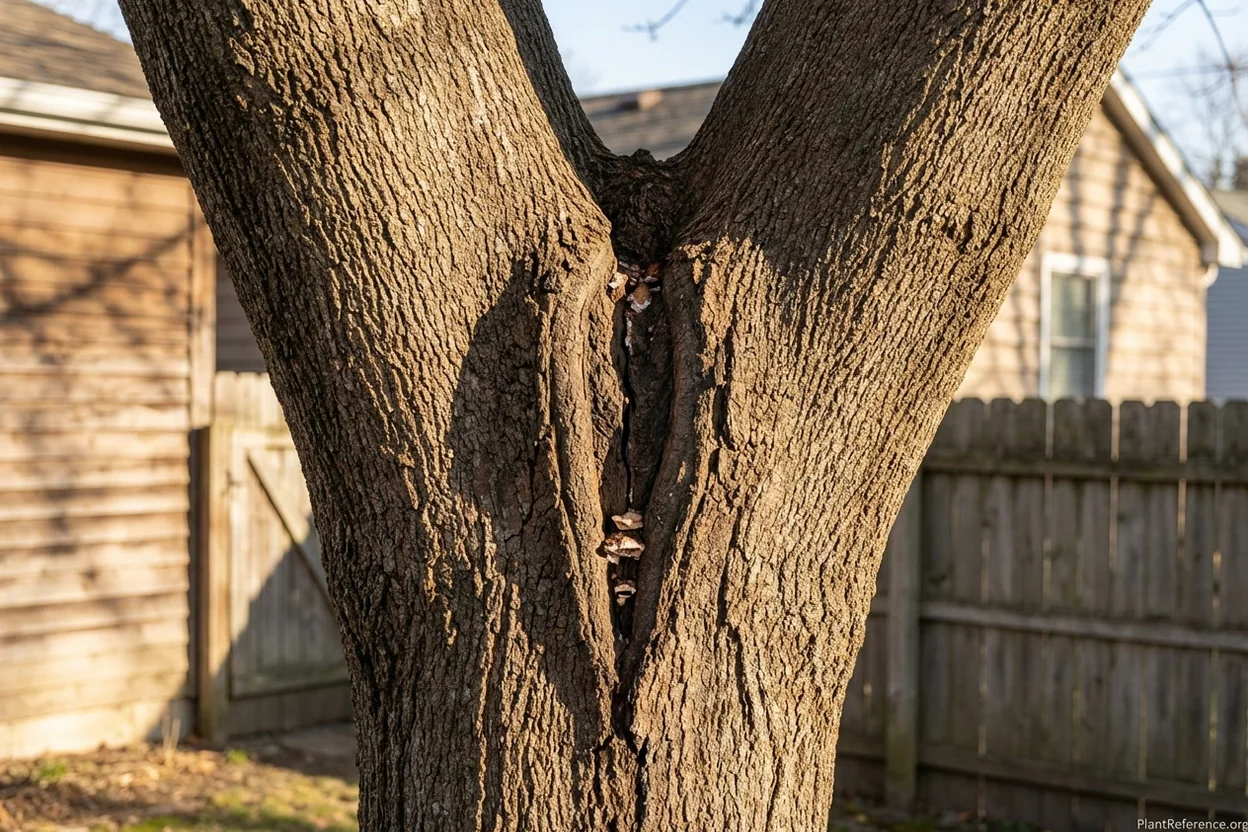
This is the number one structural flaw I see in residential trees. Co-dominant stems occur when two main trunks of similar size grow upward from a single point, creating a Y-shaped formation. The problem? Bark gets trapped between the stems (called "included bark"), creating a weak attachment that can't properly fuse.
Look for: Two trunks of similar diameter meeting at a V or Y junction, visible bark growing into the attachment point, or small cracks beginning to form where the stems meet. This defect often develops when trees are young but may not fail until they're mature and heavy.
2. Large Dead Branches (Hangers)
Dead branches over 2 inches (5 cm) in diameter are widowmakers waiting to drop. Unlike small twigs that break off naturally, large dead branches can hang in the canopy for years before falling—often during the worst possible moment when kids are playing below or cars are parked underneath.
Look for: Branches with no leaves during growing season, bark falling off in large sections, brittle wood that snaps easily, or branches already hanging at odd angles but still attached.
3. Fungal Fruiting Bodies at the Base
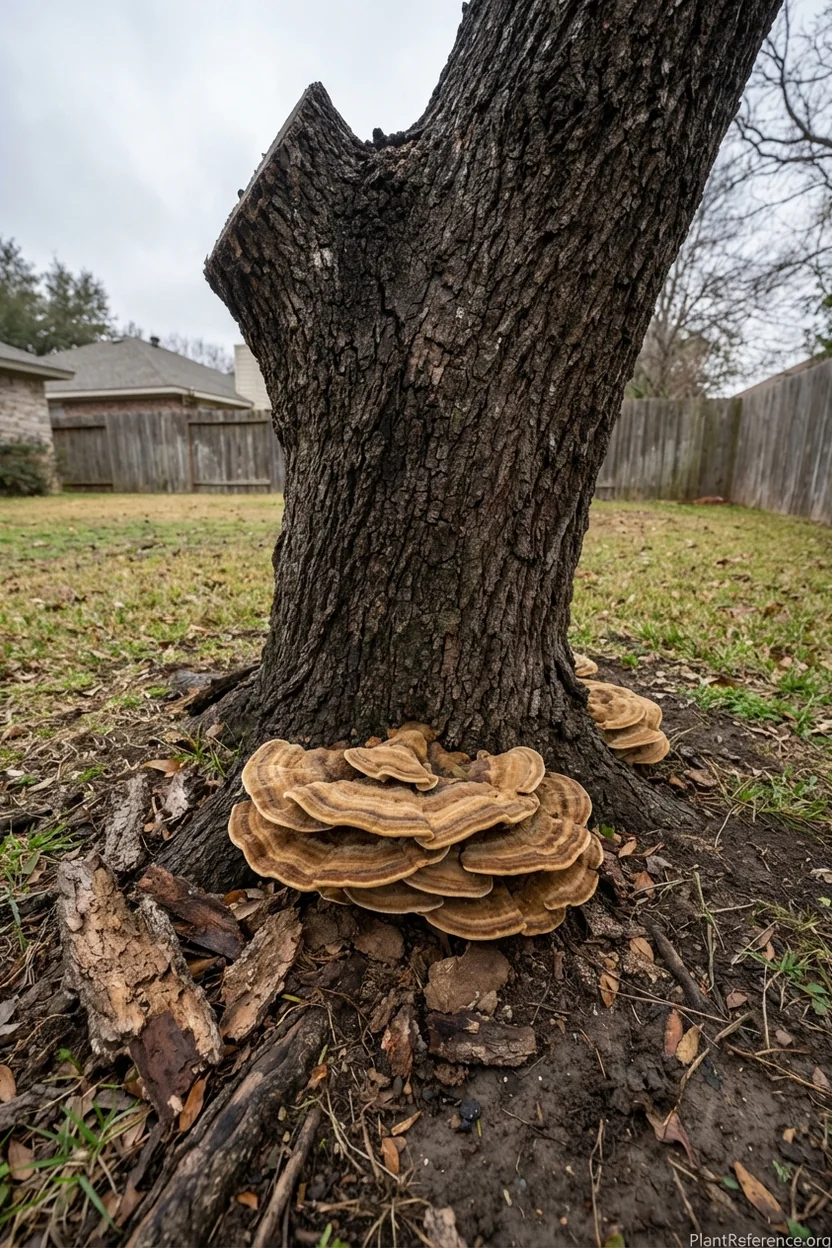
Mushrooms, conks, or shelf fungi growing from the trunk base are like warning lights on your dashboard—they indicate internal decay that you can't see from the outside. These fungi feed on dead and dying wood, suggesting the tree's structural integrity is compromised.
Look for: Mushrooms growing from roots or trunk base, bracket fungi (shelf-like growths) on the trunk, or soft, spongy areas of bark that compress when pressed.
4. Sudden Lean Development
Trees naturally grow toward light and may have a slight lean—that's normal. What's dangerous is a sudden change in lean angle, especially after storms or construction work. A tree that was straight last year but now leans 15 degrees has likely suffered root damage or trunk failure.
Look for: Noticeable change in trunk angle compared to previous years, soil mounding or cracking on the opposite side of the lean, or exposed roots on the lean side.
5. Root Plate Heaving
When a tree's root system fails, you'll often see the "root plate"—the circular area of soil and roots at the base—begin to lift or crack. This is one of the most serious warning signs because it indicates the tree's foundation is compromised.
Look for: Soil cracking in a circle around the tree, raised or heaved ground on one side, or visible root exposure where none existed before.
6. Trunk Cracks and Cavities
Vertical cracks running up the trunk, especially those that go through to the other side, indicate structural failure in progress. Large cavities or hollow areas remove so much structural wood that the tree can't support its own weight.
Look for: Vertical splits in the bark, cavities you can see into, hollow-sounding areas when tapped with a mallet, or old wounds that haven't healed properly.
7. Crown Dieback (More Than 25%)
When more than 25% of a tree's crown shows dead branches, the tree is under severe stress and may be declining rapidly. While crown dieback doesn't always mean immediate failure, it indicates the tree's defense mechanisms are failing.
Look for: Large sections of the crown with no leaves during growing season, brittle twigs that snap easily, or progressive dieback spreading from outer branches inward.
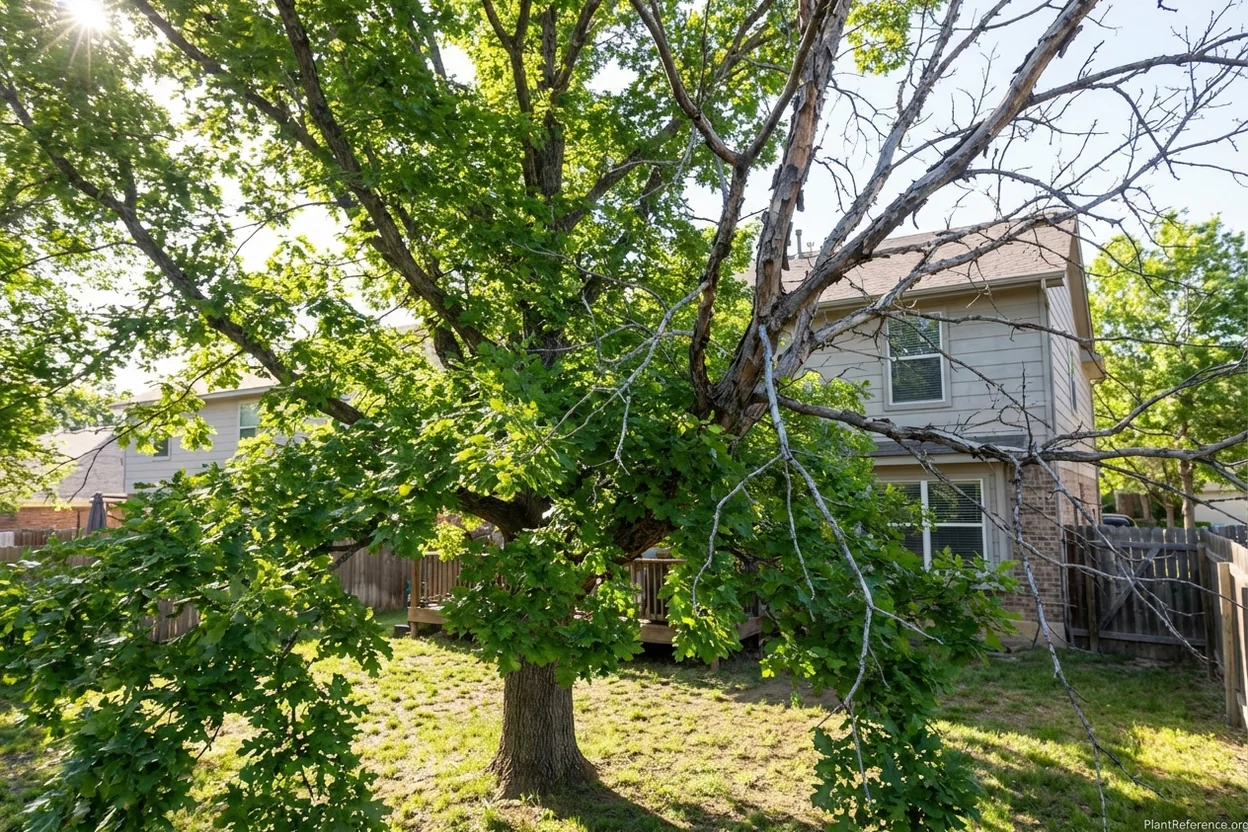
8. Storm Damage with Hanging Limbs
Recent storm damage often creates immediately dangerous conditions. Partially broken branches that remain attached are under tension and can fall without warning. Even small hanging branches become dangerous when loaded with ice or during high winds.
Look for: Branches hanging at unnatural angles, partially broken limbs still attached by strips of bark or wood, or branches resting on other branches but not properly supported.
9. Root Damage from Construction
Construction activity within the "critical root zone" (roughly 1.5 times the tree's height) can sever major roots, leading to delayed failure months or years later. The damage isn't always immediately visible but can be fatal.
Look for: Recent construction, trenching, or excavation near trees, soil compaction from heavy equipment, grade changes around trees, or new building within 50 feet (15 meters) of large trees.
10. Multiple Trunk Attachments at the Same Height
When three or more major branches or trunks originate from the same point on the tree, they create a structural weakness. Unlike a single strong leader, multiple attachments can't share loads effectively and are prone to failure.
Look for: Three or more large branches of similar size emerging from the same point, bark inclusions where multiple branches meet, or a "candelabra" appearance in the upper trunk.
When to Call a Professional vs Monitor Yourself
Here's where homeowners make critical mistakes—trying to assess complex structural problems without proper training. Here's my rule: if you see ANY of these conditions, get a professional assessment:
Immediate professional assessment required:
Any hanging or partially broken branches over 2 inches (5 cm) diameter
Fungal growth from trunk or major roots
Sudden lean development or root plate heaving
Large trunk cracks or cavities
Recent storm damage with structural impact
Monitor closely but may not require immediate intervention:
Minor crown dieback (under 15%)
Small dead branches under 2 inches (5 cm)
Gradual lean that hasn't changed in years
Minor bark damage or old healed wounds
Construction damage over two years old with no visible decline
The key distinction? Immediate hazards that could fail without warning versus long-term decline that develops predictably over time.
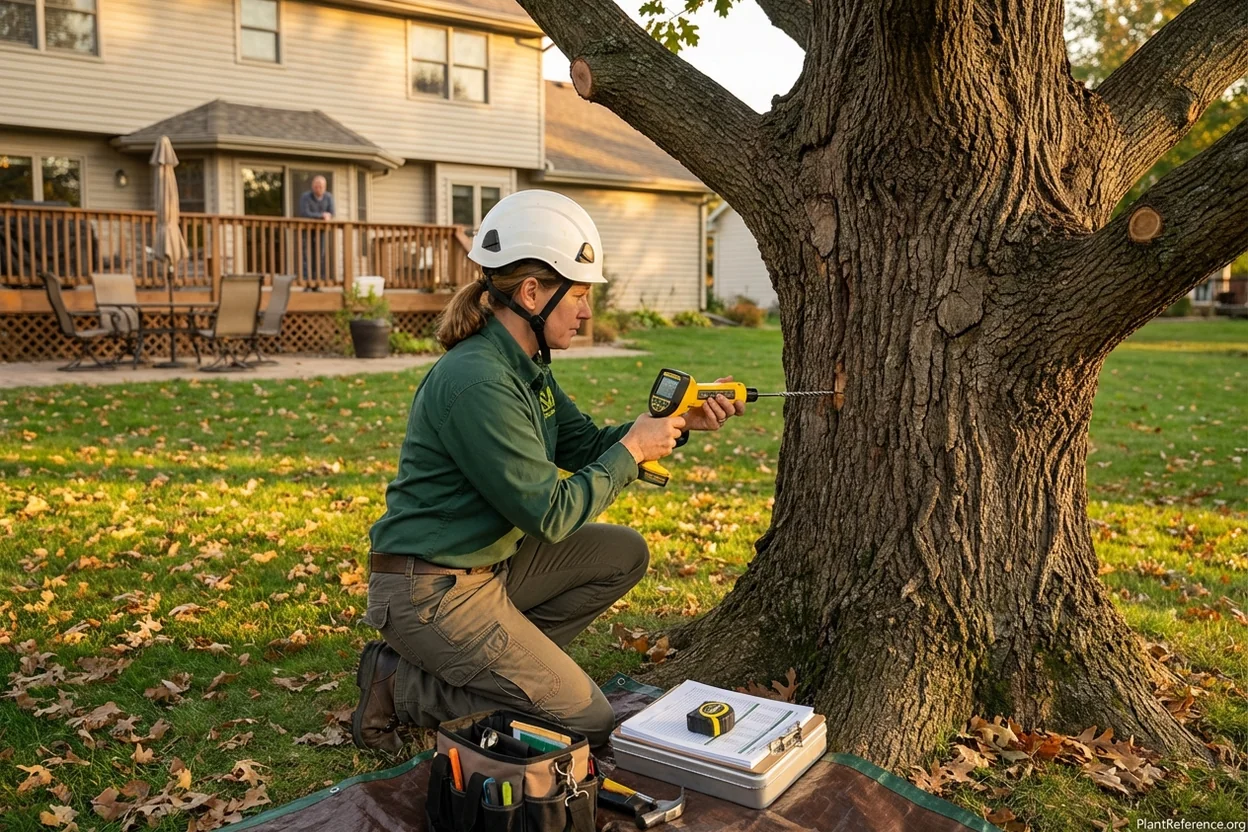
How to Find a Qualified Tree Risk Assessor
Not all tree services are qualified to assess risk—pruning trees and evaluating structural failure are completely different skills. Here's how to find legitimate expertise:
Look for these credentials: - ISA Certified Arborist certification (verify at isa-arbor.com) - Tree Risk Assessment Qualification (TRAQ 3.0) - Consulting Arborist membership (ASCA) - Current liability insurance ($1-2 million minimum) - Local business license and references
Red flags to avoid: - Door-to-door solicitation, especially after storms - Demands for immediate payment or work - Cannot provide ISA certification number - Quotes given over the phone without site visit - Recommends removing healthy trees for "safety"
A qualified risk assessment should include written documentation of hazards found, risk rating levels, recommended actions with timelines, and clear explanations of why specific treatments are needed.
The TRAQ 3.0 qualification (launched fall 2025) is now the gold standard for tree risk assessment. The 7-year certification ensures assessors stay current with biomechanical modeling and failure prediction technology.
Emergency Actions for Immediate Tree Hazards
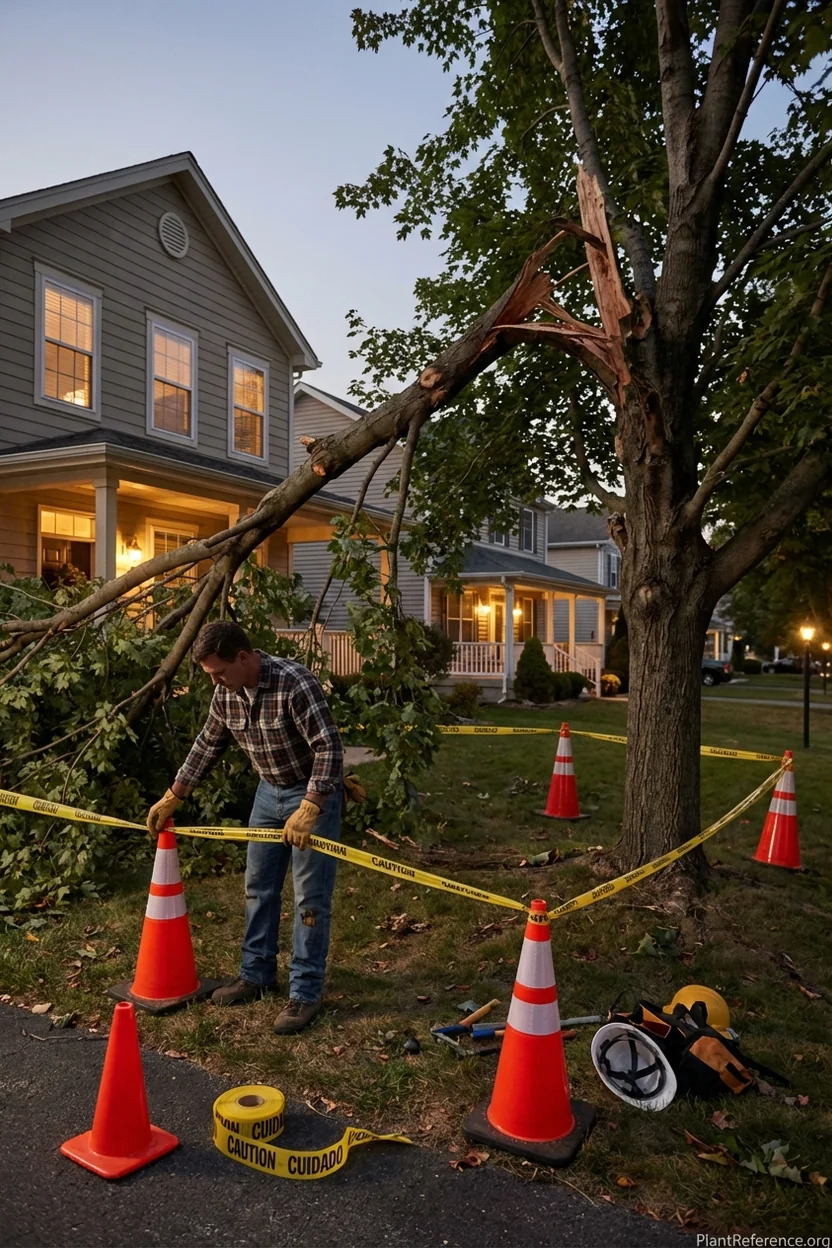
When you discover an immediate tree hazard, your priority is controlling access to the danger zone until professional help arrives:
Immediate steps for hanging branches: 1. Establish a safety perimeter 1.5 times the tree's height 2. Move vehicles, outdoor furniture, and play equipment 3. Block foot traffic with caution tape or barriers 4. Call ISA Certified Arborist within 24 hours 5. Document hazard with photos for insurance
For leaning trees or root plate heaving: 1. Evacuate area immediately—failure can be sudden 2. Contact utility company if near power lines 3. Call emergency tree service if threatening structures 4. Do not attempt to cable or prop tree yourself 5. Notify homeowner's insurance of potential claim
Storm damage protocol: 1. Stay indoors until winds subside completely 2. Photograph damage before touching anything 3. Clear safe access to your home's entrance only 4. Leave complex removals to professionals with proper equipment 5. Beware of tension in bent or broken branches
Never work under a damaged tree or attempt to remove large hanging branches yourself—the forces involved can easily kill or seriously injure you.
Preventing Tree Failures Through Proper Care
The best defense against dangerous trees is proactive maintenance based on the ANSI A300 standards (consolidated January 1, 2024) and the Prescriptive Pruning Qualification (PPQ) model:
Structural pruning in young trees: Young tree pruning focuses on developing strong architecture—single central leader, well-spaced branches with U-shaped attachments, and removal of co-dominant stems before they become large. The first 15 years of a tree's life determine its structural integrity for decades.
Regular inspection schedule:
Annual visual inspection by homeowner
Professional assessment every 3-5 years
Post-storm evaluation within 48 hours
TRAQ-qualified assessment if concerning signs develop
Documentation of all findings and treatments
Soil and root zone protection:
Maintain mulch 2-4 inches (5-10 cm) deep around trees
Avoid soil compaction from vehicles or construction
Protect critical root zone (1 foot per inch of trunk diameter)
Install root barriers before trenching near trees
Use air-spade techniques for utility work near roots
Professional pruning cycles:
5-7 year pruning cycles for mature street trees
Structural pruning for trees under 15 years old
Crown cleaning to remove dead, diseased branches annually
Storm damage evaluation and cleanup within 30 days
Never remove more than 25% of live foliage in single year
The economics are clear: preventive care costs $200-500 per tree every 5-7 years. Emergency removal after failure costs $2,000-8,000 plus potential property damage, insurance claims, and liability exposure.
Remember—trees don't fail randomly. They show warning signs that trained eyes can interpret. Your job as a homeowner is recognizing when those signs require professional expertise. The 10 warning signs in this guide give you the knowledge to protect your family and property from predictable tree failures.
When in doubt, get a professional assessment. A TRAQ-qualified arborist can determine risk levels, recommend appropriate treatments, and provide the documentation needed for insurance coverage. The cost of an assessment ($200-500) is minimal compared to the cost of doing nothing when warning signs are present.
Frequently Asked Questions

Reading about plants and recognising them are different skills. These three build the second.
- Daily PlantIdentify the day’s mystery plant from a close-up photograph.
- Keyed OutWork a dichotomous key, lead by lead, to name a hidden specimen.
- Name That PlantName a specimen from botanical clues dealt hardest first.
Free to play, no account needed
TJ stumbled into plant parenthood when a coworker gave him a neglected pothos. That single plant sparked an obsession that led him to quit his corporate marketing job and start a plant care service for busy professionals in Chicago. TJ maintains over 150 plants for residential clients and runs monthly plant swap meetups at local coffee shops. He's self-taught through YouTube, plant forums, and plenty of expensive mistakes (RIP to his variegated monstera). TJ specializes in troubleshooting common houseplant problems and is known for his blunt, no-BS advice: "Your plant isn't dying because Mercury is in retrograde—you're overwatering it." He's particularly skilled with finicky tropical plants like fiddle leaf figs and calatheas.