Image 1 of 6
1 / 6
Plant Reference
Quercus, Genus, sadleriana, Species,
- Genus & species
Sadler's oak
Klamath-Siskiyou region of northwestern California and southwestern Oregon; mixed conifer forests, serpentine chaparral, and rocky slopes at 2,000-7,000 feet (600-2,100 m) elevation
Overview
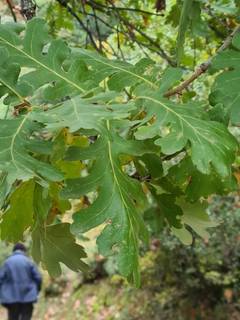
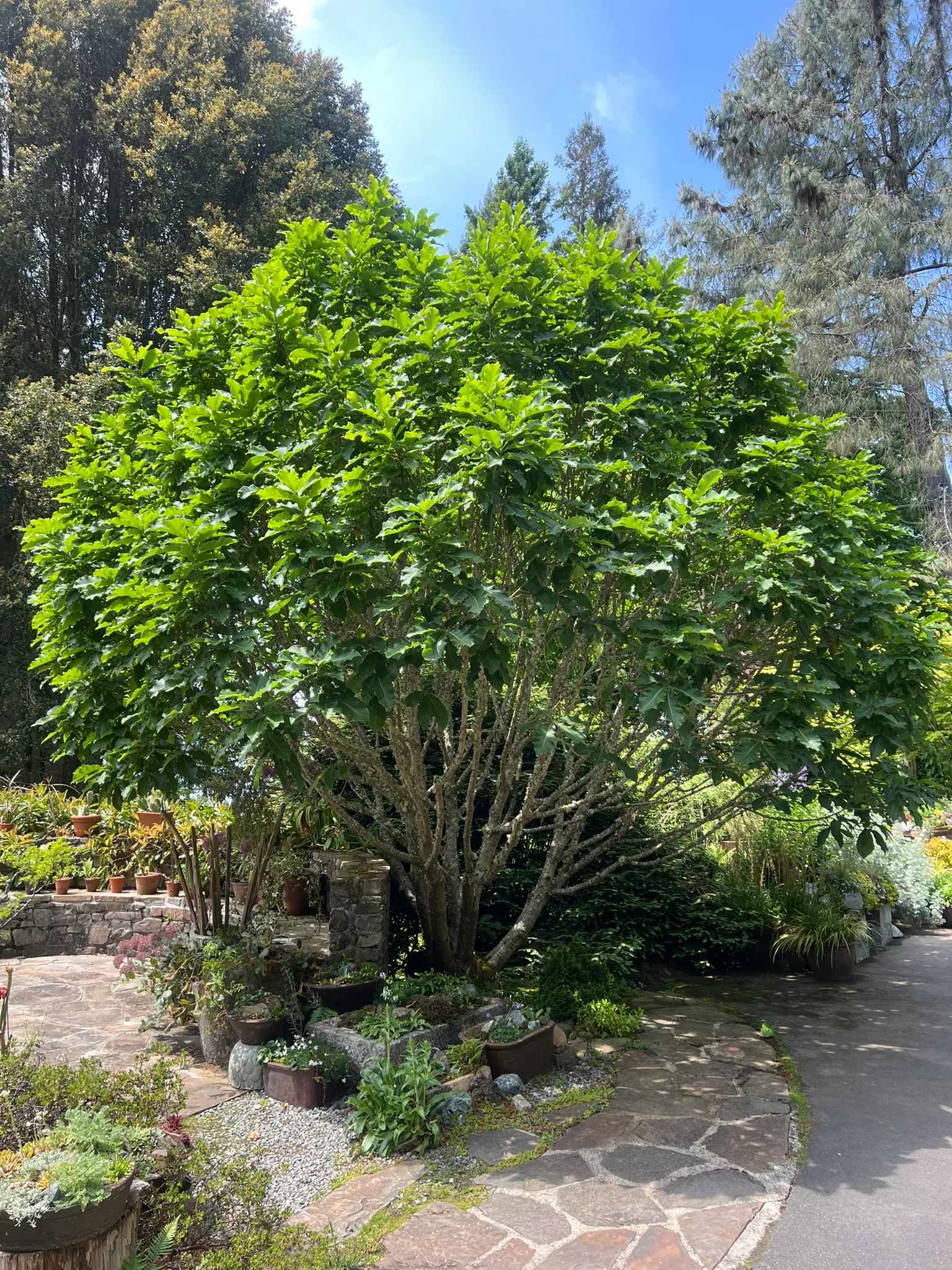
Quercus sadleriana is a low spreading broadleaf evergreen shrub in the beech family Fagaceae growing 2–6 feet (0.6–1.8 m) tall and 4–10 feet (1.2–3 m) wide through slow expansion by root suckers that produce new clumps at the margins of the parent plant. The species differs from most members of the genus Quercus because most oaks grow as large trees rather than low shrubs, and Q. sadleriana is among the few oak species that reach only shrub size at maturity — the closely related Q. vacciniifolia (huckleberry oak) and Q. sadleriana itself are the two main shrub-form oak species of the Pacific mountain ranges, and both occupy montane habitats where the shrub habit is an adaptation to exposed rocky conditions. Leaves are dark green above and paler beneath, oblong to oblanceolate in outline, 3–5 inches (7–13 cm) long, with prominent parallel veins running from the midrib to the coarsely toothed margin — the parallel-veined toothed leaf shape resembles chestnut (Castanea) leaves more closely than the lobed leaves of deciduous oaks such as Q. robur or Q. alba, and the chestnut-like leaf outline is the main field character that identifies the species at first glance. Golden stipules persist at the base of new growth in spring and early summer. Yellow-green pendulous male catkins 1–2 inches (2.5–5 cm) long open before the new leaves in April and May, and small acorns 0.5–0.75 inch (1.3–2 cm) long develop in shallow cups through summer and fall. The species is named in honor of John Sadler (1837–1882), a Scottish botanist and curator of the Royal Botanic Garden Edinburgh who described the species from material collected in the Klamath-Siskiyou region by Oregon botanist Thomas Howell in the 1870s. The species is placed in section Protobalanus (the intermediate or golden-cup oaks), a small North American section that includes Q. chrysolepis (canyon live oak) and Q. palmeri (Palmer's oak) and is characterized by intermediate traits between the white and red oak sections. Endemic to the Klamath-Siskiyou region of northwestern California and southwestern Oregon, growing in mixed conifer forests, serpentine chaparral, and rocky slopes at 2,000–7,000 feet (600–2,100 m) elevation, and the species tolerates serpentine (ultramafic) soils that exclude most other woody plants because of the toxic levels of magnesium and heavy metals in the substrate. Limitation: the narrow endemic range and the specialized montane habitat limit availability in the nursery trade, and the species is rarely offered for sale outside of native plant nurseries specializing in Klamath-Siskiyou flora. Drought-tolerant once established. Leaves and acorns contain tannins that are harmful if eaten in quantity, especially to horses and grazing livestock; the risk to people is generally low. Deer browse the young foliage (the common name deer oak reflects this palatability to deer).
Native Range
Endemic to the Klamath-Siskiyou region of northwestern California and southwestern Oregon, growing in mixed conifer forests, serpentine chaparral, and rocky slopes at 2,000–7,000 feet (600–2,100 m) elevation. The Klamath-Siskiyou ecoregion carries a high concentration of endemic plant species because of the region's complex geologic history, the presence of serpentine (ultramafic) substrates that support specialized flora, and the long isolation of the mountains from glacial disturbance during the Pleistocene, and Q. sadleriana is a signature endemic woody species of the ecoregion alongside Picea breweriana (Brewer spruce), Chamaecyparis lawsoniana (Port Orford cedar), and Kalmiopsis leachiana.Suggested Uses
Used in native plant gardens, serpentine soil restoration plantings, dry shrub borders, and Klamath-Siskiyou regional ecosystem gardens in USDA zones 6 through 9 at 4–10 foot (1.2–3 m) spacing between plants. The species is a specialty native plant suited to gardeners interested in Pacific Northwest flora, serpentine ecology, or the broader Klamath-Siskiyou ecoregion as a separate biogeographic region, and the shrub-form habit of the oak is a growth form not seen in most oaks and attracts attention among oak collectors and native plant specialists. The species is rarely offered in the general nursery trade and is typically sourced from native plant nurseries specializing in Klamath-Siskiyou and Pacific Northwest flora. Heavy deer-pressure gardens without young-plant protection, wet poorly drained positions, and USDA zones colder than zone 6 are unsuitable because of the deer palatability of the young foliage, the drainage requirement, and the cold hardiness limit of the species.How to Identify
Appearance
Size & Dimensions
Height2' - 6'
Width/Spread4' - 10'
Colors
Bloom Information
Yellow-green pendulous male catkins 1–2 inches (2.5–5 cm) long open before the new leaves in April and May across a 2–3 week flowering period, and the catkins carry many tiny wind-pollinated male flowers that release pollen over several days before the catkins wither and drop from the branches. Female flowers are tiny and inconspicuous and develop through summer into small acorns 0.5–0.75 inch (1.3–2 cm) long carried singly or in pairs in shallow cups, and the acorns mature in their first year and drop in fall to supply food for small mammals and birds in the Klamath-Siskiyou native range.
Detailed Descriptions
Flower Description
yellow-green pendulous male catkins 1-2 inches (2.5-5 cm) long open before the new leaves in mid to late spring; female flowers are tiny and inconspicuous and develop into small acorns 0.5-0.75 inch (1.3-2 cm) long carried in shallow cupsFoliage Description
dark green above and paler beneath; oblong to oblanceolate leaves 3-5 inches (7-13 cm) long with prominent parallel veins running from the midrib to the coarsely toothed margin; the parallel-veined toothed leaves resemble chestnut (Castanea) leaves more closely than the lobed leaves of the deciduous Quercus species; golden stipules persist at the base of new growth; evergreen through the yearGrowing Conditions
Sun Requirements
Requires 4-10 hours of direct sunlight daily
• Full Sun: 6+ hours of direct sunlight
• Partial Shade: 3-6 hours of direct sunlight
• Full Shade: Less than 3 hours of direct sunlight