Image 1 of 15
1 / 15
Plant Reference
Daucus, Genus, carota, Species,
- Genus & species
Queen Anne's lace
Europe, western Asia, northern Africa
Overview
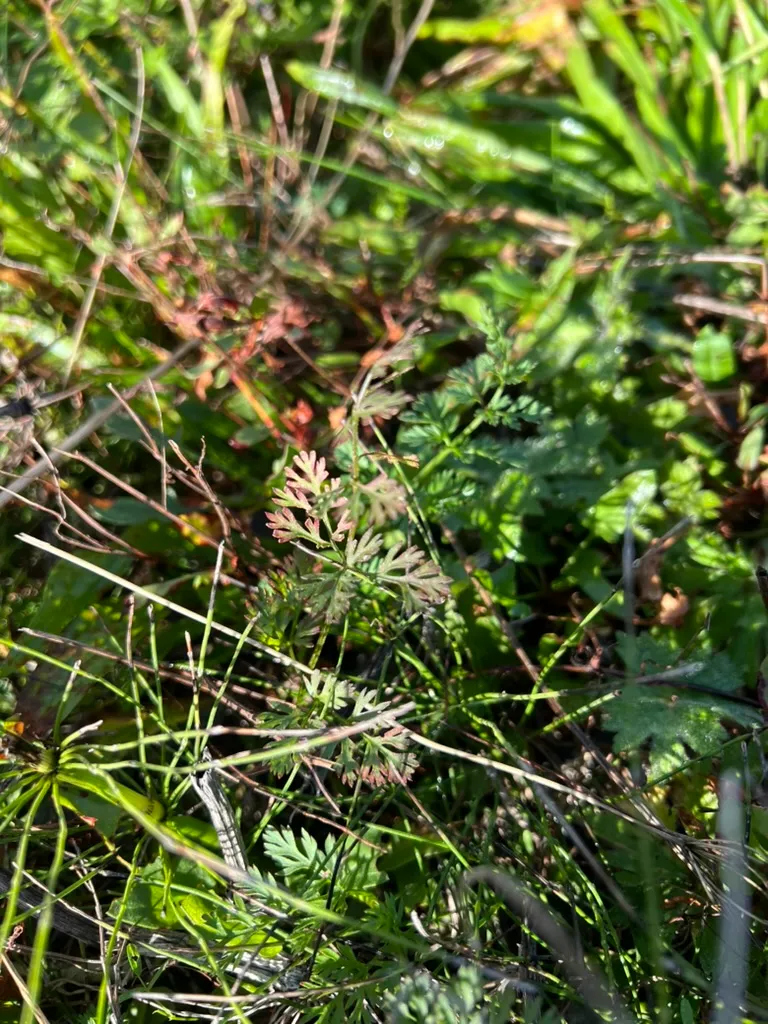
Daucus carota is a biennial in the carrot family (Apiaceae) reaching 24–48 inches (60–120 cm) tall with a 12–24 inch (30–60 cm) spread. The wild ancestor of the cultivated carrot (D. carota ssp. sativus). First-year plants form a basal rosette of finely 2–3 times pinnately compound leaves 3–8 inches (8–20 cm) long with a lacy, fern-like appearance. Second-year stems are erect, hairy, grooved, branching, and solid (not hollow). Flowers are white, tiny, borne in flat to slightly domed compound umbels 2–5 inches (5–13 cm) across, typically with a single dark purple to red floret at the center of the umbel. Below each umbel is a ring of finely divided, pinnate bracts (involucre). As fruit matures, the umbel curls inward to form a concave, bird's-nest shape. Fruit is a small, bristly mericarp with hooked spines for animal dispersal. The taproot is whitish, woody, and slender (unlike the enlarged orange root of cultivated carrots). Crushed foliage emits a carrot-like scent. A single plant produces 1,000–40,000 seeds that remain viable in soil for 2–5 years. Listed as a noxious weed in several U.S. states. Closely resembles the highly toxic Conium maculatum (poison hemlock).
Native Range
Native to Europe, western Asia, and northern Africa, occurring in meadows, roadsides, pastures, and waste ground from sea level to approximately 5,000 feet (1,500 m). Widely naturalized across North America, found in all 50 U.S. states and all Canadian provinces. Particularly common in dry to mesic roadsides, pastures, and abandoned fields.Suggested Uses
Used in weed identification courses, particularly for teaching the critical distinction from Conium maculatum (poison hemlock). Larval host plant for black swallowtail butterflies. Seeds used as a spice in some culinary traditions. Studied in crop wild relative genetics as the progenitor of the cultivated carrot. Included in Apiaceae morphology exercises for umbel, involucre, and fruit structures.How to Identify
Appearance
Size & Dimensions
Height2' - 4'
Width/Spread1' - 2'
Bloom Information
Flowers from June through August in the second year. Individual umbels bloom for 7–10 days. Compound umbels contain 20–40 umbellets, flowering from the outside inward. In the Pacific Northwest, peak bloom occurs in July. The central purple floret opens before the white peripheral florets. Seeds mature by August through September. Pollinated by a wide range of insects including flies, beetles, bees, and butterflies. Larval host plant for black swallowtail butterflies (Papilio polyxenes).
Detailed Descriptions
Foliage Description
Dark green, finely 2-3 times pinnately compound with lacy, fern-like appearance; hairy stems and petiolesGrowing Conditions
Sun Requirements
Requires 6-10 hours of direct sunlight daily
• Full Sun: 6+ hours of direct sunlight
• Partial Shade: 3-6 hours of direct sunlight
• Full Shade: Less than 3 hours of direct sunlight