Plant Reference
Daucus, Genus, carota, Species, 'Nantes', Cultivar,
- Genus & species
- Cultivar
nantes carrot
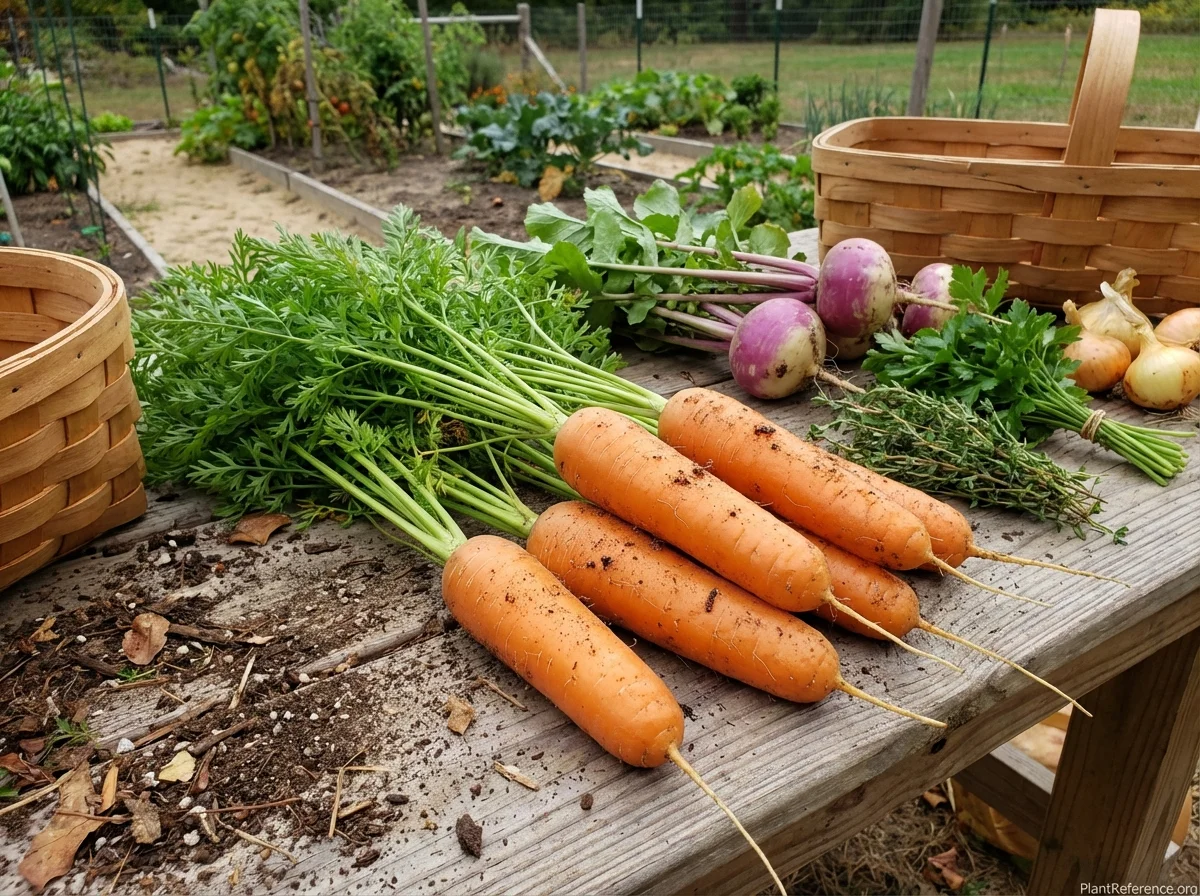
Nantes type developed in Nantes, France in the 19th century; the species {D. carota} is native to Europe and western Asia; the Nantes type is characterized by the uniform cylindrical shape (not tapered like Danvers or Imperator types) and the smooth-textured sweet nearly coreless flesh — the shape and flesh characters together make Nantes the reference cultivar group for home-garden carrot production in loose sandy-loam soils
Overview
Daucus carota 'Nantes' is Nantes carrot, a biennial root vegetable grown as an annual, with fern-like bright green narrowly divided foliage 12-18 inches (30-45 cm) tall and a cylindrical orange root 6-7 inches (15-18 cm) long with blunt rounded tips at both ends. The Nantes type is characterized by the uniform cylindrical shape — not tapered like Danvers or Imperator types. The flesh is smooth-textured, sweet, and nearly coreless. Named after Nantes, France (19th century). In the carrot family (Apiaceae). The species D. carota is the same as wild carrot (Queen Anne's lace — D. carota var. carota). Direct-sow only: carrots do not transplant since the taproot forks if disturbed. Sow 2-3 weeks before last frost through midsummer. Succession-sow every 2-3 weeks. Loose sandy loam with no stones or clods produces the straightest roots — heavy clay or stony soil causes forked and stunted roots. Consistent moisture during germination (10-21 days — slow and erratic). Carrot rust fly (Psila rosae) is the primary pest. Non-toxic (edible root crop). Tolerates light frost to 25°F (-4°C) — fall carrots are sweeter after frost exposure. Full sun. Annual. Growth rate is moderate.
Native Range
Nantes type developed in Nantes, France (19th century). The species D. carota is native to Europe and western Asia.Suggested Uses
Grown in vegetable gardens, raised beds, and containers of at least 2 gallons (8 L) with 12 inches (30 cm) of depth to hold the 6-7 inch root. Direct-sow into loose stone-free soil. The cylindrical Nantes shape holds together well in both fresh eating and lacto-fermentation preparations. Succession-sow across the spring and summer windows for a continuous supply across fall. Non-toxic. Annual.How to Identify
Appearance
Size & Dimensions
Height1' - 1'6"
Width/Spread6" - 8"
Bloom Information
Biennial: flowers in the second year if overwintered — white compound umbels. Grown as an annual for root harvest. Bolting in the first year produces a woody inedible root.
Detailed Descriptions
Flower Description
White compound umbels (flat-topped clusters) if allowed to bolt in the second year — biennial, but grown as an annual for root harvestFoliage Description
Bright green, fern-like, narrowly divided (bipinnate), 8-12 inches (20-30 cm)Growing Conditions
Sun Requirements
Requires 6-10 hours of direct sunlight daily
• Full Sun: 6+ hours of direct sunlight
• Partial Shade: 3-6 hours of direct sunlight
• Full Shade: Less than 3 hours of direct sunlight
Care & Maintenance
Care Guide
Grows in full sun (6+ hours per day) in loose sandy loam with no stones or clay clods, since stones and clods cause forking of the taproot. Direct-sow only (no transplanting, since the taproot forks if disturbed during transplant). Consistent moisture during germination (10-21 days, slow and erratic germination is typical for the species). Succession-sow every 2-3 weeks through the spring and early summer sowing windows to extend harvest across the fall. Carrot rust fly (Psila rosae) is the primary pest and row cover during the flight period reduces egg laying on the crown. Non-toxic (edible root crop). Annual.Pruning
No pruning. Thin seedlings to 2-3 inches (5-7 cm) apart after germination to give each root room to size up without crowding. Do not disturb the taproot at any stage since the taproot forks readily. Harvest at 65-75 days by loosening soil with a spade or fork and pulling the root by the foliage base.Container Growing
Suitable for container growing
Minimum container size: 2 gallons
Toxicity
Non-toxicPlanting Guide
Planting Methods & Timing
Planting Method
direct sow
Direct Sow Timing
2-3 weeks before last frost through midsummer. Soil temperature 45-85 degrees F (7-29 degrees C). Succession-sow every 2-3 weeks.
Days to Maturity
65–75 days
Plant Spacing
3 inches