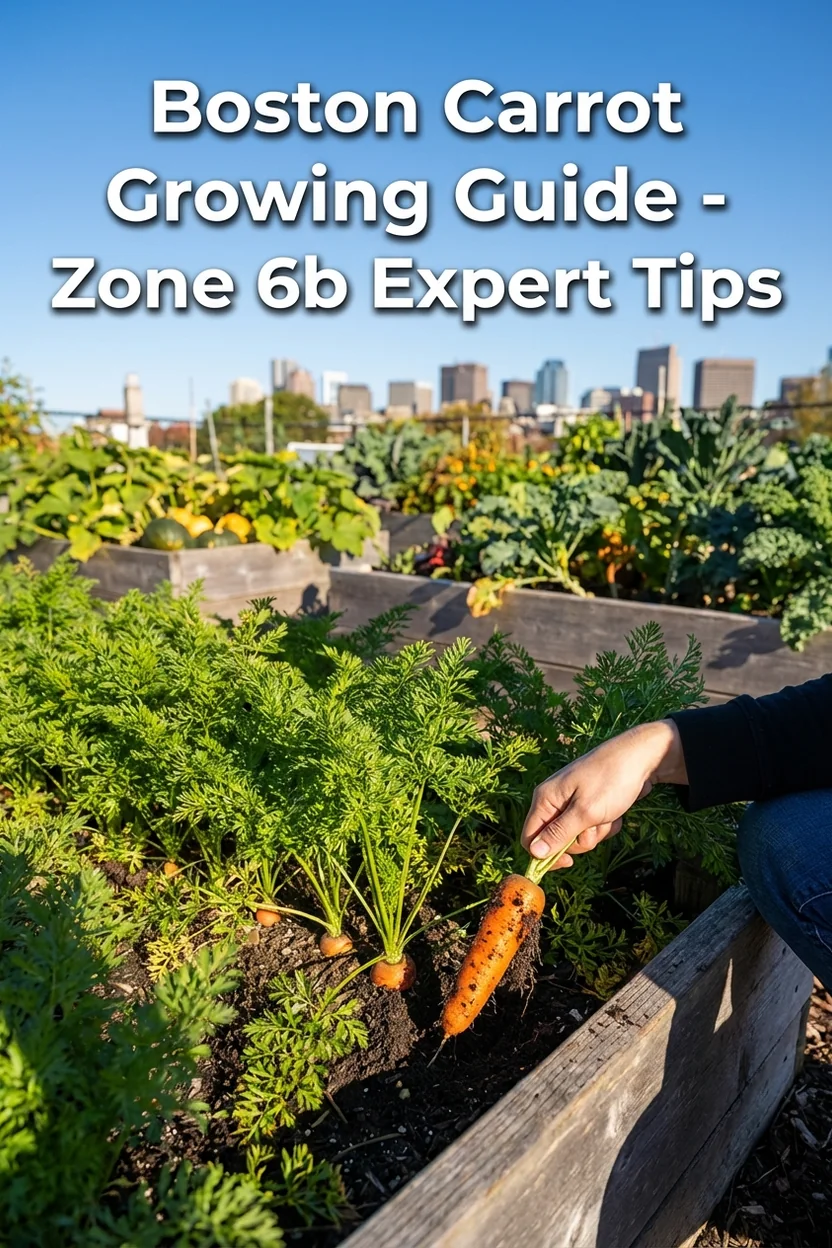
When to Plant Carrots in Boston: Complete Guide + Best Varieties for Zone 6b
Pets & Toxicity
Recorded toxicity for plants linked in this guide. An unknown status is not a safety assessment.
No linked plant is recorded as toxicDetailsHide
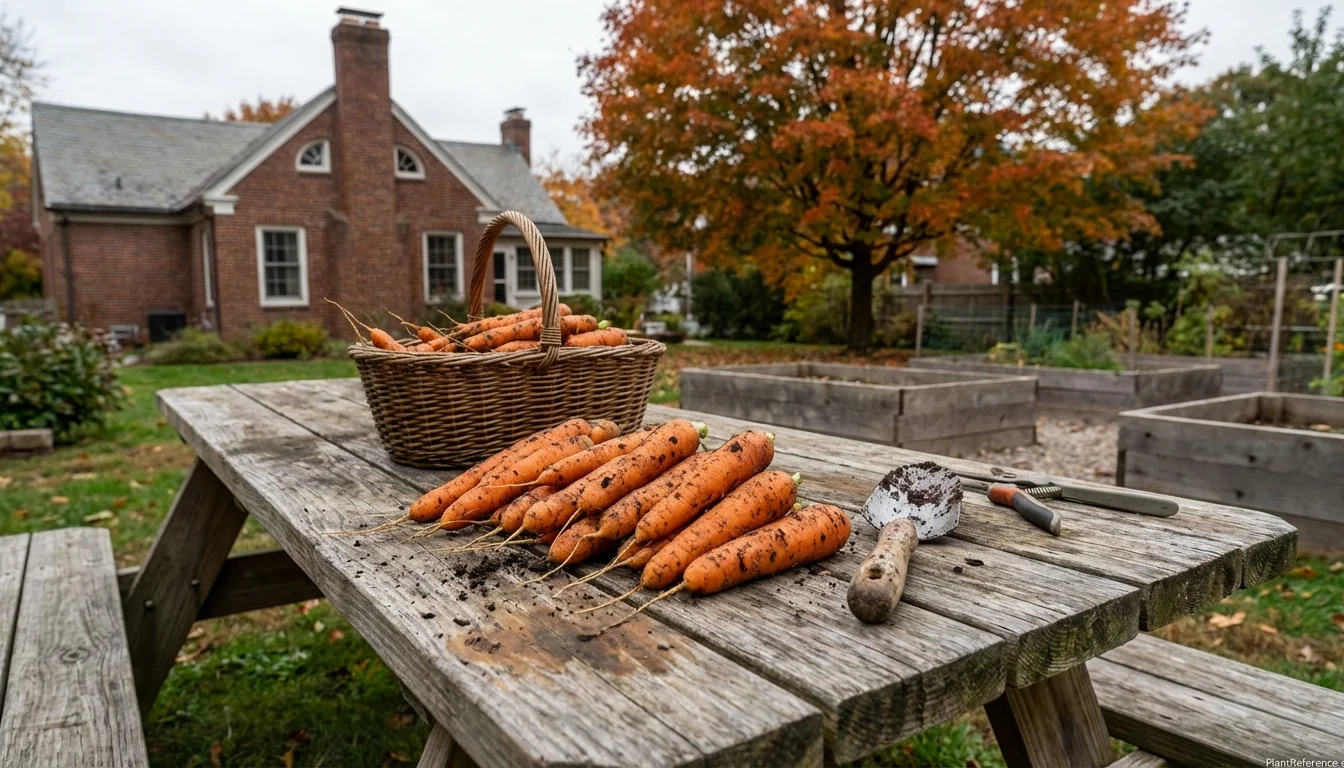
— Image © Plant Reference 2026
Boston's Zone 6b climate creates ideal conditions for growing sweet, crisp carrots. With our last frost around April 19 and first frost October 19, you get a generous 183-day growing season perfect for both spring and fall carrot crops.
I've been growing carrots in New England gardens for forty years, and Boston's coastal climate ranks among the best I've seen for root vegetables. The key is understanding that carrots are cool-season crops—they love Boston's mild springs and crisp autumns, but struggle in the summer heat. Plan for two distinct growing seasons, and you'll have fresh carrots from July through February.
Best Carrot Varieties for Boston's Zone 6b Climate
Your variety choice determines success more than any other factor. I've tested dozens of carrot types in New England conditions, and these five consistently deliver the best results in Boston's climate.
Variety | Days to Maturity | Best For | Notes for Boston |
|---|---|---|---|
Daucus carota 'Scarlet Nantes' | 65-70 days | Fresh eating, quick harvest | Perfect for spring crop, excellent sweetness |
Daucus carota 'Bolero' | 75-80 days | Disease resistance | Best choice for humid Boston summers |
Daucus carota 'Danvers 126' | 75-80 days | Winter storage | Handles Boston's clay-loam soils perfectly |
Daucus carota 'Nelson' | 58-65 days | Fast harvest | Ideal for succession planting every 3 weeks |
Daucus carota 'Chantenay Red Core' | 65-70 days | Heavy soils | Best for challenging Boston clay conditions |
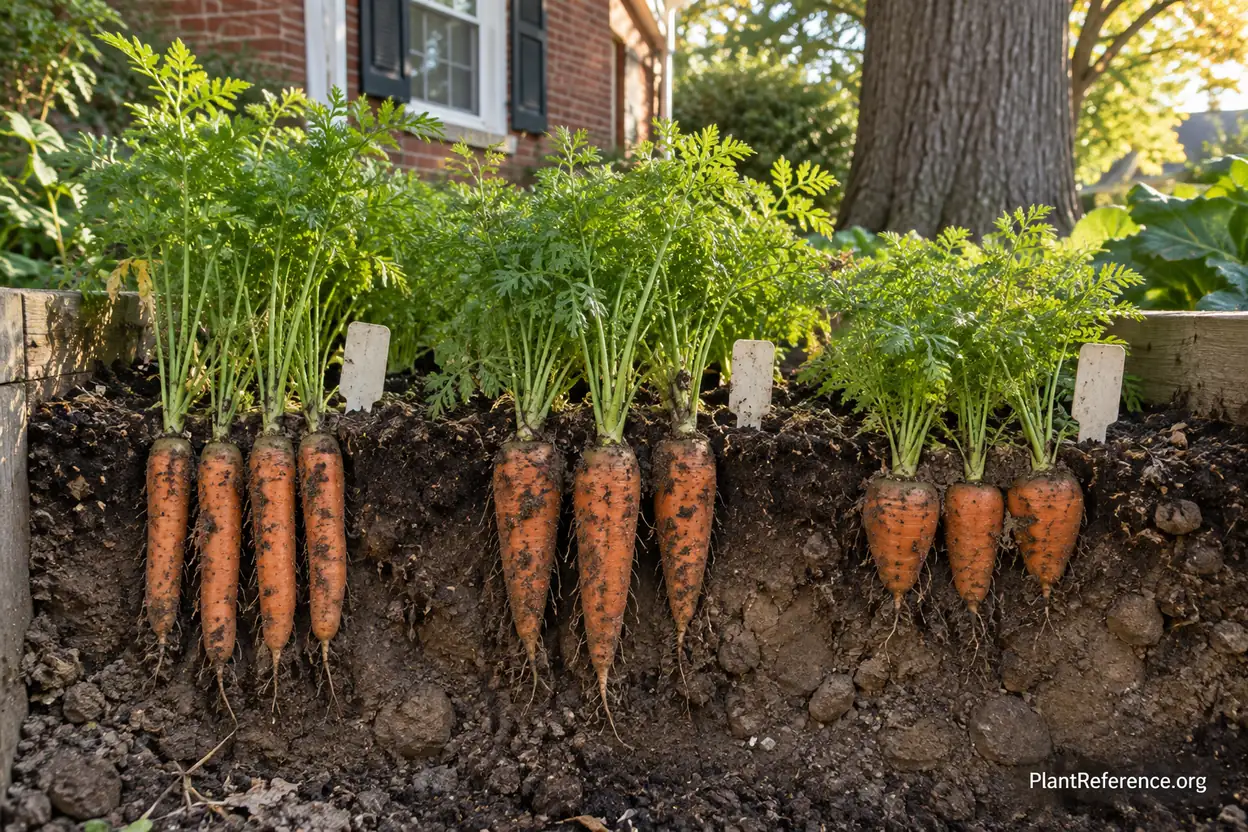
Daucus carota 'Scarlet Nantes' (nahn-TEZ)** remains my top choice for Boston gardeners. These cylindrical carrots reach 6-7 inches long with consistently sweet flavor. The blunt tip means they need loose soil, but Boston's raised beds and amended clay-loam provide perfect conditions. Plant them for your spring crop—they mature in 65-70 days, putting harvest in early July before the heat hits.
Daucus carota 'Bolero' (bo-LAIR-oh) earns its reputation as the disease-resistant champion. Boston's coastal humidity can trigger leaf blight on susceptible varieties, but Bolero shrugs off fungal problems. The roots are classic Nantes type—cylindrical, sweet, and perfect for fresh eating. Use this variety for your fall crop when humidity is highest.
Daucus carota 'Danvers 126' (DAN-verz) was literally bred in Massachusetts, just north of Boston. These conical carrots with their pointed tips can push through heavier soils that would stop a Nantes variety. If your garden has Boston's typical clay subsoil, Danvers is your best friend. The 75-80 day maturity makes them ideal for fall planting and winter storage.
For challenging Boston clay conditions, Daucus carota 'Chantenay Red Core' (shan-ten-AY) delivers reliability. These short, stout carrots only reach 4-5 inches long but can force their way through compacted soil that defeats longer varieties. The broad shoulders give them mechanical advantage, and they're incredibly sweet when harvested at proper size.
Specific Planting Dates for Boston
Boston's April 19 last frost date and October 19 first frost create two distinct carrot seasons. Here's exactly when to plant for maximum success:
Spring Crop Timeline: - April 1-15: Plant fast varieties like Daucus carota 'Nelson' and Daucus carota 'Scarlet Nantes' - April 15-May 1: Plant main crop varieties like Daucus carota 'Bolero' - May 1-15: Last chance for spring planting; use only 58-65 day varieties - July 1-15: Harvest spring-planted carrots before summer heat
Fall/Storage Crop Timeline: - July 15-30: Plant storage varieties like Daucus carota 'Danvers 126' - August 1-15: Plant fresh eating varieties like Daucus carota 'Bolero' - August 15: Absolute latest planting for 65-day varieties - October 15-November 30: Harvest fall crop after frost sweetening
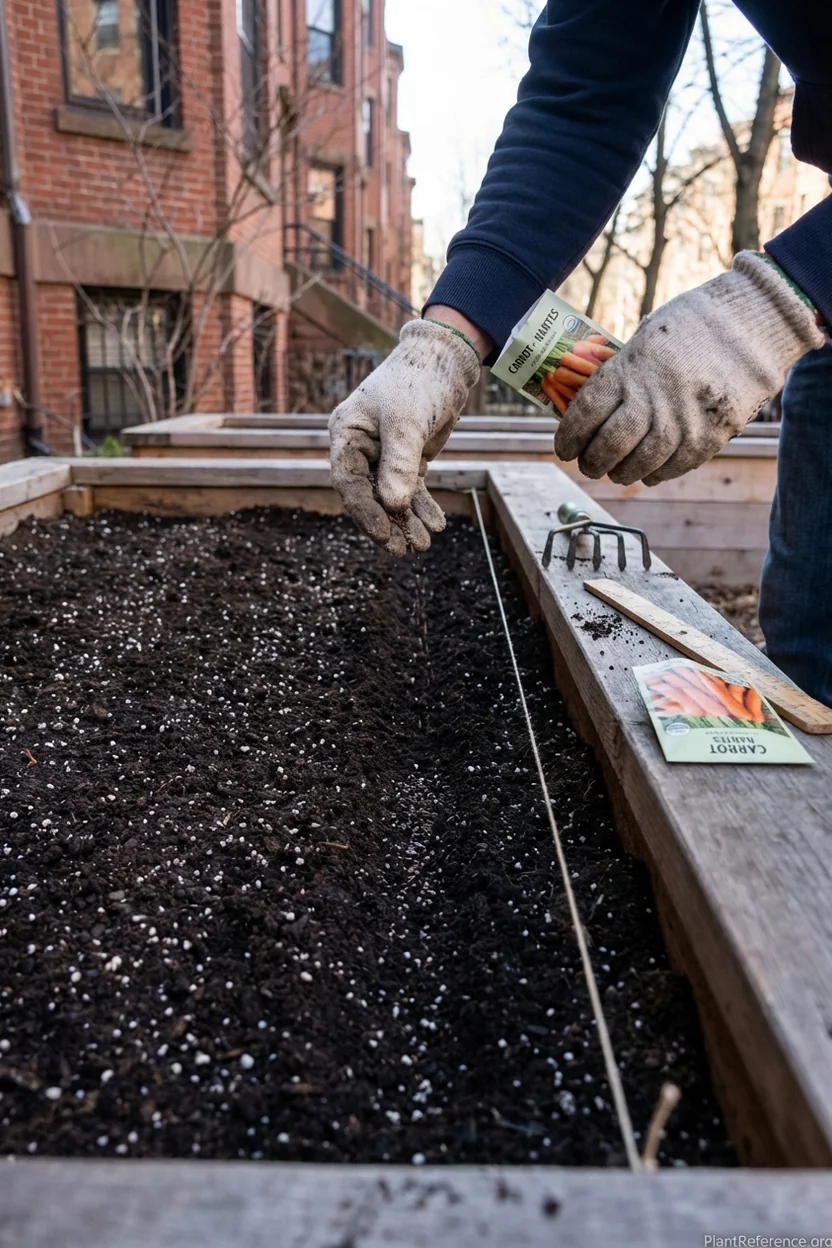
The secret to Boston carrot success is understanding soil temperature, not just air temperature. Carrot seeds need soil temperatures above 45°F (7°C) to germinate reliably. In Boston, this typically occurs by April 1, even though our last frost isn't until April 19. I've been planting carrots successfully in early April for decades.
For fall planting, count backward from your first frost. Daucus carota 'Danvers 126' needs 80 days to maturity, so July 15 planting gives you an October 15 harvest—perfect timing for frost sweetening. Late August plantings work for 65-day varieties like Daucus carota 'Scarlet Nantes'.
Complete Growing Guide for Boston
Soil Preparation for Boston Conditions:
Boston's glacial soils range from sandy loam near the harbor to heavy clay in western suburbs. Most gardeners deal with clay-loam that becomes brick-hard when dry and sticky when wet. Here's how I prepare beds for carrots:
Double-dig to 12 inches deep, breaking up any hardpan layer. Boston clay often has a compacted layer 6-8 inches down that will fork your carrots if not addressed. Remove any stones larger than a golf ball—our glacial till is full of them.
Amendment is crucial. I add 2 inches of finished compost and 1 inch of coarse sand (not fine sand, which creates concrete with clay). This creates the loose, friable texture carrots demand. Fresh manure is death to carrots—it causes forking and excessive top growth. Only use manure that's been composted for at least one year.
Test soil pH and adjust to 6.0-6.8 using lime if needed
Ensure drainage by creating raised beds if your soil stays soggy
Add organic matter but avoid fresh nitrogen sources
Create a fine seedbed surface for successful germination
Planting Techniques for Boston Success:
Carrot germination is the trickiest part of growing them in Boston. Our spring weather can swing from 40°F to 75°F in a week, and seeds need consistent moisture for 14-21 days to sprout.
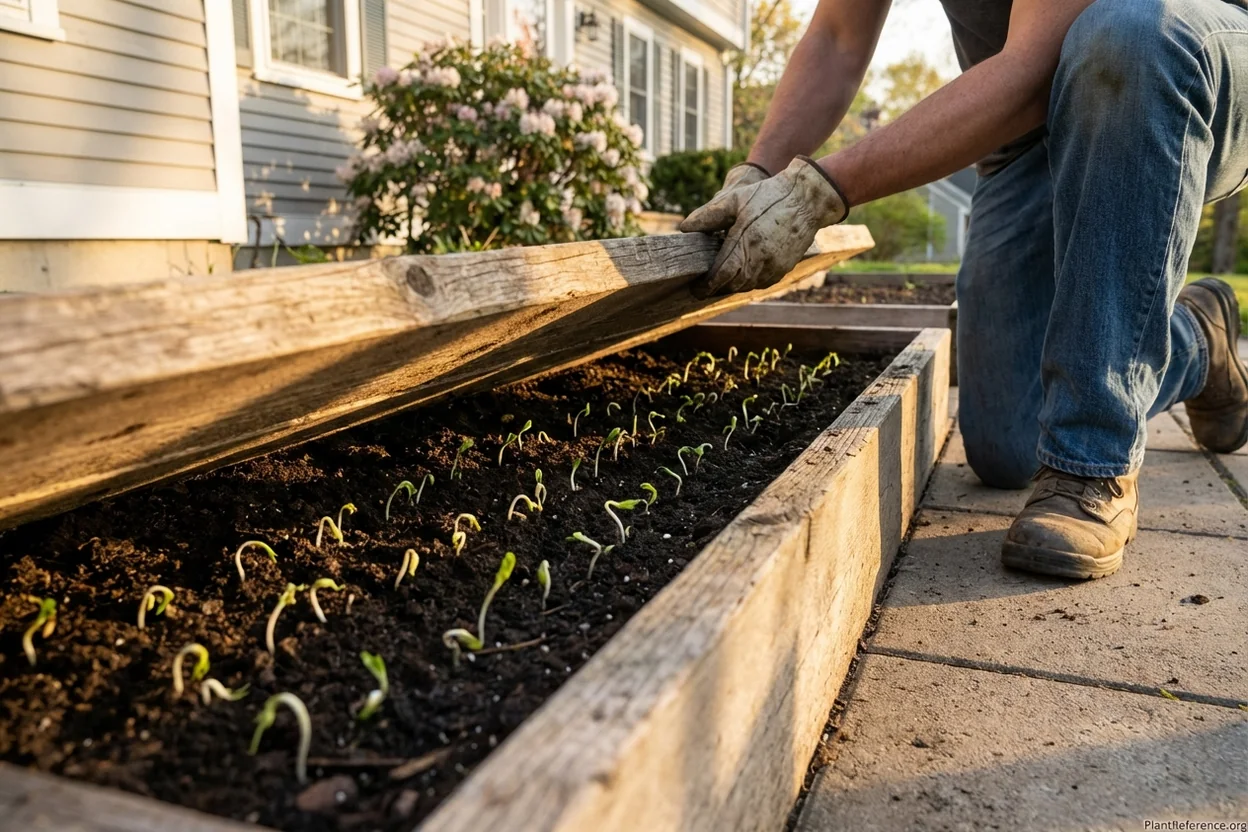
Plant seeds ¼ inch deep in rows 12 inches apart. In Boston's variable spring weather, I use the "board method" for guaranteed germination. Lay a 1×4 board directly over the seeded row to prevent moisture loss. Check daily starting day 5—when you see the first white loops of sprouting seedlings, remove the board immediately.
Thinning is absolutely critical—unthinned carrots produce worthless pencil-thin roots. First thinning when seedlings are 1 inch tall: thin to 1 inch spacing using small scissors, not pulling (which disturbs neighbors). Second thinning at 4 inches tall: thin to final 2-3 inch spacing for most varieties, 3-4 inches for 🌿Daucus carota 'Danvers'.
Water Management in Boston Climate:
Boston's 43 inches of annual rainfall sounds generous, but it comes at the wrong times for carrots. We get heavy spring rain when seeds can rot, then summer drought when roots are sizing up, followed by fall deluges that can split mature carrots.
Consistent moisture is key—1 inch per week through the growing season. I use soaker hoses laid down the rows, covered with straw mulch. This maintains steady soil moisture without wetting the foliage (which encourages leaf blight in our humid climate).
During Boston's typical July-August dry spells, increase watering to 2 inches per week. The roots are doing their heaviest growth then, and water stress creates woody, bitter carrots. Mulching with 2 inches of straw conserves moisture and keeps the soil temperature steady.
Fertility Management:
Carrots are light feeders, but they need balanced nutrition. Too much nitrogen creates lush tops and stringy roots—I learned this the hard way forty years ago. For Boston gardens, I recommend:
Apply balanced 10-10-10 fertilizer at 1 pound per 100 square feet before planting
Side-dress with compost tea monthly during growing season
Avoid high-nitrogen fertilizers which cause excessive foliage
Test soil every 2-3 years and lime if pH drops below 6.0
Troubleshooting Boston-Specific Problems
Problem | Symptoms | Likely Cause | Quick Fix |
|---|---|---|---|
Carrot Rust Fly | Small rust-colored tunnels through roots, minor brown frass damage | Psila rosae larvae feeding inside roots during peak activity | Install floating row covers at planting; seal edges completely. Interplant with onions to mask carrot scent. |
Alternaria Leaf Blight | Brown spots with yellow halos on foliage; progressive leaf death | Fungal disease triggered by high humidity and poor air circulation | Choose resistant varieties like Bolero. Space plants 3 inches apart. Water at soil level only, never overhead. |
Soil Crusting | Seedlings cannot push through hard surface; germination death | Spring rain followed by sun hardens clay-loam soil surface | Cover seeds with compost or vermiculite. Apply gentle mist watering to soften existing crusts. |
Forking and Fanging | Carrots split or develop multiple roots; deformed shape | Stones and hardpan layers in glacial Boston soils | Double-dig to 12 inches. Remove all stones. Choose short varieties like Chantenay for difficult soils. |
Green Shoulders | Chlorophyll develops in crown area; bitter taste | Carrot top pushes above soil, receives sunlight exposure | Hill soil around crowns as they develop. Apply 2-3 inch straw mulch to keep roots buried. |
Carrot Rust Fly (Psila rosae): This small black fly is Boston's primary carrot pest. Adults emerge in late May and lay eggs at the base of carrot plants. Larvae tunnel through the roots, creating rust-colored tunnels filled with frass.
Row covers provide 100% control if installed at planting and kept sealed until harvest. For open plantings, time your harvest for mid-July to avoid the second generation in August. I've found interplanting with onions helps mask the carrot scent that attracts the flies.
Alternaria Leaf Blight: Boston's coastal humidity creates perfect conditions for this fungal disease. Infected leaves develop brown spots with yellow halos, eventually killing the foliage. Stressed plants from poor drainage or overcrowding are most susceptible.
Choose resistant varieties like Daucus carota 'Bolero' for humid conditions. Space plants adequately for air circulation—overcrowded carrots in Boston's humidity will get blight every time. Water at soil level, never overhead, to keep foliage dry.
Soil Crusting: Spring rains followed by hot sun create a hard crust on Boston clay soils that weak carrot seedlings can't penetrate. I've seen perfect germination rates ruined by crusting.
Cover seeds with compost, vermiculite, or sand instead of garden soil—these materials won't crust. For existing crusts, gentle watering with a fine spray will usually soften them enough for seedlings to break through.
Forking and Fanging: Boston's glacial soils are notorious for stones and hardpan layers that cause carrots to fork. Even small obstacles will split a growing carrot root.
Soil preparation is everything. I spend time removing stones and breaking up compacted layers. For really challenging soils, grow 🌿Daucus carota 'Chantenay' varieties—their short, stout roots push through obstacles that would fork a 🌿Daucus carota 'Nantes'.
Green Shoulders: When carrot tops push above the soil surface, sunlight triggers chlorophyll production in the crown, creating green, bitter areas. This happens frequently in Boston's loose, organic-rich soils.
Hill soil up around the crowns as they develop, keeping the entire root buried. Mulching heavily with straw also prevents light exposure. Green areas are just bitter, not toxic, but they ruin the eating quality.
Harvest & Storage
Boston's climate offers excellent opportunities for both fresh harvest and long-term storage. Spring carrots planted in April are ready for harvest in July—perfect timing before summer heat arrives. Fall carrots benefit from frost sweetening, converting starches to sugars for incredible flavor.
Fresh Harvest Techniques: Harvest spring carrots when roots reach 1 inch diameter for 🌿Daucus carota 'Nantes' types, slightly larger for 🌿Daucus carota 'Danvers'. Pull carefully to avoid breaking—Boston clay can grip roots tightly. Water the bed thoroughly the day before harvest to soften soil.
For fall harvest, wait until after several frosts. October nights in the 20s trigger the sweetening response that makes fall carrots taste like candy. Harvest before the ground freezes hard—usually by late November in Boston.
Winter Storage Methods: Boston's climate is perfect for root cellaring carrots through winter. Remove tops immediately after harvest—they continue to draw moisture from the roots. Don't wash until ready to use.
Store in your basement at 32-40°F (0-4°C) in damp sand or sawdust. Boston basements typically maintain ideal 90-95% humidity. Properly stored 🌿Daucus carota 'Danvers' varieties keep until March. Check monthly and remove any that show signs of rot.
For overwintering in the ground, mulch heavily with 12 inches of straw after the first hard frost. Tarp the mulch to keep it dry. You can dig carrots through the winter—just brush away snow and pull back mulch. The ground rarely freezes deeply enough in Boston to damage properly mulched carrots.
Frequently Asked Questions
Reading about plants and recognising them are different skills. These three build the second.
- Daily PlantIdentify the day’s mystery plant from a close-up photograph.
- Keyed OutWork a dichotomous key, lead by lead, to name a hidden specimen.
- Name That PlantName a specimen from botanical clues dealt hardest first.
Free to play, no account needed
Kevin is a landscape contractor in the Boston area who specializes in cold-climate perennial gardens and hardscaping. He studied landscape design and worked at a prominent nursery on the North Shore before starting his own design-build firm. Kevin's gardens are built to handle New England weather—freeze-thaw cycles, nor'easters, late springs, and heavy snow loads. He's particularly interested in native perennials and shrubs that provide four-season interest without constant maintenance. Kevin writes about cold-hardy plant selection, winter garden structure, and building landscapes that look good even in February.