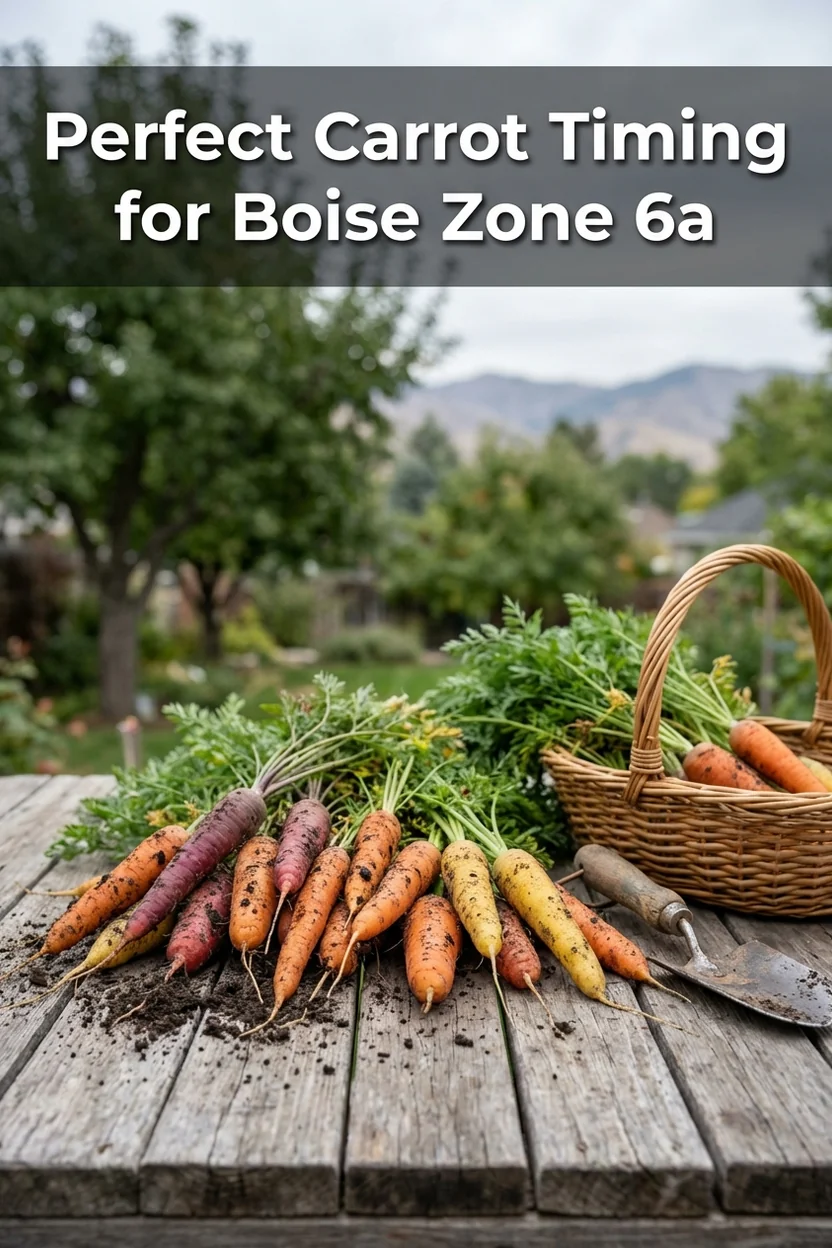
When to Plant Carrots in Boise: Complete Guide + Best Varieties for Zone 6a
Pets & Toxicity
Recorded toxicity for plants linked in this guide. An unknown status is not a safety assessment.
No linked plant is recorded as toxicDetailsHide
— Image © Plant Reference 2026
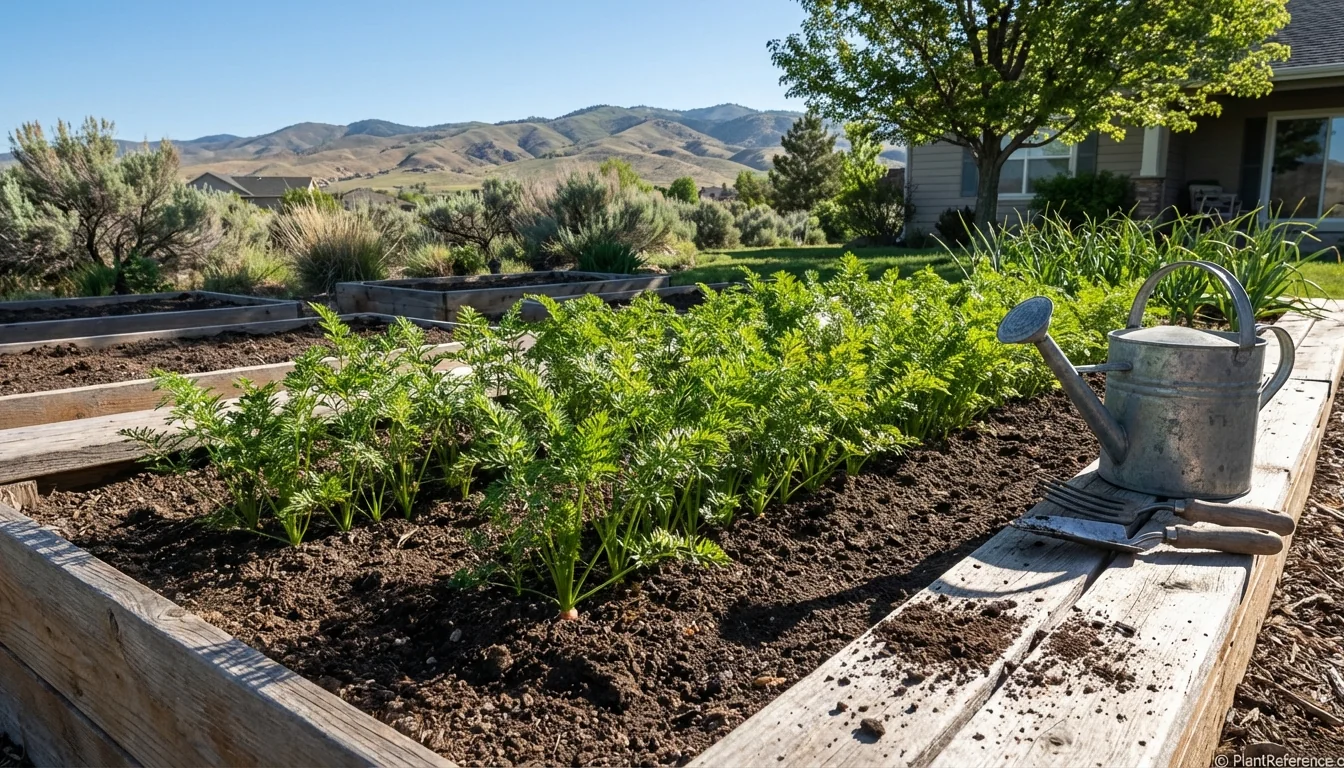
Growing carrots in Boise offers unique advantages that many gardeners don't realize. Our Zone 6a climate provides a generous 158-day growing season from May 4 to October 9, perfect for both quick spring crops and sweet fall harvests.
I've been growing carrots in Idaho for thirty-five years, and I can tell you that Boise's high desert climate creates some of the sweetest, crunchiest carrots you'll ever taste. The key is working with our alkaline soil and taking advantage of our cool spring mornings and crisp fall nights.
The biggest mistake I see new Boise gardeners make is fighting our naturally heavy clay-loam soil instead of choosing varieties that thrive in it. Forget what you see in magazines—those perfect Imperator carrots need deep sandy soil. Here in Boise, we grow chunky Danvers and robust Chantenay varieties that can push through clay and actually taste better for the effort.
Best Carrot Varieties for Boise's Zone 6a Climate
Boise's unique growing conditions—alkaline soil, hot summers, and excellent fall weather—mean variety selection makes or breaks your carrot crop. I've tested dozens of varieties over the decades, and these five consistently deliver.
Variety | Days to Maturity | Best For | Notes for Boise |
|---|---|---|---|
Daucus carota 'Danvers 126' | 75 days | Clay soil tolerance | Perfect for Boise's heavy native soil |
Daucus carota 'Chantenay Red Core' | 70 days | Short, stocky roots | Handles clay and rocks beautifully |
Daucus carota 'Nantes Scarlet' | 70 days | Raised bed growing | Needs amended soil but superior flavor |
Daucus carota 'Bolero' | 75 days | Disease resistance | Best for fall crops and storage |
Daucus carota 'Paris Market' | 65 days | Container growing | Round carrots perfect for heavy soil |
Daucus carota 'Danvers 126' - The Boise Clay Buster
This wedge-shaped carrot was bred specifically for heavy soils like ours. At 6-8 inches long, it develops enough force to push through our clay-loam without forking. The broad shoulders help it displace soil particles, and the pointed tip penetrates compaction layers that stop other varieties cold.
I plant Danvers for my main storage crop every year. The thick flesh stores beautifully in our cool fall weather, often lasting until March in proper storage. The texture is firm and sweet, perfect for roasting or juicing.
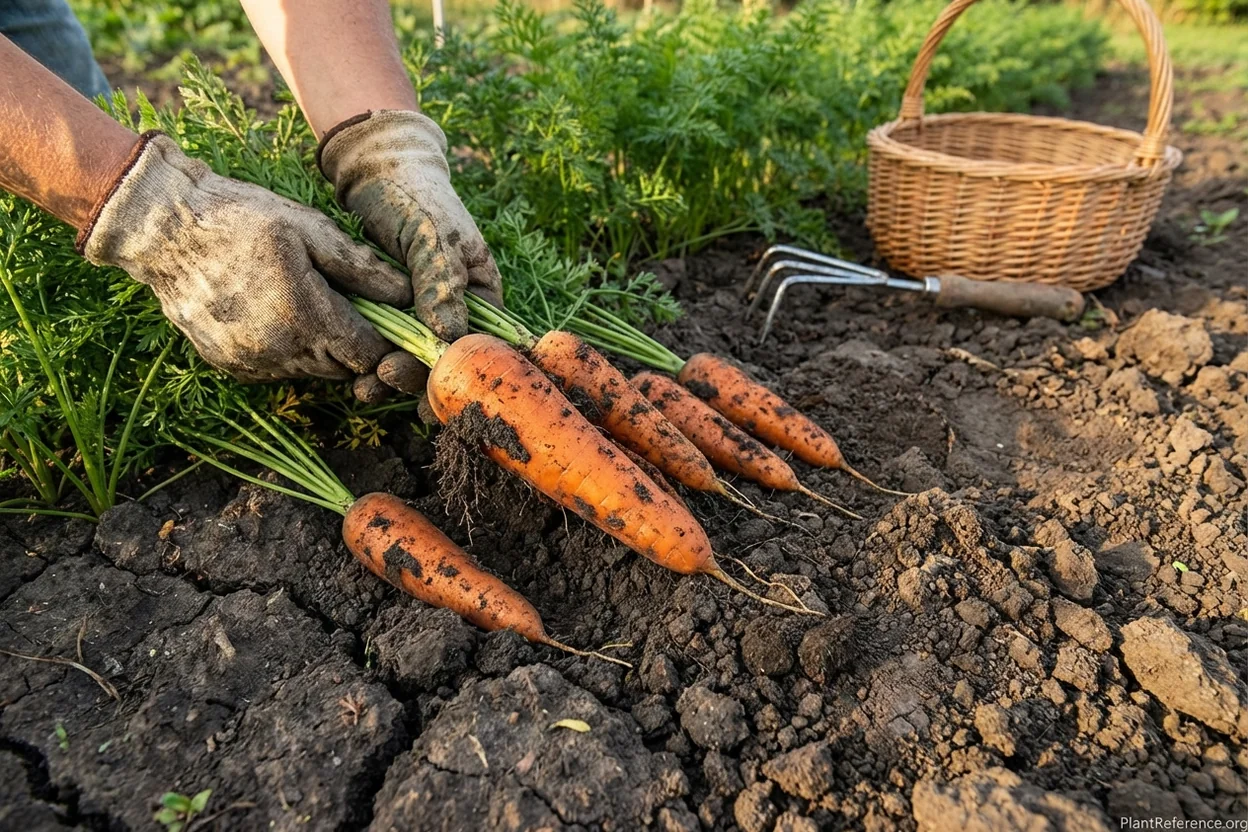
Daucus carota 'Chantenay Red Core' - Short and Sweet
Don't let the 4-5 inch length fool you—Chantenay packs incredible sweetness into its stocky frame. This variety excels in our rocky areas where longer varieties would fork. I've grown beautiful Chantenay in soil where I couldn't push a spade more than 6 inches deep.
The broad shoulders make harvest easy, and they're perfect for cutting into coins for roasting. Plant these anywhere you have shallow soil over hardpan or caliche.
Daucus carota 'Nantes Scarlet' - For the Sweet Tooth
If you've amended your soil or garden in raised beds, Nantes produces the sweetest, most tender carrots you can grow in Boise. The cylindrical shape and blunt tip require looser soil, but the eating quality is unmatched.
I reserve a section of my best-prepared bed for Nantes every spring. They mature quickly at 70 days, perfect for fresh eating during our hot July and August weather.
Daucus carota 'Bolero' - The Storage Champion
Bolero combines the best traits for Boise growing: moderate soil requirements, excellent disease resistance, and superior storage quality. This hybrid variety was specifically bred for areas with challenging soil and weather conditions.
Plant Bolero for your main fall crop. It handles our October temperature swings beautifully and stores until spring without going woody.
Specific Planting Dates for Boise
Timing is everything with carrots in Zone 6a. Our last frost averages May 4, but soil temperature matters more than air temperature for carrots. Here's my proven planting schedule developed over three decades of Boise gardening.
Spring Planting Window: March 15 - April 15
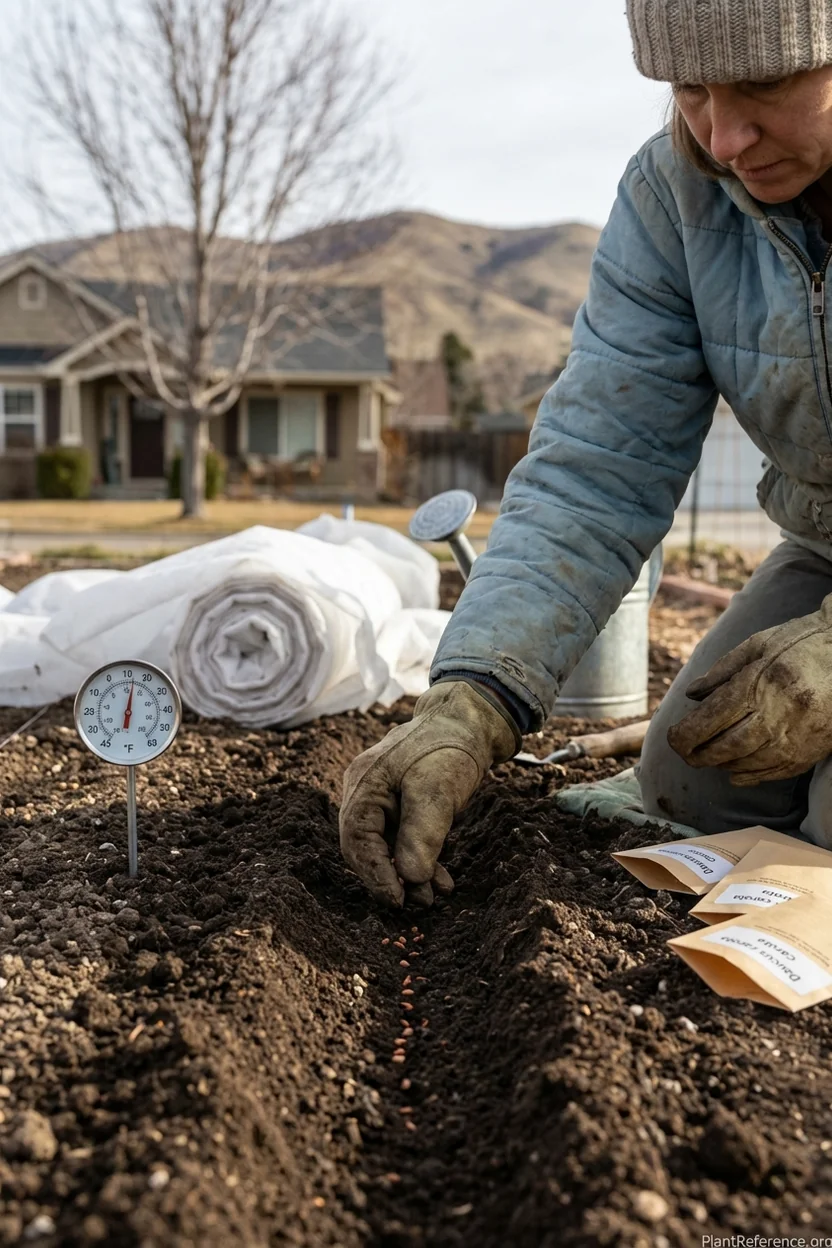
Start checking soil temperature in mid-March. When soil reaches 45°F consistently at 2-inch depth, it's time to plant. This usually happens around March 15 in Boise, though I've planted as early as March 10 in warm years.
March 15-30: First succession of fast varieties
Daucus carota 'Nantes Scarlet' (70 days → harvest late May)
Daucus carota 'Paris Market' (65 days → harvest late May)
April 1-15: Main spring crop
Daucus carota 'Danvers 126' (75 days → harvest mid-June)
Daucus carota 'Chantenay Red Core' (70 days → harvest mid-June)
Spring carrots must be harvested before sustained 80°F+ weather arrives, usually by mid-July in Boise. The heat makes them woody and bitter.
Fall Planting Window: July 15 - August 15
Fall carrots are the crown jewel of Boise carrot growing. Cool nights and warm days create perfect growing conditions, and the approaching frost converts starches to sugars for incredible sweetness.
July 15-31: Early fall varieties for October harvest
Daucus carota 'Nantes Scarlet' (70 days → harvest September 25)
Daucus carota 'Paris Market' (65 days → harvest September 20)
August 1-15: Storage varieties for winter harvest
Daucus carota 'Bolero' (75 days → harvest October 20)
Daucus carota 'Danvers 126' (75 days → harvest October 20)
Count backwards from first frost (October 9) and add 10 days safety margin. This puts your last planting around August 15 for 75-day varieties.
Succession Planting Strategy
Plant a new row every 2-3 weeks from March through August for continuous harvest. I use this schedule:
March 15: First spring succession
April 1: Second spring succession
April 15: Final spring planting
July 15: First fall succession
August 1: Second fall succession
August 15: Final fall planting
This provides fresh carrots from late May through November, plus storage carrots for winter use.
Complete Growing Guide for Boise
Soil Preparation for Boise Conditions
Boise's native soil runs alkaline (pH 7.5-8.5) and heavy with clay content. Most carrot guides ignore this reality, but I work with what we have.
pH Adjustment: Test your soil first. If pH exceeds 8.0, add sulfur at 2 pounds per 100 square feet in fall. Work it into the top 8 inches and let winter precipitation activate it.
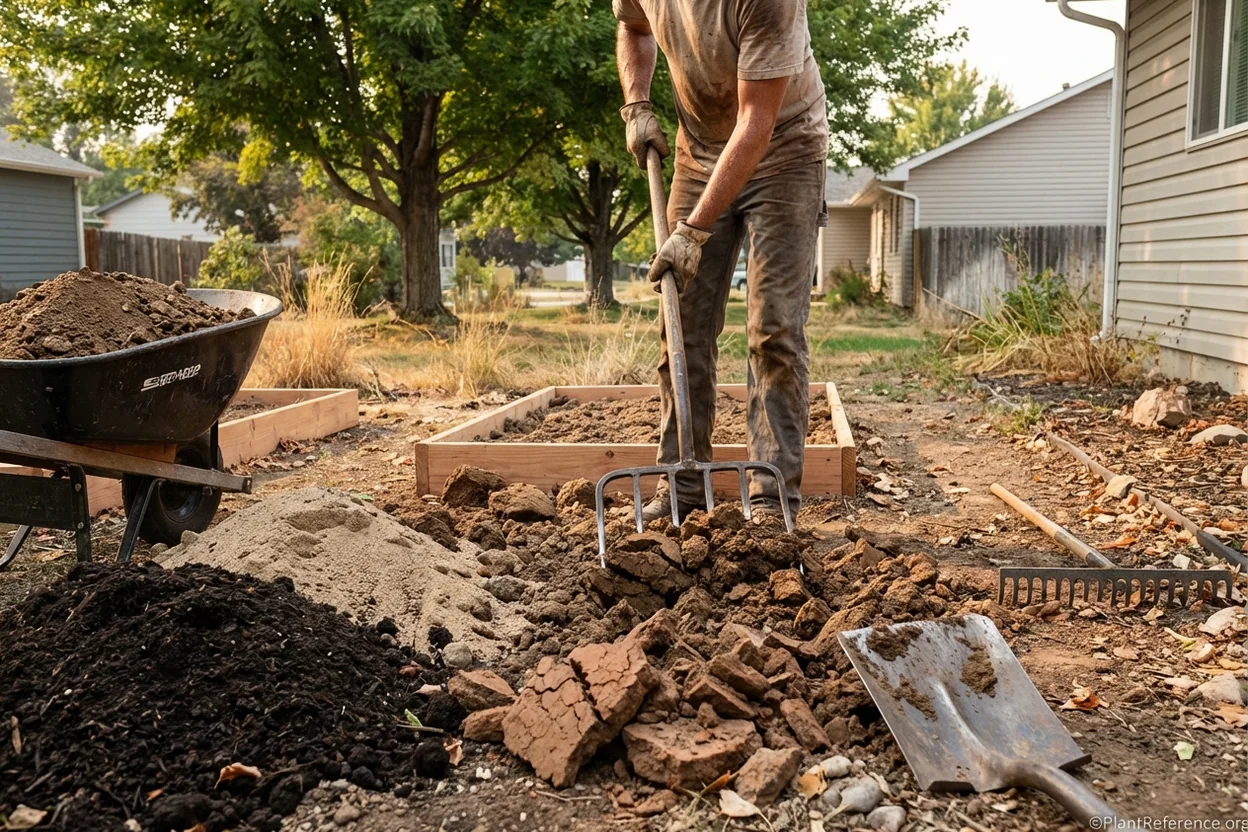
Breaking Up Clay: Don't fight the clay—work with it. Add coarse sand (not fine sand) and compost at a 1:1:1 ratio with existing soil. Work this mixture 10-12 inches deep where you'll plant carrots.
Double Digging Method: Remove top 6 inches of soil and set aside. Break up the next 6 inches with a broadfork or pickaxe. Mix in amendments, then replace the topsoil mixed with more amendments.
Seed Starting Techniques for Boise
Carrot germination in Boise requires managing our dry air and intense sun. Seeds dry out quickly in our 30-40% humidity, killing the embryo before it establishes.
The Board Method: My go-to technique for 30 years. Plant seeds 1/4 inch deep in prepared soil, water thoroughly, then lay a 1x6 board directly over the seeded row. Check daily starting day 5. Remove the board immediately when you see white seedling loops pushing against it.
Soil Covering: Instead of covering with regular garden soil, use a 1/4 inch layer of vermiculite or finished compost. These materials don't crust over like our clay-based soil, allowing easier emergence.
Moisture Management: Water seeds thoroughly at planting, then rely on the board to prevent evaporation. After removing the board, water gently every other day until seedlings reach 2 inches tall.
Thinning and Spacing
Proper thinning separates successful carrot growers from disappointed ones. Crowded carrots produce skinny, twisted roots with no culinary value.
First Thinning: When seedlings reach 1 inch tall (usually 2-3 weeks after germination), thin to 1 inch apart. Use small scissors to cut unwanted seedlings at soil level—pulling disturbs neighboring roots.
Final Thinning: At 4 inches tall, thin to final spacing:
Daucus carota 'Danvers 126': 2-3 inches apart
Daucus carota 'Chantenay Red Core': 2 inches apart
Daucus carota 'Nantes Scarlet': 2-3 inches apart
Daucus carota 'Bolero': 2-3 inches apart
Save the thinnings from the second round—these baby carrots are a delicacy when harvested with tops attached.
Water Requirements in Boise Climate
Consistent moisture is critical for straight, sweet carrots. Boise's dry climate and intense sun create challenging conditions, but proper irrigation solves most problems.
Deep, Infrequent Watering: Water 1-2 times weekly with 1-1.5 inches total. Light daily watering encourages shallow roots and increases forking.
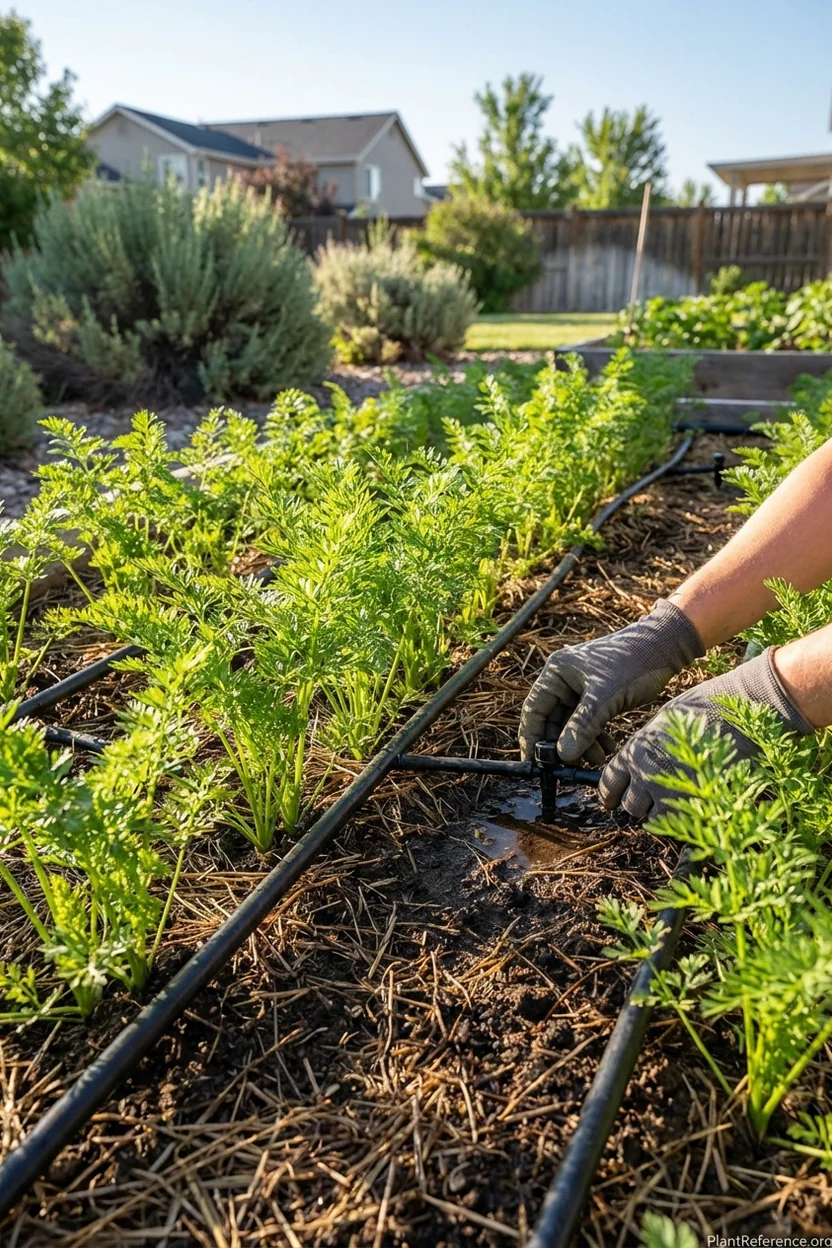
Mulching Strategy: Apply 2-3 inches of grass clippings or shredded leaves around plants once they reach 4 inches tall. This conserves moisture and keeps soil temperature moderate during hot summer days.
Drip Irrigation: If possible, install drip lines or soaker hoses. Overhead watering in our dry climate leads to rapid evaporation and can encourage foliar diseases during humid periods.
Troubleshooting Boise-Specific Problems
Alkaline Soil Issues
Boise's naturally alkaline soil (pH 7.5-8.5) can lock up nutrients and cause specific problems.
Phosphorus Deficiency: Purple leaf margins and stunted growth indicate phosphorus unavailability in alkaline soil. Apply rock phosphate in fall or use acidic fertilizers like ammonium sulfate.
Iron Chlorosis: Yellowing leaves with green veins signal iron deficiency. Apply iron sulfate or use acidifying mulches like pine needles to lower soil pH gradually.
Clay Soil Challenges
Forked Roots: When clay hardens into impenetrable layers, carrot roots split and fork. Double dig beds in fall when soil is workable, not when wet. Add coarse sand and organic matter to improve structure permanently.
Poor Drainage: Clay holds water, leading to root rot and splitting. Build raised beds 8-12 inches tall or create drainage channels in heavy soil areas.
Heat Stress Management
Summer Bolt Resistance: Hot July weather can trigger premature flowering in spring crops. Harvest spring carrots by early July or provide afternoon shade during extreme heat waves.
Root Quality Decline: Carrots grown during hot weather become woody and bitter. Focus major production on fall crops when cool nights preserve sweetness and texture.
Pest Management
Carrot Rust Fly: Less common in Boise than coastal areas, but can appear during wet years. Use floating row covers if damage occurs, or time plantings to avoid peak fly activity in June.
Wireworms: These soil-dwelling pests occasionally damage carrot roots in newly broken ground. Rotate crops and avoid planting in areas recently converted from lawn.
Harvest & Storage
Knowing when and how to harvest determines whether you get prize-winning carrots or disappointing roots.
Harvest Timing by Variety
Spring Harvest (June-July): Pull carrots when they reach variety-specific size but before sustained hot weather arrives. Spring carrots don't store well—use them fresh.
Daucus carota 'Nantes Scarlet': 1-1.5 inch diameter
Daucus carota 'Paris Market': 1.5-2 inch diameter
Young Daucus carota 'Danvers 126': 1.5 inch diameter
Fall Harvest (September-November): These provide your storage crop. Wait until after several light frosts (28-30°F) for maximum sweetness. Hard frost (25°F) damages tops but not roots.
Daucus carota 'Bolero': After first frost for storage
Daucus carota 'Danvers 126': Late October for winter storage
Daucus carota 'Chantenay Red Core': After frost sweetening
Proper Harvest Technique
Soil Preparation: Water deeply 2 days before harvest to soften soil. Wet soil releases roots more easily and reduces breakage.
Lifting Method: Grab the entire top cluster, not individual leaves. Gently wiggle while pulling straight up. For clay soil, use a spading fork to loosen soil alongside the row first.
Post-Harvest Handling: Remove tops immediately—they continue drawing moisture from roots. Leave 1/2 inch of stem to prevent bleeding. Don't wash until ready to use.
Storage Methods for Boise Climate
Root Cellar Storage: Ideal temperature 32-38°F with 90-95% humidity. Layer carrots in damp sand or sawdust in wooden crates. Properly stored carrots keep until April.
Refrigerator Storage: Perforated plastic bags in the refrigerator crisper work for 2-3 months. Don't store with apples or pears—ethylene gas causes bitter flavor.
In-Ground Storage: Mulch carrots heavily with straw after first hard frost. Mark rows clearly. Harvest through winter by digging through mulch. This works until soil freezes solid, usually January in Boise.
Frequently Asked Questions
Reading about plants and recognising them are different skills. These three build the second.
- Daily PlantIdentify the day’s mystery plant from a close-up photograph.
- Keyed OutWork a dichotomous key, lead by lead, to name a hidden specimen.
- Name That PlantName a specimen from botanical clues dealt hardest first.
Free to play, no account needed
Lily is a Master Gardener and high-desert homesteader outside Boise. She and her husband moved to Idaho from the Bay Area and had to completely relearn gardening for a climate with alkaline soil, intense sun, hard freezes, and limited water. Lily now grows a large vegetable garden, maintains a small orchard of cold-hardy fruit trees, and raises cut flowers for the local farmers market. She writes about the specific challenges of intermountain gardening—short seasons, temperature swings, and the importance of soil amendment in high-pH soils. Lily is honest about the learning curve: high-desert gardening is humbling, and she thinks more gardening writers should admit when conditions are genuinely difficult.