Image 1 of 13
1 / 13
Plant Reference
Liquidambar, Genus, styraciflua, Species,
- Genus & species
sweetgum
Eastern North America from Connecticut south to Florida and west to eastern Texas and Missouri, with disjunct populations in montane forests of Mexico and Central America; floodplains, stream banks, and moist upland forests
Overview
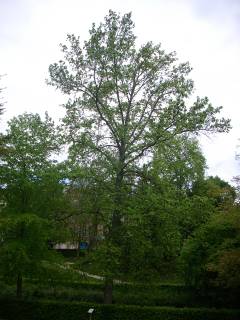
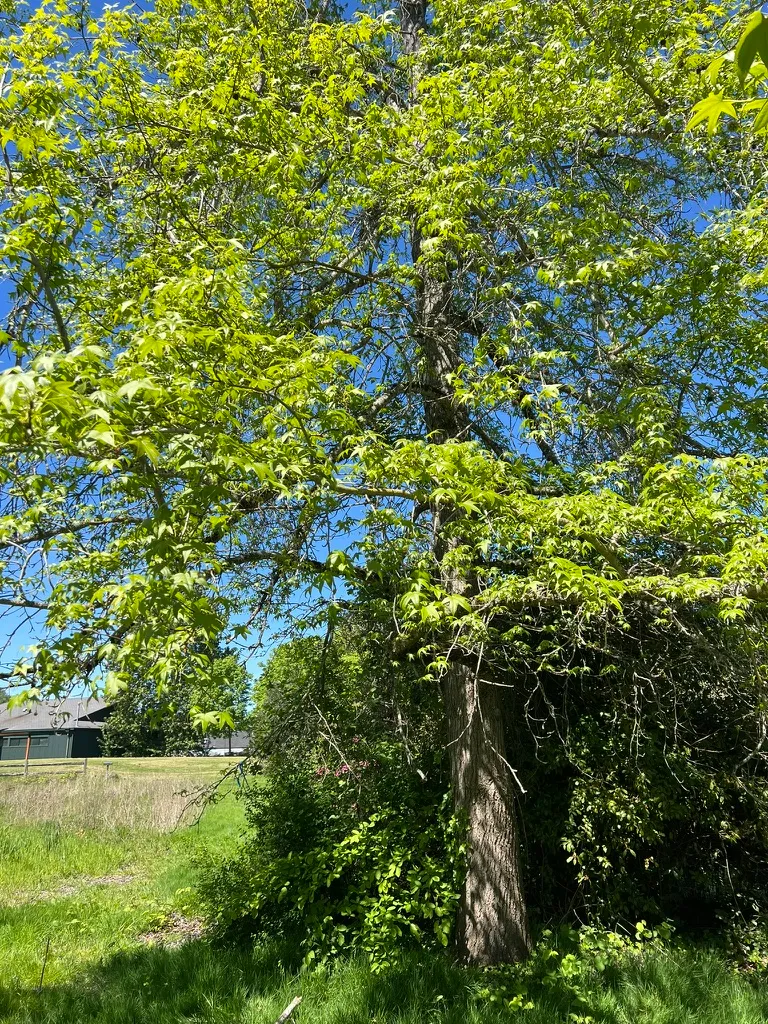
Liquidambar styraciflua is a large upright deciduous tree in the family Altingiaceae reaching 60–75 feet (18–23 m) tall and 40–50 feet (12–15 m) wide with a pyramidal crown that broadens to oval with age. Leaves are alternate, glossy dark green, and star-shaped with 5–7 sharply pointed lobes 4–7 inches (10–18 cm) across, carried on long petioles. Fall color is one of the main reasons the species has been carried into landscape use: a single tree frequently shows yellow, orange, scarlet, burgundy, and purple leaves at the same time over a 3–4 week transition period in October and November. Corky-winged ridges develop on the young branches and give the winter silhouette a coarse texture that persists on the bark into the second and third year. Round woody fruit balls 1–1.5 inches (2.5–4 cm) across covered in stiff spines ripen in fall and persist on the tree through winter; hundreds drop per mature tree in late winter and early spring and create a walking hazard on lawns and paths. The fruitless cultivar 'Rotundiloba', selected from a tree with rounded rather than sharply pointed leaf lobes, produces no gumballs and is the selection of choice for residential landscape use where fruit litter is the main objection to the species. Limitation: the shallow aggressive root system lifts and cracks sidewalks, driveways, and foundation slabs within 15 feet (4.5 m) of the trunk, and the species does not tolerate alkaline soils above pH 7.0, where iron chlorosis develops and reduces vigor; pavement positions within 15 feet (4.5 m) of planned trunk locations are unsuitable for this species.
Native Range
Native to eastern North America from Connecticut south to Florida and west to eastern Texas and Missouri, with disjunct populations in montane forests of Mexico and Central America. Grows on floodplains, stream banks, and moist upland forests from sea level to middle elevations and reaches its largest size on deep alluvial bottomland soils.Suggested Uses
Used as a shade tree and specimen in large open landscapes and parks at 40–50 foot (12–15 m) spacing where the multicolored fall display is the reason for planting. The fruitless cultivar 'Rotundiloba' is the selection of choice for residential positions where gumball litter on lawns, paths, and driveways would otherwise create a walking hazard. Pavement positions within 15 feet (4.5 m) of the planned trunk location and alkaline soil sites above pH 7.0 are unsuitable because of the shallow root system and the species intolerance of high-pH soils.How to Identify
Appearance
Size & Dimensions
Height60' - 75'
Width/Spread40' - 50'
Bloom Information
Inconspicuous greenish-yellow wind-pollinated flowers without petals open in April and May over about 3 weeks; male and female flowers are separate on the same tree. Round spiny woody fruit balls 1–1.5 inches (2.5–4 cm) across develop through summer, ripen in fall, and persist on long stalks through winter before dropping in late winter and early spring.
Detailed Descriptions
Foliage Description
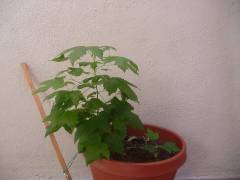
glossy dark green; star-shaped with 5-7 sharply pointed lobes, 4-7 inches (10-18 cm) across; turns yellow, orange, scarlet, burgundy, and purple in fall, with multiple colors frequently appearing on a single tree at the same timeGrowing Conditions
Sun Requirements
Requires 6-12 hours of direct sunlight daily
• Full Sun: 6+ hours of direct sunlight
• Partial Shade: 3-6 hours of direct sunlight
• Full Shade: Less than 3 hours of direct sunlight
Care & Maintenance
Care Guide
Site in full sun with 6–12 hours of direct sun per day in deep well-drained acidic to slightly acidic soil with a pH of 5.0–6.5. Alkaline soils above pH 7.0 cause iron chlorosis with yellowing between the leaf veins and reduced growth. The species tolerates loam, clay, and sand, and establishes readily on moist sites, but is not drought-tolerant and calls for supplemental irrigation during extended dry periods. The shallow aggressive root system lifts pavement, so pavement positions within 15 feet (4.5 m) of the planned trunk location are unsuitable. For residential lots where fruit litter is the main objection, the fruitless cultivar 'Rotundiloba' is the selection of choice. Hardy in USDA zones 5–9.Pruning
Pruning is done in late winter (February and March) while the tree is dormant. A single strong central leader is developed in the first 5–10 years to build an upright pyramidal framework; co-dominant leaders and crossing limbs can be reduced at the same time. Mature trees require little pruning because the natural pyramidal to oval crown develops without training, and low-hanging branches can be raised as the tree grows to allow lawn mowing and foot traffic beneath the canopy.Pruning Schedule
Prune: February–March
early spring