Ulmus, Genus, americana, Species,
- Genus & species
American elm
Native to eastern North America, from Nova Scotia and Manitoba south to Florida and central Texas; the species occurs in floodplains, bottomlands, and mesic upland forests from near sea level to approximately 3,000 ft (900 m); the broadly distributed native elm; the species was the broadly planted street tree in North America from the 1700s through the 1950s, with millions of elms forming continuous canopy tunnels over streets from New England to the Great Plains before Dutch elm disease devastated the populations from the 1950s onward
Overview
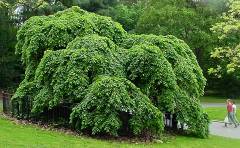
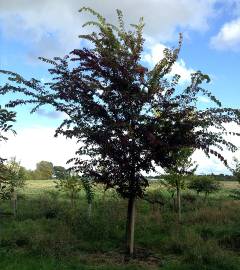
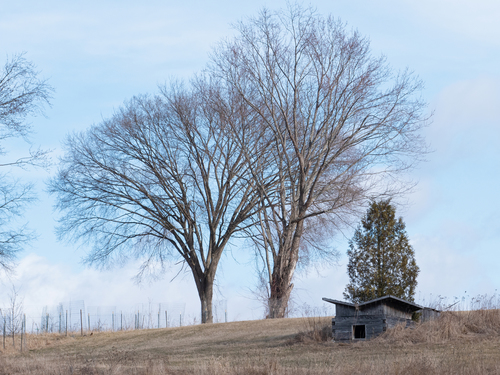
Ulmus americana is a large deciduous tree in the elm family (Ulmaceae) growing 60-80 ft (18-24 m) tall and 40-60 ft (12-18 m) wide with a vase-shaped crown — the arching fan-like branching pattern creates a cathedral-like canopy that was the defining feature of American streetscapes from the colonial period through the mid-20th century. Trunk is single, straight, 2-4 ft (60-120 cm) in diameter, with dark grey bark developing flat-topped interlacing ridges. Leaves are alternate, ovate, 3-6 inches (8-15 cm) long, doubly serrate, with an asymmetric (oblique) leaf base — the uneven base is a key identification feature shared by all elms. Leaves turn yellow in autumn. The species was the broadly planted street tree in North America from the 1700s through the 1950s — millions of elms formed continuous canopy tunnels over streets from New England to the Great Plains. Dutch elm disease (DED), caused by the fungus Ophiostoma novo-ulmi and vectored by elm bark beetles, devastated American elm populations from the 1950s onward — an estimated 100 million trees were killed. The disease spread through both beetle transmission and root grafts between adjacent trees planted in rows. Surviving populations exist, and disease-tolerant (not immune) cultivars have been developed: 'Princeton', 'Valley Forge', 'Jefferson', and 'New Harmony' show significantly reduced mortality from DED. These cultivars are being replanted in some cities to restore the historic elm canopy. In the Pacific Northwest, American elm grows well — DED pressure is lower than in the Midwest but the disease is present.
Native Range
Ulmus americana is native to eastern North America, from Nova Scotia and Manitoba south to Florida and central Texas. The species occurs in floodplains, bottomlands, and mesic upland forests from near sea level to approximately 3,000 ft (900 m). The broadly distributed native elm.Suggested Uses
Replanted as a street and shade tree using DED-tolerant cultivars to restore the historic American elm canopy in cities and towns. The vase-shaped crown creates the cathedral-like street canopy that was the iconic feature of American streetscapes. Used in parks, institutional grounds, and large residential properties. In the Pacific Northwest, DED-tolerant cultivars grow well and the lower disease pressure (compared to the Midwest) gives a more favorable environment for elm restoration.How to Identify
Appearance
Size & Dimensions
Height60' - 80'
Width/Spread40' - 60'
Bloom Information
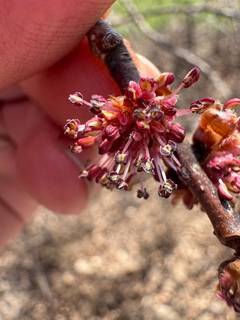
Small reddish-green flowers in pendant clusters appear in March-April before leaf emergence. Wind-pollinated. Fruit are flat round winged samaras 0.5 inch (12 mm) in diameter, ripening and dispersing in April-May — often before leaves are fully expanded. The papery samaras accumulate on streets and sidewalks in spring.
Detailed Descriptions
Flower Description
Reddish-green small flowers in pendant clusters in March-April before leaf emergence; wind-pollinated; fruit are flat round winged samaras 0.5 inch (12 mm) in diameter, ripening and dispersing April-May often before leaves are fully expandedFoliage Description
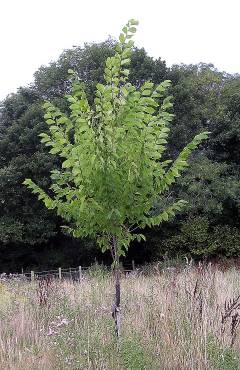
Dark green alternate ovate leaves 3-6 inches (8-15 cm) long, doubly serrate, with an asymmetric (oblique) leaf base — the uneven base is a key identification feature shared by all elmsGrowing Conditions
Sun Requirements
Requires 4-10 hours of direct sunlight daily
• Full Sun: 6+ hours of direct sunlight
• Partial Shade: 3-6 hours of direct sunlight
• Full Shade: Less than 3 hours of direct sunlight
Care & Maintenance
Care Guide
Use DED-tolerant cultivars only ('Princeton', 'Valley Forge', 'Jefferson', 'New Harmony'). The species type itself is not recommended for new plantings due to high DED susceptibility. Full sun, moist well-drained soil, pH 5.5-8.0 — tolerates a wide range of soils including clay, alkaline, and compacted. Space 40-50 ft (12-15 m) apart. Water during the first 3-5 years. Pruning during the growing season (April-October) attracts elm bark beetles to fresh wounds, which transmit DED — pruning is restricted to the dormant season (November-March). Watch for DED symptoms: wilting, yellowing, and curling of leaves on individual branches ('flagging') in early summer. If DED is suspected, contact a certified arborist immediately — early intervention (branch removal) can save the tree if infection is caught before it reaches the main trunk.Pruning
Prune only in the dormant season (November-March) to minimize DED risk. Remove dead, crossing, and structurally weak branches. Develop a strong central leader with well-spaced scaffold branches. The vase-shaped crown develops naturally — do not attempt to change the architecture. Disinfect pruning tools with 70% isopropyl alcohol between cuts, especially if DED is present in the area.Pruning Schedule
Prune: November–March
fallwinter