Image 1 of 15
1 / 15
Plant Reference
Ulmus, Genus, glabra, Species, 'Camperdownii', Cultivar,
- Genus & species
- Cultivar
Camperdown elm
Scotland (cultivar discovered at Camperdown House, Dundee, around 1850); species {U. glabra} native to Europe and western Asia
Overview
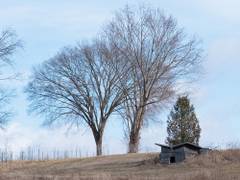
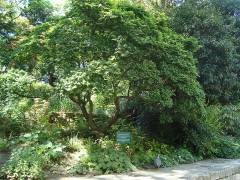
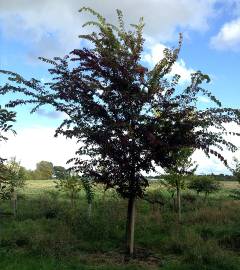
Ulmus glabra 'Camperdownii' is Camperdown elm (weeping wych elm), a small weeping deciduous tree growing 15-25 feet (4.5-7.5 m) tall and 15-25 feet (4.5-7.5 m) wide. Pendulous branches cascade from the grafted head to the ground, forming a dense umbrella-shaped or dome-shaped canopy. Dark green very rough-textured (sandpaper-like) asymmetrically elliptic doubly serrated leaves 3-6 inches (7-15 cm). Reddish-purple tiny flowers on bare branches in March-April. Turns yellow in fall. In Ulmaceae. Discovered at Camperdown House in Dundee, Scotland around 1850. Grafted onto upright U. glabra rootstock at 6-8 feet (1.8-2.4 m) — the tree height is determined by the graft height. Susceptible to Dutch elm disease (DED — Ophiostoma novo-ulmi) — this DED susceptibility is the primary limitation. The wych elm species (U. glabra) is moderately to highly susceptible. Elm leaf beetle and elm bark beetle are secondary concerns. Remove any upright-growing shoots from below the graft union — these are rootstock growth. The pendulous branches that touch the ground can root at contact points. Deer browse. Non-toxic. Zones 4-7. Full sun to partial shade. Growth rate is moderate.
Native Range
Discovered at Camperdown House in Dundee, Scotland around 1850. Species U. glabra (wych elm) native to Europe and western Asia.Suggested Uses
Grown as a specimen tree in parks and residential gardens spaced 15-25 feet (4.5-7.5 m). Weeping dome-shaped canopy. Susceptible to Dutch elm disease. Grafted — monitor for rootstock growth. Non-toxic. Zones 4-7.How to Identify
Appearance
Size & Dimensions
Height15' - 25'
Width/Spread15' - 25'
Bloom Information
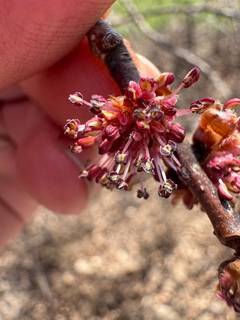
Early spring (March-April). Reddish-purple tiny flowers in clusters along bare branches before leaf emergence. 2 weeks. Wind-pollinated. Small round samaras 0.75 inch (2 cm) follow.
Detailed Descriptions
Flower Description
Reddish-purple, tiny, in clusters along bare branches in March-April before leaves emerge; inconspicuousFoliage Description
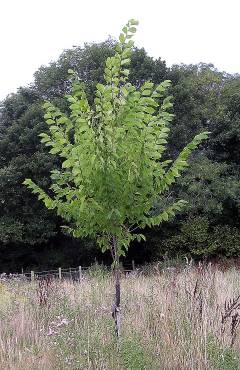
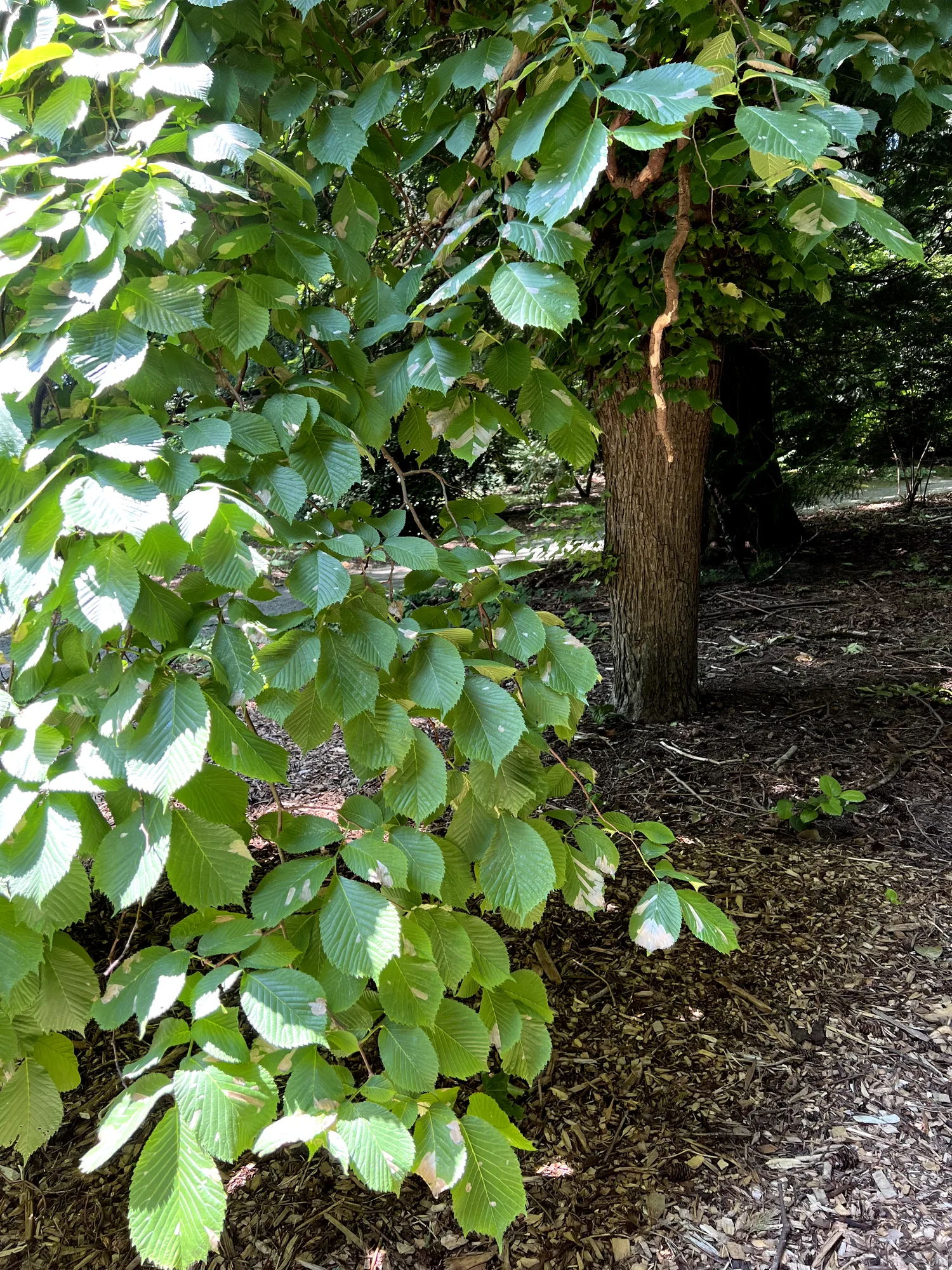
Dark green, simple, asymmetrically elliptic, alternate, very rough-textured (sandpaper-like), 3-6 inches (7-15 cm), doubly serrated; turns yellow in fallGrowing Conditions
Sun Requirements
Requires 4-12 hours of direct sunlight daily
• Full Sun: 6+ hours of direct sunlight
• Partial Shade: 3-6 hours of direct sunlight
• Full Shade: Less than 3 hours of direct sunlight
Care & Maintenance
Care Guide
Full sun to partial shade (4-12 hours). Well-drained soil pH 5.5-8.0. Susceptible to Dutch elm disease (DED) — monitor for wilting and yellowing branches; remove infected wood promptly. Elm leaf beetle and bark beetle. Grafted — remove upright growth below the graft union. Prune in winter (January-February). Deer browse. Non-toxic. Zones 4-7.Pruning
Prune in winter (January-February). Remove any upright-growing shoots from below the graft union (rootstock growth). Lift pendulous branches that drag on the ground if access beneath the canopy is needed. Remove dead or DED-infected branches — cut 10 feet (3 m) below visible wilt and disinfect tools.Pruning Schedule
Prune: January–February
winter