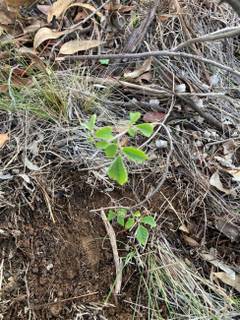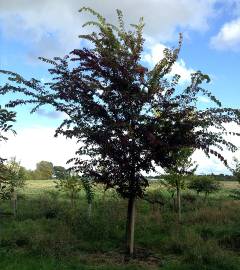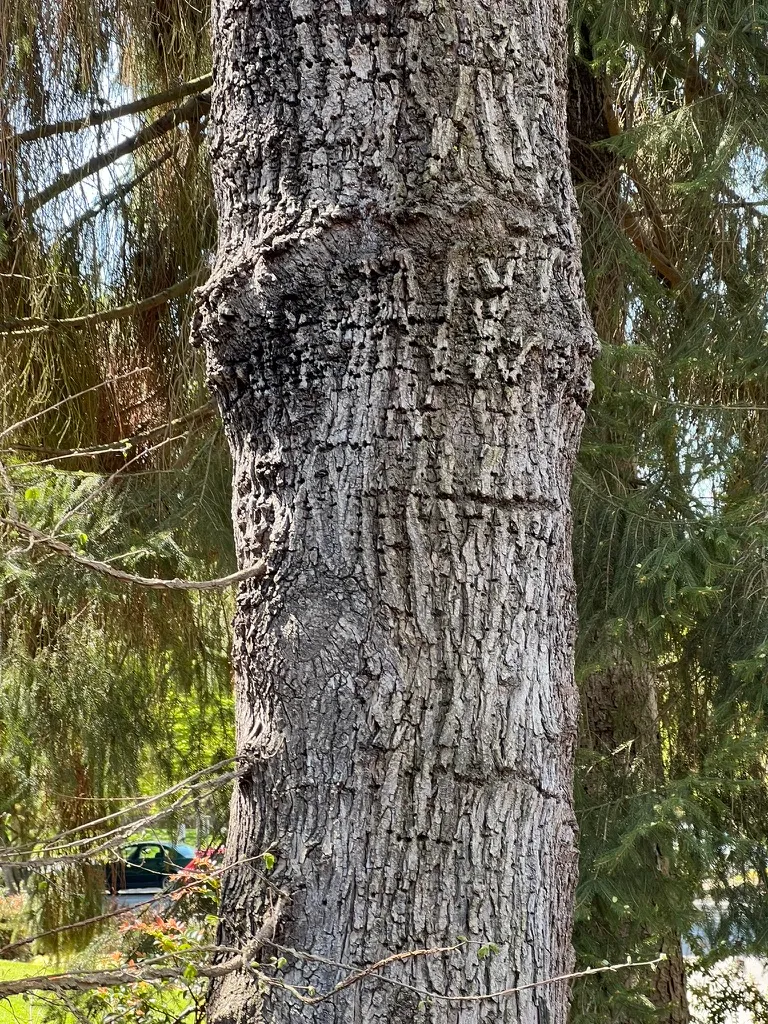
Image 1 of 10
1 / 10
Plant Reference
Ulmus, Genus, procera, Species,
- Genus & species
English elm
Origin debated — possibly Spain; widely planted throughout Britain since Roman times; may be a clone of {U. minor} spread vegetatively rather than a distinct species
Overview
Ulmus procera is English elm, a very large upright deciduous tree growing 60-100 feet (18-30 m) tall and 40-60 feet (12-18 m) wide with a tall vase-shaped to domed crown. Dark green oval doubly serrated leaves 2-3 inches (5-7 cm) with asymmetric base — rough-textured above. Red-purple tiny flowers on bare branches in February-March. Turns yellow in fall. In Ulmaceae. Origin debated — possibly a Roman introduction to Britain from Spain. Reproduces almost entirely by root suckers — rarely produces viable seed. Dutch elm disease (Ophiostoma novo-ulmi) destroyed an estimated 25 million English elms in Britain in the 1970s. DED susceptibility is the defining limitation — few mature specimens remain outside of isolated populations. The near-universal clonality (all trees in a region genetically identical) made the species uniformly vulnerable. Surviving populations persist in Brighton, Edinburgh, and parts of Australia. The elm bark beetle (Scolytus multistriatus) transmits the DED fungus. Root suckers emerge aggressively after the parent tree dies from DED — these suckers grow 20-30 feet (6-9 m) before succumbing to DED again. Not recommended for new plantings. Deer browse. Non-toxic. Zones 5-8. Full sun. Growth rate is fast.
Native Range
Origin debated — possibly Spain. Widely planted throughout Britain since Roman times. May be a vegetatively spread clone of U. minor rather than a distinct species.Suggested Uses
Historically planted as a street tree, park tree, and hedgerow tree in Britain. Not recommended for new plantings due to Dutch elm disease susceptibility. DED-resistant elm hybrids (U. 'New Horizon', U. 'Sapporo Autumn Gold') are planted instead. Non-toxic. Zones 5-8.How to Identify
Appearance
Size & Dimensions
Height60' - 100'
Width/Spread40' - 60'
Bloom Information
Detailed Descriptions
Flower Description
Red-purple, tiny, in clusters along bare branches in February-March before leaves emerge; inconspicuous; wind-pollinatedFoliage Description
Dark green, simple, oval, alternate, 2-3 inches (5-7 cm), doubly serrated with an asymmetric base — one side of the leaf base is longer than the other (diagnostic for elms); rough-textured above; turns yellow in fallGrowing Conditions
Sun Requirements
Requires 6-10 hours of direct sunlight daily
• Full Sun: 6+ hours of direct sunlight
• Partial Shade: 3-6 hours of direct sunlight
• Full Shade: Less than 3 hours of direct sunlight
Care & Maintenance
Care Guide
Full sun (6+ hours). Well-drained soil pH 5.5-8.0. Dutch elm disease (DED) destroyed most mature English elms — not recommended for new plantings. Root suckers emerge aggressively after DED kills the parent tree. Elm bark beetle transmits DED. Prune in winter (November-February). Deer browse. Non-toxic. Zones 5-8.Pruning
Prune in winter (November-February). Remove dead or DED-infected branches — cut well below visible wilt and disinfect tools. Develop a single central leader when young. Remove root suckers to control spread.Pruning Schedule
Prune: November–February
winter