Image 1 of 6
1 / 6
Plant Reference
Prostanthera, Genus, cuneata, Species,
- Genus & species
alpine mint bush
Southeastern Australia — alpine and subalpine zones of the Australian Alps in Victoria, New South Wales, and Tasmania; alpine scrub, rocky slopes, and montane heath at 3,000-6,000 feet (900-1,800 m) elevation
Overview
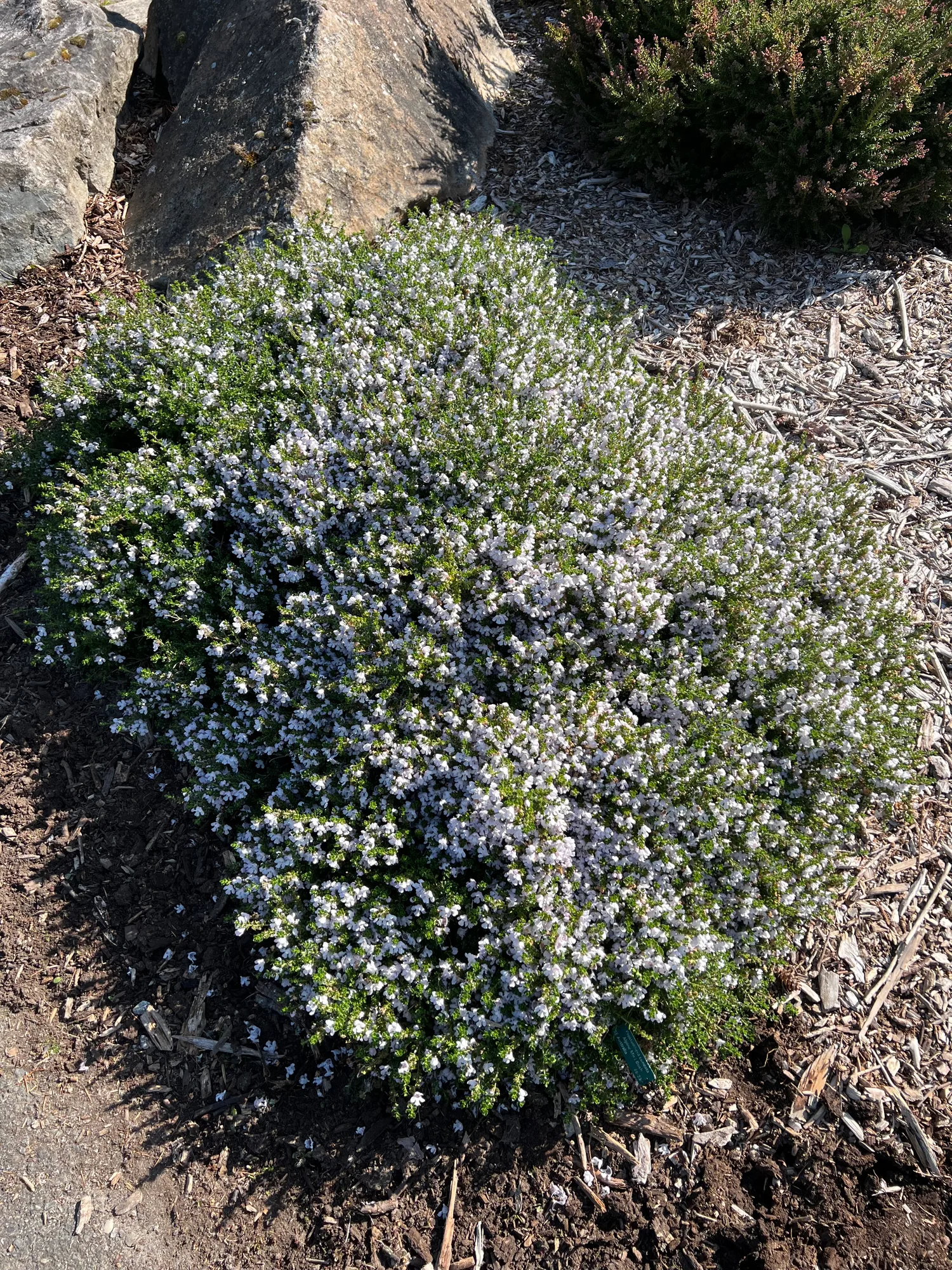
Prostanthera cuneata is a compact rounded to mounding evergreen shrub in the mint family Lamiaceae growing 2–4 feet (0.6–1.2 m) tall and 2–4 feet (0.6–1.2 m) wide at maturity from a woody base. The specific epithet cuneata is Latin for wedge-shaped and refers to the small thick wedge-shaped leaves 0.2–0.4 inch (5–10 mm) long that taper at the base and broaden toward the tip like a wedge. Leaves are glossy dark green, densely carried along the branches, and strongly aromatic when crushed, releasing a powerful mint-eucalyptus fragrance from the aromatic oils stored in glandular hairs on the leaf surface that is characteristic of the genus Prostanthera (the mint bushes). The genus name Prostanthera comes from Greek for appendage-anther and refers to the small appendages on the flower stamens, and all species in the genus produce aromatic foliage and small two-lipped flowers typical of the mint family Lamiaceae. White tubular two-lipped flowers 0.4–0.6 inch (10–15 mm) long with purple spots in the throat open in profuse clusters along the upper branches in May, June, and July in the Northern Hemisphere (November through January in the Australian native range) across a 3–4 week bloom period, and the purple throat spots serve as nectar guides for visiting honeybees and native solitary bees. Native to southeastern Australia in the alpine and subalpine zones of the Australian Alps — Victoria, New South Wales, and Tasmania — growing in alpine scrub, rocky slopes, and montane heath at 3,000–6,000 feet (900–1,800 m) elevation where the species experiences winter snow cover and dry summer conditions. The alpine montane habitat gives P. cuneata cold hardiness to USDA zone 8, which carries the species into temperate garden cultivation outside the warm subtropical climates where most other Prostanthera species are limited by winter cold sensitivity. Limitation: the species calls for sharp drainage and fails in wet winter soils because crown rot develops under saturated conditions during the cool wet months, and plants in heavy clay or poorly drained positions decline and die within a season or two of planting. Cold drying winds during winter damage the glossy evergreen foliage and can kill young plants before they are fully established, and sheltered positions or partial wind protection during the establishment period are suited for gardens on the cold margins of the zone 8 range. Non-toxic and deer-resistant. Drought-tolerant once established because the thick leathery leaves and the woody crown hold water reserves through summer dry periods.
Native Range
Native to southeastern Australia in the alpine and subalpine zones of the Australian Alps — the mountain range extending through Victoria, New South Wales, and Tasmania — growing in alpine scrub, rocky slopes, and montane heath at 3,000–6,000 feet (900–1,800 m) elevation. The species occupies a well-defined montane ecological niche in the Australian Alps and experiences winter snow cover, spring and summer rainfall, and dry autumn conditions in its native range, and this alpine montane heritage is the source of the cold hardiness that allows the species to grow in temperate gardens outside the warm subtropical climates of mainland Australia.Suggested Uses
Used in rock gardens, Mediterranean-style gardens, herb gardens, coastal gardens, mixed shrub borders, and containers of at least 3 gallons (11 L) at 2–3 foot (0.6–0.9 m) spacing between plants. The compact rounded form, the intense mint-eucalyptus aromatic foliage when brushed, and the profuse late-spring white purple-spotted bloom combine to make the species a sensory garden plant near pathways, seating areas, and entries where the fragrance can be released by passing brushes against the foliage. Wet winter positions, heavy clay soils, cold wind-exposed sites in zone 8, and gardens in USDA zones 7 and colder are unsuitable because of the crown rot risk in wet soils, the cold wind damage to the evergreen foliage, and the zone 8 minimum hardiness.How to Identify
Appearance
Size & Dimensions
Height2' - 4'
Width/Spread2' - 4'
Bloom Information
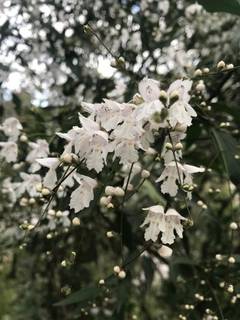
White tubular two-lipped flowers 0.4–0.6 inch (10–15 mm) long with purple spots in the throat open in profuse clusters along the upper branches in May, June, and July in the Northern Hemisphere across a 3–4 week bloom period. In the Australian native range the bloom opens during the Southern Hemisphere spring and summer (November through January). The purple throat spots serve as nectar guides for visiting honeybees and native solitary bees that work the flowers for nectar during the bloom window.
Detailed Descriptions
Flower Description
white tubular two-lipped flowers 0.4-0.6 inch (10-15 mm) long with purple spots in the throat (the spots serve as nectar guides for visiting bees); carried in profuse clusters along the upper branchesFoliage Description
glossy dark green; small thick wedge-shaped (cuneate) leaves 0.2-0.4 inch (5-10 mm) long, carried densely along the branches in a compact rounded to mounding arrangement; the crushed foliage releases a strong mint-eucalyptus fragrance from the aromatic oils stored in glandular hairs on the leaf surfaceGrowing Conditions
Sun Requirements
Requires 4-8 hours of direct sunlight daily
• Full Sun: 6+ hours of direct sunlight
• Partial Shade: 3-6 hours of direct sunlight
• Full Shade: Less than 3 hours of direct sunlight
Care & Maintenance
Care Guide
Site in full sun to partial shade with 4–8 hours of direct sun per day in well-drained sandy, loamy, or rocky soil with a pH of 5.5–7.0. Sharp drainage is essential because the species fails in wet winter soils where crown rot develops under saturated conditions, and plants in heavy clay or poorly drained positions decline within a season or two of planting. Cold drying winds during winter damage the glossy evergreen foliage and can kill young plants, so sheltered positions or partial wind protection during the establishment period support survival in gardens on the cold margins of the zone 8 range. Drought tolerance develops once the woody crown and the leathery leaves are established after the first or second growing season, and supplemental irrigation is needed only during extended summer dry periods. Light pruning after flowering maintains the compact rounded form and promotes dense branching, and hard cuts into old wood are not done because the species does not reliably regenerate from woody bare stems. Non-toxic and deer-resistant. Hardy in USDA zones 8 through 10.Pruning
Light pruning after flowering (July or August) maintains the compact rounded form and promotes dense new growth for the following year's bloom, and the cuts are kept to the soft outer growth rather than reaching into the older woody interior of the shrub. Hard pruning into old wood is avoided because the species does not reliably regenerate from bare woody stems, and stems cut below the active leaf zone often die back rather than regrowing. Dead or damaged branches can be removed at any time of year without harm to the shrub.Pruning Schedule
Prune: July–August
summer
Container Growing
Suitable for container growing
Minimum container size: 3 gallons