Platanus, Genus, occidentalis, Species,
- Genus & species
American sycamore
Native to eastern North America, from southern Ontario and Maine south to Florida and west to Nebraska and Texas; the species occurs along rivers, streams, floodplains, and bottomlands from near sea level to approximately 3,000 ft (900 m); the largest deciduous tree native to eastern North America by trunk diameter, with documented specimens exceeding 10 ft (3 m) in diameter; the species is widely planted along urban streams and in large parks where the eventual size and the white mottled bark are landscape features
Overview
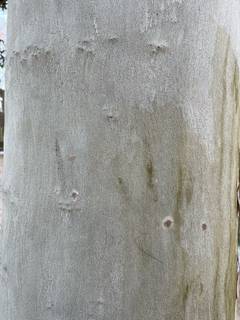
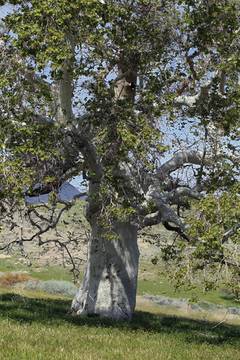
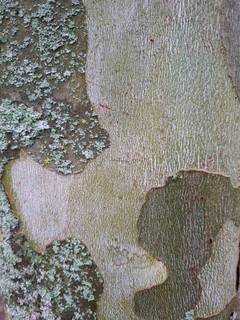
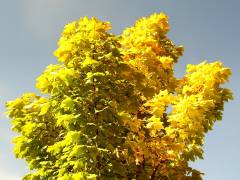
Platanus occidentalis is a massive deciduous tree in the plane tree family (Platanaceae) growing 75-100 ft (23-30 m) tall and 60-80 ft (18-24 m) wide — the largest deciduous tree native to eastern North America by trunk diameter, with documented specimens exceeding 10 ft (3 m) in diameter. The bark is the most recognizable identification feature: the outer bark exfoliates in large irregular patches revealing a mosaic of white, cream, olive, and grey inner bark — the white upper trunk and branches are visible from a distance and give the tree a ghostly mottled appearance in winter. Leaves are alternate, palmately lobed with 3-5 shallow lobes, 6-10 inches (15-25 cm) across, medium green, with a fuzzy undersurface. Leaf petioles have a hollow base that encloses the axillary bud — a genus-specific character of Platanus. Fruit are spherical achene balls 1-1.25 inches (2.5-3 cm) in diameter, hanging singly on a long peduncle — the solitary fruit ball separates P. occidentalis from P. × acerifolia (London plane), which produces 2-3 fruit balls per stalk. Tolerates flooding, compacted soil, urban pollution, and poor drainage. Susceptible to anthracnose (Apiognomonia veneta), which causes leaf browning and defoliation in cool wet springs — common in the Pacific Northwest but rarely fatal. Sycamore lace bug and bacterial leaf scorch are additional concerns. The massive size limits the species to large landscapes, parks, and riparian corridors.
Native Range
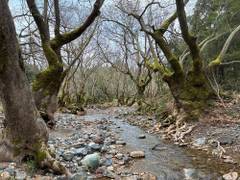
Platanus occidentalis is native to eastern North America, from southern Ontario and Maine south to Florida and west to Nebraska and Texas. The species occurs along rivers, streams, floodplains, and bottomlands from near sea level to approximately 3,000 ft (900 m).Suggested Uses
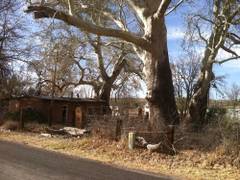
Planted as a shade tree in large parks, institutional grounds, and along rivers and streams. Too large for residential lots. Used in riparian restoration and streambank stabilization — the species naturally colonizes floodplains and tolerates periodic inundation. The white mottled bark gives a winter feature in large landscapes.How to Identify
Appearance
Size & Dimensions
Height75' - 100'
Width/Spread60' - 80'
Bloom Information
Inconspicuous flowers in April-May. Monoecious — male and female flowers on separate spherical heads on the same tree. Wind-pollinated. Spherical fruit balls develop through summer, ripening to brown by autumn and persisting on bare branches through winter before disintegrating and releasing hairy achenes in late winter through early spring.
Detailed Descriptions
Foliage Description
Medium green large palmately lobed leaves with 3-5 shallow lobes, 6-10 inches (15-25 cm) across, with a fuzzy undersurface; the petiole base is hollow and encloses the axillary bud — a genus-specific character of PlatanusGrowing Conditions
Sun Requirements
Requires 6-10 hours of direct sunlight daily
• Full Sun: 6+ hours of direct sunlight
• Partial Shade: 3-6 hours of direct sunlight
• Full Shade: Less than 3 hours of direct sunlight
Care & Maintenance
Care Guide
Plant in full sun in moist deep fertile soil at pH 5.0-7.5. Tolerates flooding, clay, and compacted soil. Space 40-50 ft (12-15 m) apart — the species requires substantial space. Water during the first 3 years; once established, the deep root system tolerates moderate drought but performs poorly in dry sandy soil. Anthracnose causes spring defoliation in cool wet years — the tree typically releafs within 3-4 weeks and no treatment is needed. In the Pacific Northwest, the species grows vigorously but anthracnose is common in the wet springs.Pruning
Prune in late winter while dormant. Remove dead, damaged, and crossing branches. Raise the canopy by removing lower branches as desired — mature trees often have a clear trunk to 20-30 ft (6-9 m). The brittle wood is prone to storm breakage — remove structurally weak branch attachments early.Pruning Schedule
Prune: February–March
late winter